




Period Open Bookshelf
A period open bookshelf brings warmth and order to a room, offering accessible display for treasured volumes through Georgian, Regency, and Victorian craftsmanship.
Period Open Bookshelf
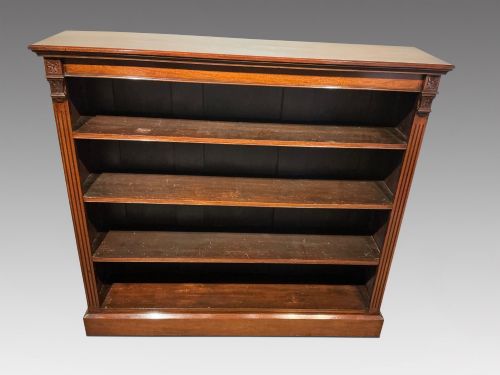
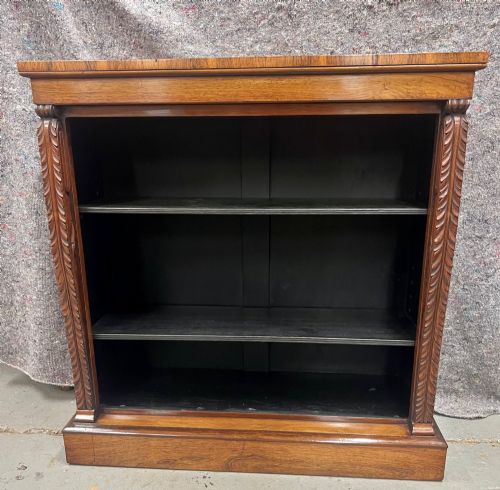
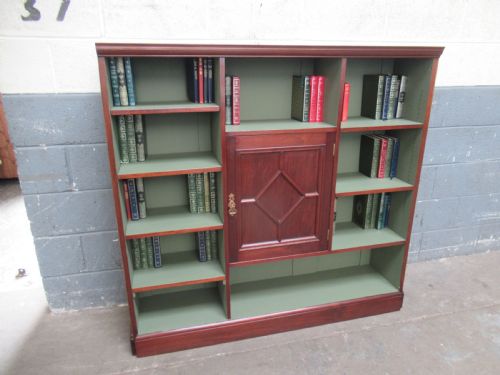
A period open bookshelf provides practical shelving without doors, making volumes immediately accessible within domestic spaces. These pieces span Georgian, Regency, William IV, Victorian, and Edwardian eras, each carrying distinct design characteristics from its time.
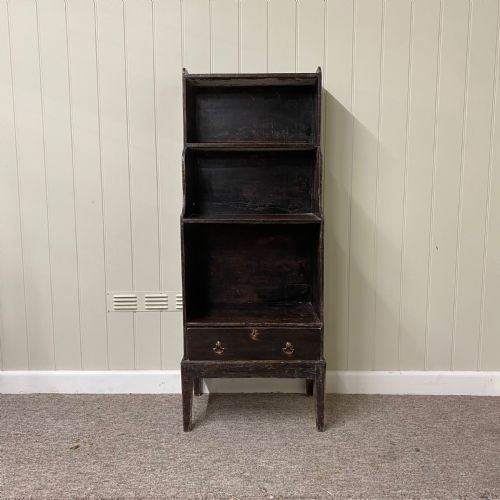
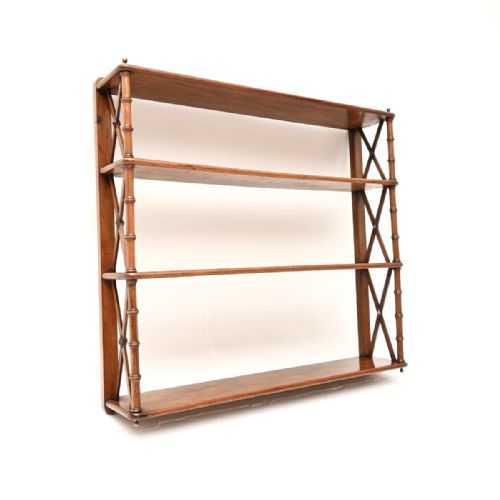
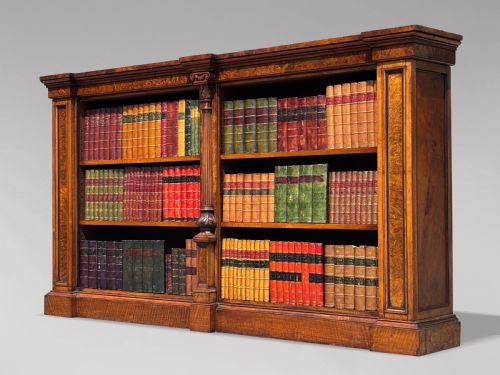
Buyers encounter forms ranging from compact wall mounting bookcases and three-tier whatnots to low open bookcases and dramatic breakfront floor bookcases. Rosewood and mahogany dominate the material selection across these varied formats.
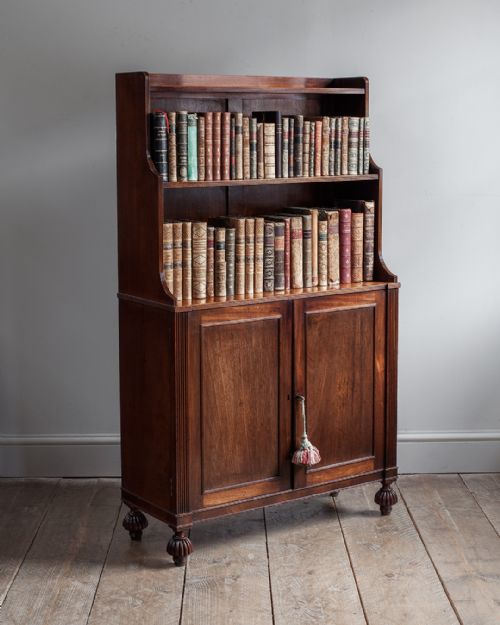
The Regency period heavily influences the available pieces, bringing waterfall bookcases and side cabinets fitted with leather dummy books into the selection. Walnut and burr walnut additionally appear among the Victorian and Georgian examples.
Materials and Construction
Cabinet makers utilised dense hardwoods including mahogany, rosewood, and walnut to build structurally sound shelves capable of holding heavy rows of books. Burr walnut provides rich grain patterns on select Victorian and Georgian low models.
Decorative refinement involved brass inlay, parcel gilt accents, and ormolu mounts, particularly on Regency pieces. Simulated rosewood surfaces also appear, offering the visual depth of exotic timber through alternative painting techniques.
Period Open Bookshelf Retail Price Guide 2026
Typical asking prices for period open bookshelf among the pieces listed under this phrase on Sellingantiques today, from the lower quarter to the upper quarter. They describe what is for sale here now, not the wider market.
Distinguishing Quality in Construction
The distinction between standard utility items and superior examples lies in the choice of timber and the precision of decorative enrichment. Finely figured rosewood veneers and crisp brass inlay elevate the presence of Regency pieces.
Proportion and scale dictate the success of the form, whether dealing with a diminutive wall mounting shelf or an expansive breakfront floor bookcase. Integrated details such as leather dummy books reflect a higher tier of bespoke commission.
The Period Open Bookshelf Glossary
- Waterfall bookcase
- A tiered shelving unit where each successive shelf steps back from the one below, creating a cascading profile popular in the Regency era.
- Breakfront
- A piece of furniture where the central section projects forward from the flanking outer sections, adding architectural depth to floor bookcases.
- Whatnot
- A freestanding set of open shelves supported by slender columns or uprights, traditionally utilised for displaying ornaments or small books.
- Parcel gilt
- A decorative technique applying thin layers of gold leaf to specific carved or architectural details on timber frames.
Period Open Bookshelf: Frequently Asked Questions
How were open bookshelves used?
These pieces served in libraries, parlours, and studies to keep frequently read volumes within arm's reach. They prioritized accessibility over the dust protection offered by glazed cabinet doors.
Smaller variants like wall shelves and whatnots accommodated lighter reading materials alongside decorative ornaments in private chambers.
What woods are most common?
Mahogany and rosewood form the majority of the selection, prized for their strength and deep natural grain. Walnut and burr walnut appear more frequently in Georgian and Victorian pieces.
Secondary treatments include painted surfaces and simulated rosewood finishes that mimic exotic timbers through skilled brushwork.
How do I date a bookcase?
Stylistic cues point directly to the era of manufacture, such as the classical restraint of Georgian designs or the rich brass inlay typical of the Regency period. Timber selection also shifts from early mahogany to later rosewood and burr walnut.
Structural proportions and edge mouldings help separate nineteenth-century interpretations from Edwardian reproductions.
Are waterfall bookcases sturdy?
Tiered shelving relies on solid uprights and fixed backboards to maintain rigidity under the weight of books. Heavier timber construction ensures lower shelves remain stable.
Compact wall mounting models require secure wall fixings to bear the load safely in modern rooms.