
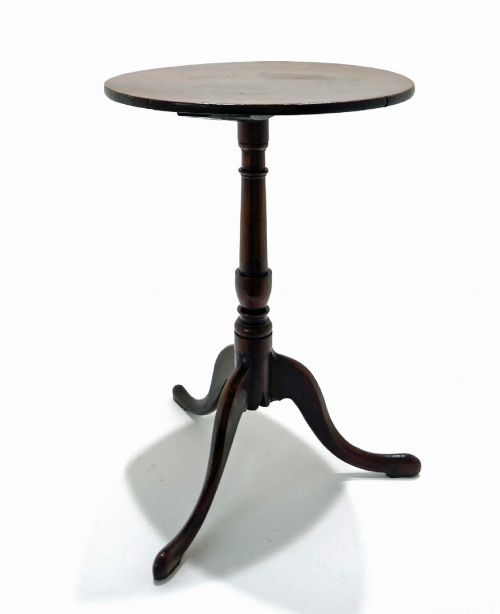
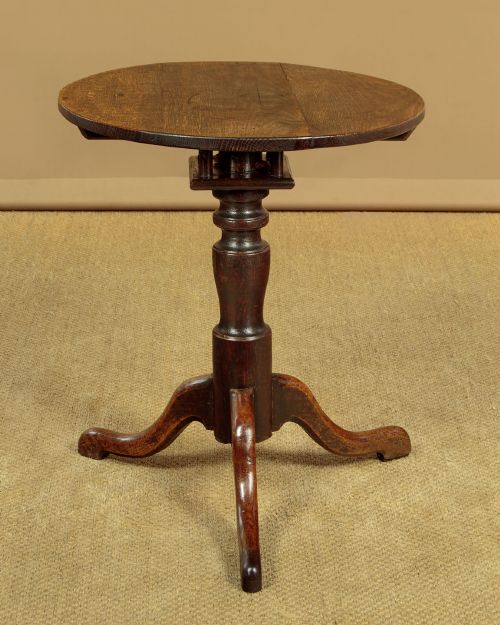


Period Oak Wine Table
A period oak wine table brings sturdy country charm and centuries of character to any corner, holding a glass or candle with understated elegance.
Period Oak Wine Table
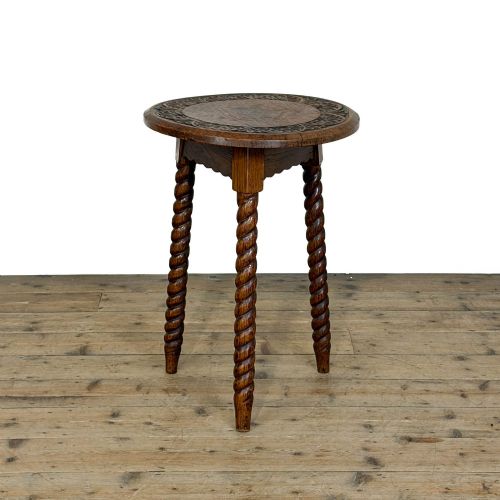
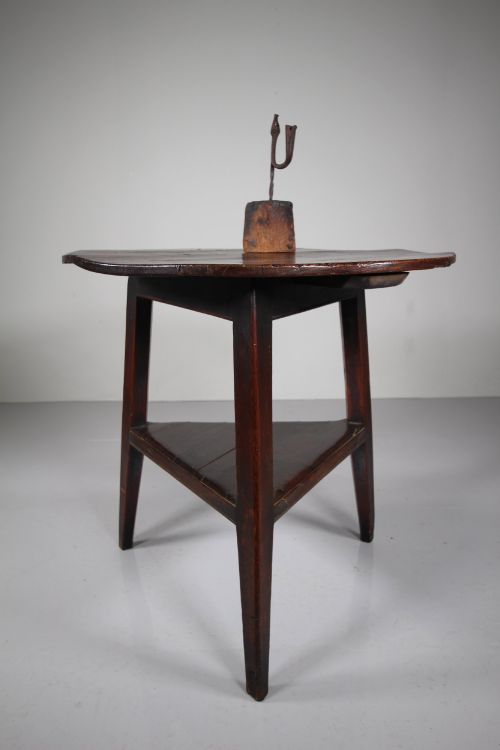
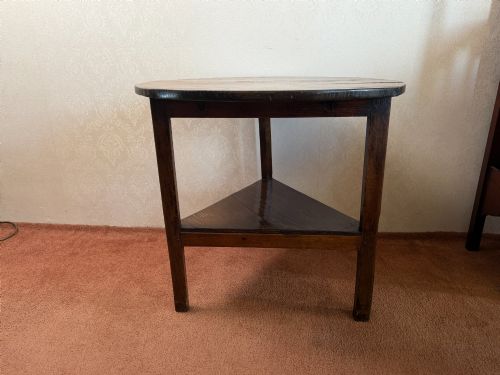
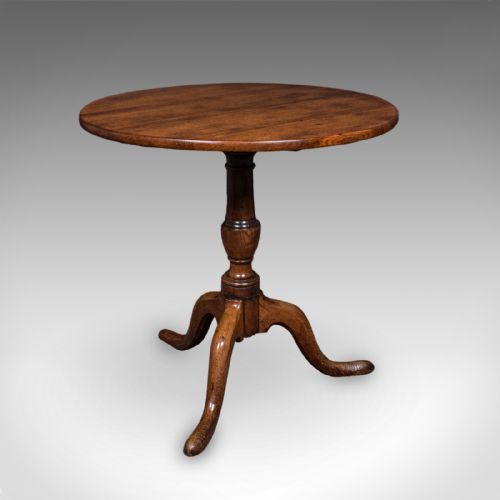
A period oak wine table offers a compact surface raised on a slender central column supported by a tripod base, designed for practical use beside a chair or in a quiet alcove. These pieces span the eighteenth century and the Georgian period, often emerging from vernacular traditions where utility guided the maker's hand. Buyers meeting these pieces on this page will frequently encounter tripod tables and cricket tables built for everyday domestic service.
The materials recorded in these listings rely predominantly on solid oak, sometimes combined with beech for turned columns or copper for decorative details. Styles range from Georgian Vernacular and English Country Vernacular to Jacobean Revival and Arts and Crafts interpretations. Such variety ensures that whether a piece dates from the eighteenth century or the Edwardian era, it carries the distinct imprint of British woodworking traditions.
Materials and construction
Construction relies heavily on native hardwoods, primarily oak for tops and legs, supplemented by beech for turned structural components. Timbers were selected for strength and grain pattern, then shaped using hand tools to create sturdy tripod bases and slender columns.
Joinery methods reflect traditional carpentry, employing pegged joints, tenons, and lathe-turned shafts designed to bear weight steadily on three legs. Occasional variations incorporate copper elements, particularly in later Arts and Crafts pieces, blending metalwork with traditional timber framing.
Listings feature oak, beech, burr wood, and copper across eighteenth-century, Georgian, Edwardian, and Arts and Crafts periods.
Judging quality and proportion
Quality in these pieces rests upon the harmony of proportion between the top, the slender column, and the splay of the tripod legs. Finer examples maintain an elegant balance that prevents the small table from feeling top-heavy, while simpler vernacular pieces prioritise robust utility over refined turning.
Surface character and timber selection further distinguish individual pieces. Tables featuring well-figured oak boards with deep, honest patina and minimal intrusive restoration stand apart from later revivals or heavily altered examples.
The Period Oak Wine Table Glossary
- Tripod table
- A small occasional table supported by a central pillar resting on three legs. This design prevents wobbling on uneven floors.
- Cricket table
- A small round table featuring three legs and often a lower tier for storage. The triangular leg arrangement provides inherent stability.
- Tilt top
- A table mechanism allowing the wooden surface to pivot vertically when not in use. This feature saved valuable floor space in smaller period rooms.
- Vernacular
- Everyday furniture made by regional craftsmen for local use rather than high-style metropolitan workshops. These pieces emphasise practical construction and local timber.
Period Oak Wine Table: Frequently Asked Questions
What is a period oak wine table used for?
These small tables serve as convenient bedside surfaces, reading stands, or low stands for drinks and lamps. Their compact footprint makes them ideal for filling awkward corners without crowding a room.
Historically, similar tripod stands held candles or wine glasses near seating areas during evening gatherings. Today, they function just as easily beside a modern armchair or traditional sofa.
How do I tell an eighteenth century table from a later revival?
Examine the timber shrinkage, tool marks on the underside, and the construction methods used in the joints. Eighteenth-century pieces show hand-cut pegging and natural wear patterns accumulated over generations of use.
Later revivals, such as Edwardian or Jacobean Revival pieces, often display more uniform machining and cleaner internal surfaces. Comparing the patina across the top and base helps confirm the age of the timber.
Are these tables stable enough for daily use?
Three-legged tables naturally sit firmly on uneven floors without rocking, making them surprisingly stable for everyday placement. The wide splay of the tripod base distributes weight evenly beneath the column.
Care should be taken not to overload the edges of tilt-top variants if the locking mechanism is worn. Placed thoughtfully, they handle normal daily items like books and cups securely.
How should I care for an antique oak surface?
Maintain the timber by applying a traditional beeswax polish occasionally to nourish the dry grain and protect the finish. Avoid placing oak furniture in direct sunlight or near sudden heat sources that could cause the wood to split.
Use coasters under wet glasses to prevent water rings from penetrating the aged surface patina. Gentle dusting with a soft cloth keeps the grain looking clear and bright.