



Period Metalwork Lighting
Period metalwork lighting gathers practical illumination from past centuries into heavy, tactile fixtures of brass and bronze.
Period Metalwork Lighting
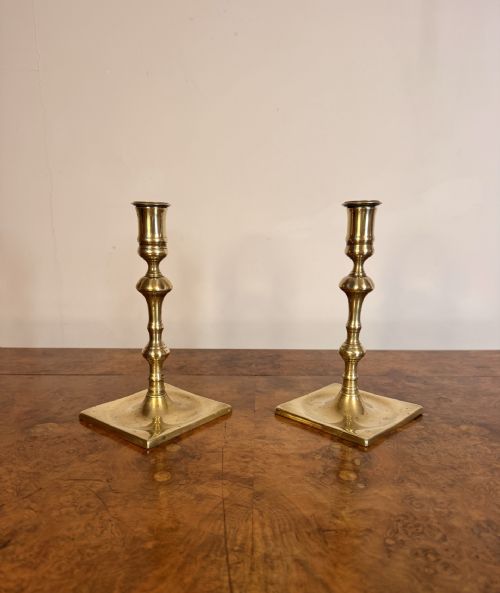
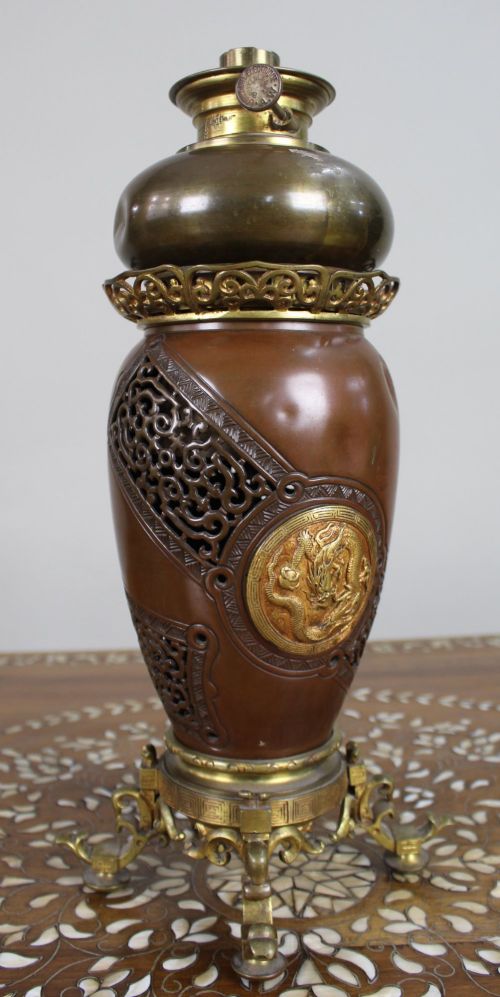
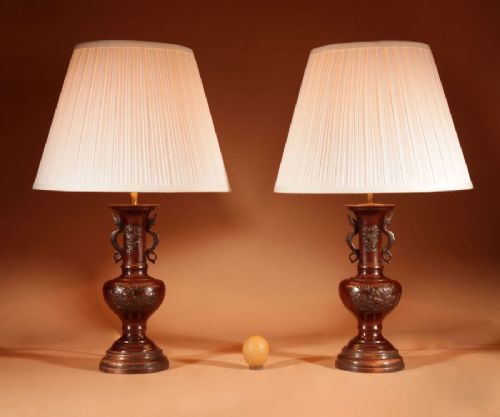
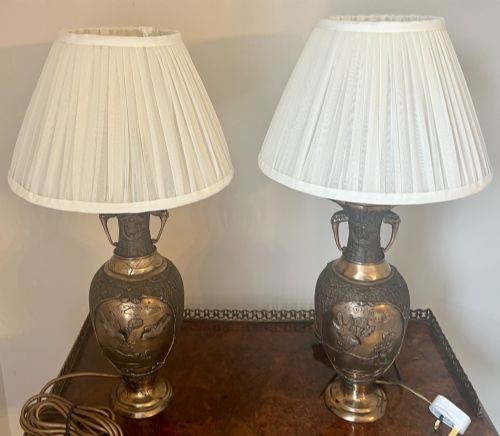
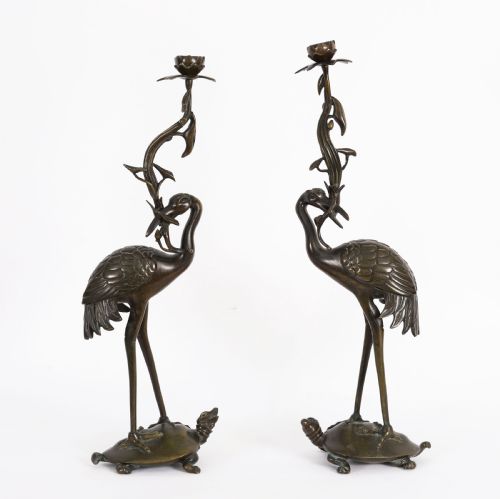
The selections span stout domestic candlesticks, towering standard lamps, and table lamps converted from oil vessels or Japanese bronze vases. Most examples on this page date from the eighteenth and nineteenth centuries, with notable pieces stretching into the early twentieth century.
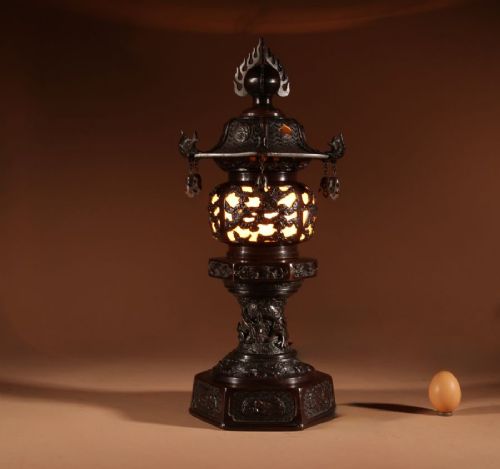
Origin varies between English domestic brassware and Japanese Meiji period metalwork brought home by travellers. You find standard baluster candlesticks sitting alongside intricate bronze lanterns and cloisonné enamel vessels adapted for modern wiring.
How they were made
Brass and bronze dominate these items, cast in heavy moulds and turned on lathes to achieve crisp sockets, drip pans, and octagonal bases. Makers shaped the metal while hot or poured it into intricate moulds, producing thick walls that give each piece substantial weight.
Surface decoration relies on direct chasing, patination, and cloisonné enamel work rather than applied paint. Elements of glass, fabric, and copper appear across shades and vessels, complementing the core metal structure without hiding it.
Period Metalwork Lighting Retail Price Guide 2026
Typical asking prices for period metalwork lighting among the pieces listed under this phrase on Sellingantiques today, from the lower quarter to the upper quarter. They describe what is for sale here now, not the wider market.
Several heavy bronze table lamps started life as Japanese vases before someone decided they deserved to hold a light bulb instead of flowers.
What varies in quality
Quality rests on the crispness of the casting and the thickness of the metal used in the stem and base. Heavy, well-balanced candlesticks with clean turning show greater care in the workshop than thin, lightweight alternatives.
Finish and patination set the better examples apart, particularly in Japanese bronze work and English brass balusters. Original surface patination and tight, secure joins indicate superior craftsmanship from the outset.
The Period Metalwork Lighting Glossary
- Baluster
- A moulded shaft with a swelling lower portion resembling a classical architectural column. This shape provides a stable centre of gravity for heavy candlesticks.
- Pricket
- A sharp metal spike set in the centre of a candle socket to hold a wax taper securely. It requires a candle with a hollow base.
- Cloisonné
- An enamelling technique where thin metal wires form raised compartments on a bronze or copper body to hold coloured paste. Firing fuses the glass paste into hard decorative cells.
- Standard lamp
- A tall floor-standing light fixture designed to illuminate a room from standing height. Telescopic versions allow the height to be adjusted.
- Meiji period
- The era of Japanese history spanning from eighteen sixty-eight to nineteen twelve, known for exceptional decorative metalwork and export bronzes.
Period Metalwork Lighting: Frequently Asked Questions
How do I clean old brass lighting?
Dust gently with a soft cloth to preserve the dark patination accumulated over centuries. Avoid harsh commercial polishes that strip away the aged surface.
Allow the metal to retain its natural character rather than forcing a bright, modern shine.
Are these lamps safe for modern wiring?
Many older metal lamps have been professionally converted to accept modern electrical flex and standard bulbs. You should have any antique fitting checked by a qualified electrician before use.
Check the internal wiring condition, especially within telescopic or standard lamp columns.
How do I date a brass candlestick?
Examine the base construction, casting seams, and the shape of the socket or drip pan. Eighteenth-century examples often feature solid cast octagonal bases and heavy proportions.
Victorian pieces frequently adopt baluster profiles and heavier, more ornate turnings.
What is a pricket candlestick?
A pricket candlestick uses a sharp spike to impale a candle rather than a socket to cup it. This style was common in earlier centuries before standard socket cups became universal.
They require candles made specifically with a central base hole.