
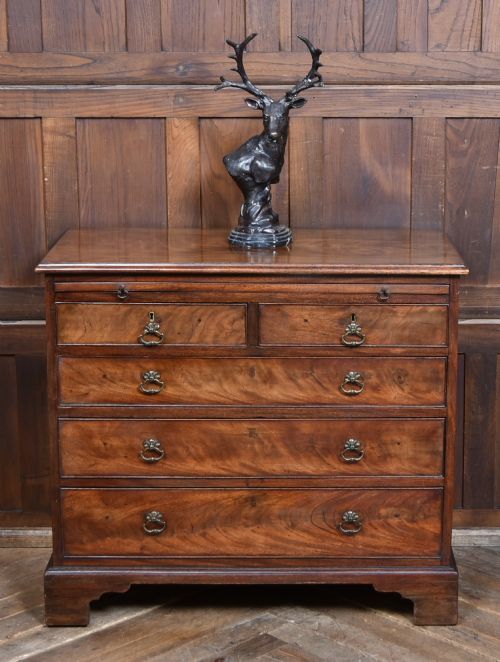
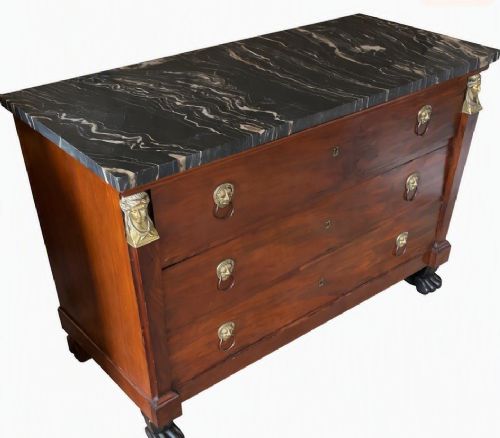
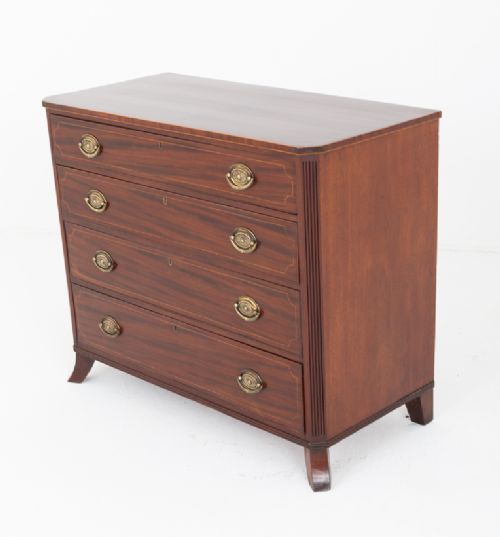

Period Mahogany Commode
A period mahogany commode offers deep-toned timber and solid proportion, serving as a functional statement piece for any bedroom or reception space.
Period Mahogany Commode
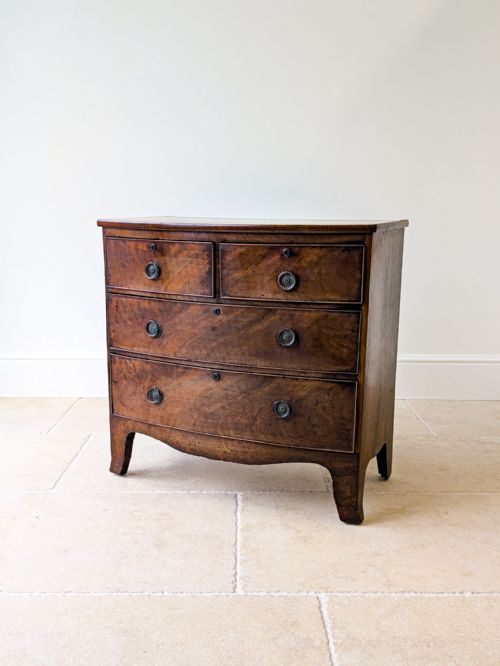
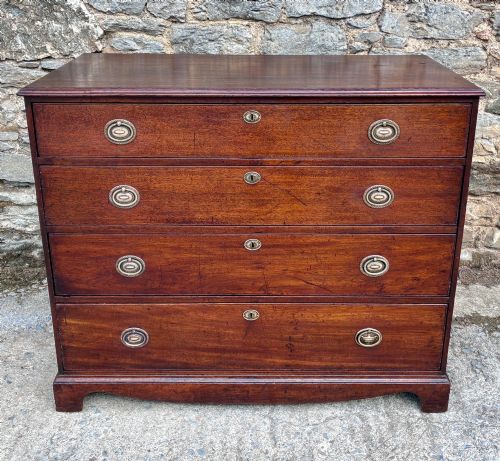
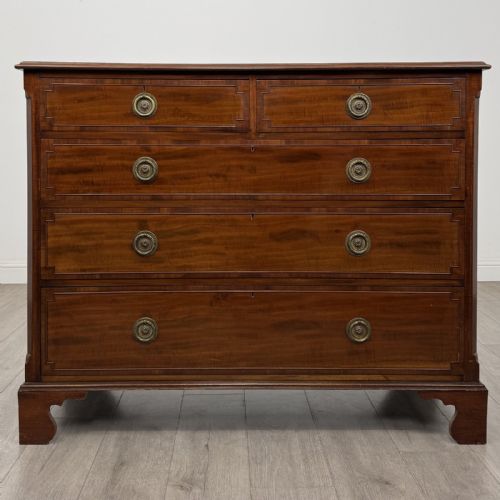
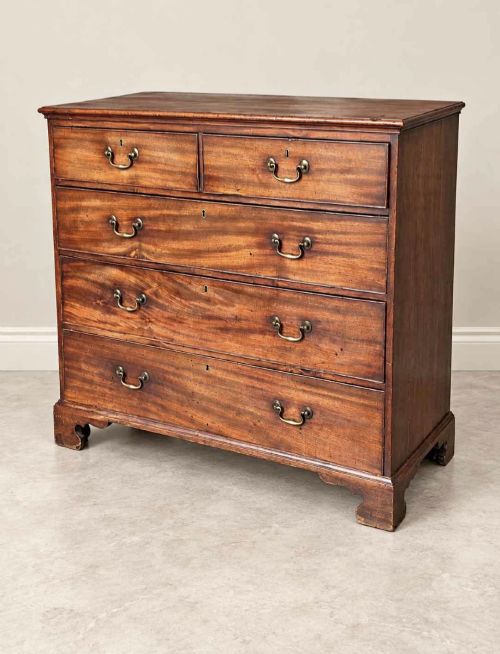
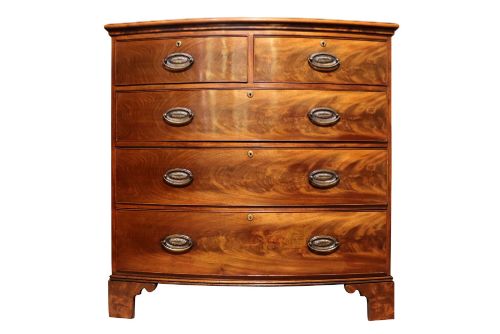
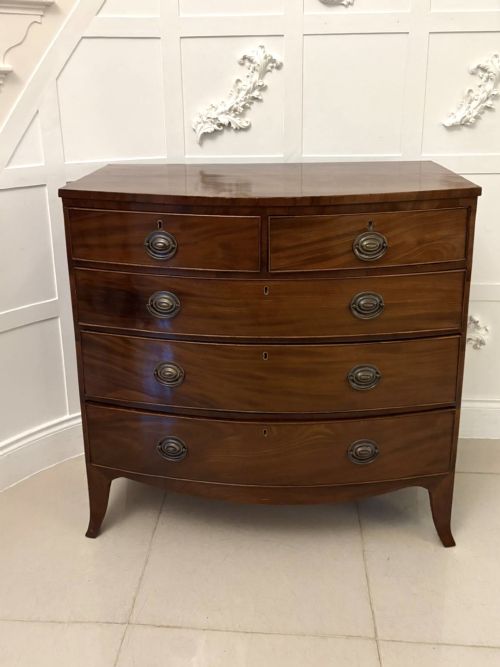
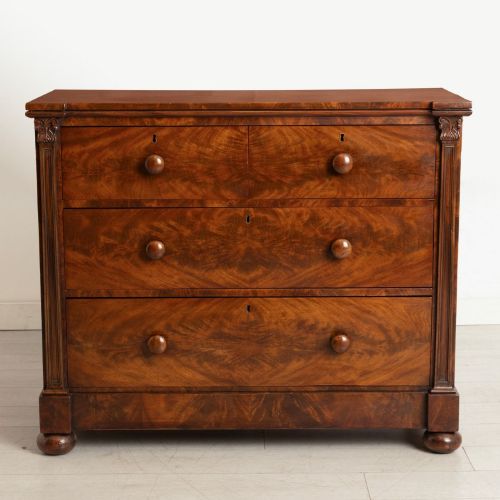
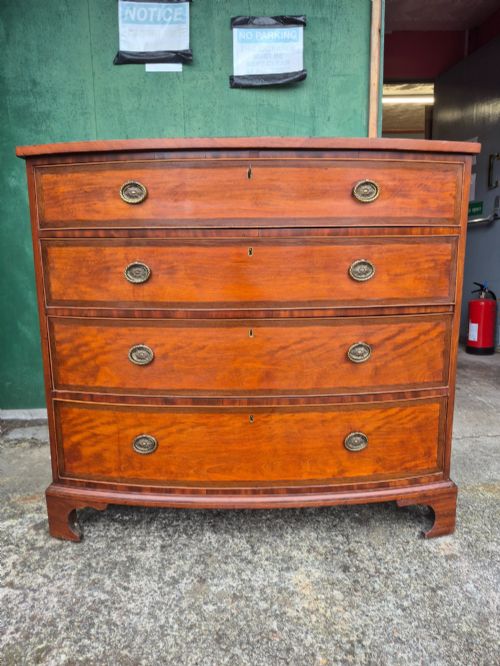
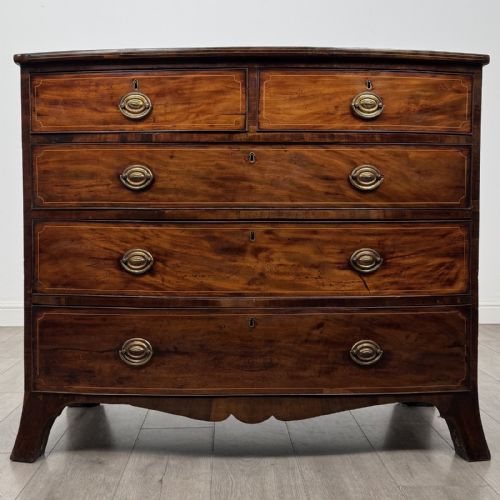
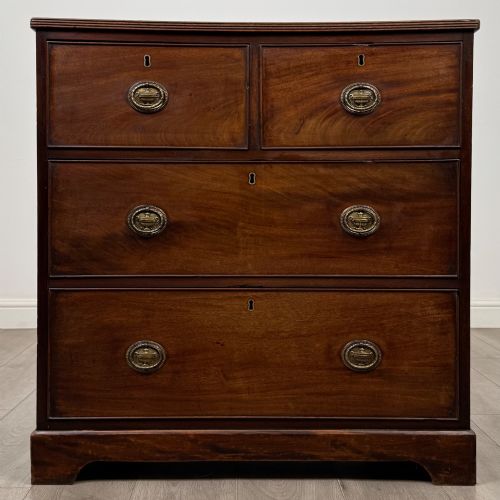
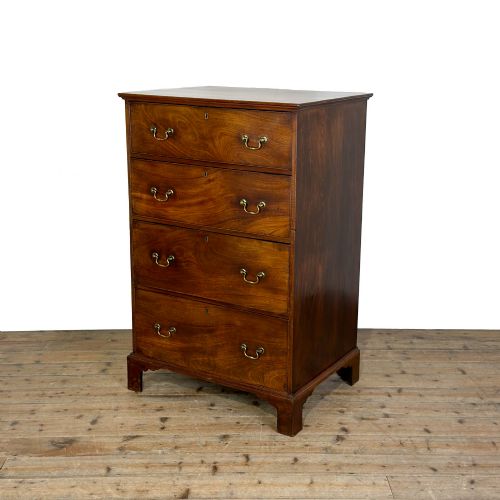
A period mahogany commode encompasses a range of traditional English and continental forms, most frequently appearing on this page as chests of drawers, bedside cabinets, and night cupboards dating from the Georgian, Regency, and Victorian eras. Buyers seeking this search phrase encounter pieces varying from compact bow-front examples to larger four-drawer storage units.
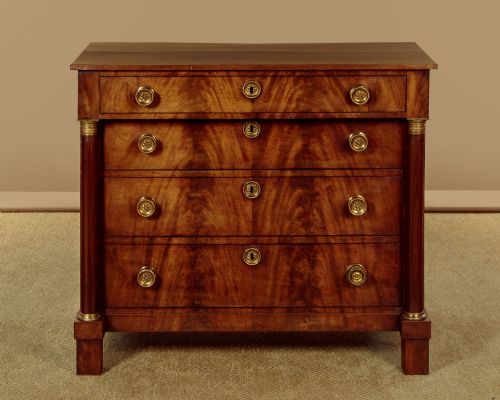
The selection ranges across distinct historical styles such as George III, Chippendale, and Regency, alongside French Louis XVI and Empire designs found in the archive. These variations provide buyers with options spanning straight fronts, serpentine shapes, and specialised forms like tray top commodes or step commodes.
How They Were Made
Cabinet makers utilised solid mahogany and flame mahogany veneer applied to secondary woods such as oak and pine, frequently incorporating boxwood inlay and brass handles. Drawer linings in oak and pine demonstrate traditional joining methods used to ensure structural stability.
Surface finishing relied on natural polishing techniques that developed a deep patina over centuries. Details like bracket feet, shaped marble tops, and bone escutcheons display the precision of period joinery and ornamentation.
Some miniature chests of drawers served as salesman samples or apprentice pieces, condensing full-scale elegance into tabletop proportions.
What Varies in Quality
The standard of a piece rests upon the selection of timber veneers, where highly figured flame mahogany or carefully matched grain patterns elevate the visual impact. Superior examples maintain crisp carving along the edges and feet without softness or wear from excessive restoration.
Internal construction dictates the longevity and authenticity of the piece, particularly the use of oak linings for drawers and the retention of original brass handles or bracket feet. The depth of the patina and the fluidity of movement in bow fronts or serpentine shapes further distinguish finer examples.
Gillows
The Period Mahogany Commode Glossary
- Bow front
- A convex curved front to a chest of drawers or commode that became popular during the Georgian and Regency periods. This curved shape softens the silhouette of the furniture.
- Brushing slide
- A pull-out shelf positioned above the top drawers, historically used for grooming or folding clothes. It slides flush into the cabinet frame when not in use.
- Tray top
- A raised rim around the top surface of a bedside commode or cabinet. This feature prevents items from rolling off the edges.
- Serpentine
- A front contour characterised by a concave central section flanked by two convex curves. It requires advanced woodworking skill to execute properly.
- Patina
- The deep gloss and surface sheen developed by mahogany timber through age and regular polishing. A good patina reflects the history of the piece.
Period Mahogany Commode: Frequently Asked Questions
What is a period mahogany commode?
A period mahogany commode is an antique storage piece or bedside cabinet constructed primarily from mahogany during the eighteenth or nineteenth century. These items include chests of drawers, night cupboards, and French-influenced commodes.
They reflect the design movements of the Georgian, Regency, and Victorian eras, combining practical storage with refined cabinet making.
How do I tell a Georgian commode from a Regency one?
Georgian pieces often display intricate carving, bracket feet, and finer details associated with Chippendale or George III styles. The proportions tend to be robust and classical in ornament.
Regency examples favour cleaner architectural lines, flame mahogany veneers, and brass inlay or handles. The silhouette frequently incorporates prominent bow fronts or cylindrical bodies.
Were all commodes used for the same purpose?
Historical usage varied significantly depending on the specific form of the commode. Some served as bedside tables or night commodes with enclosed cupboards, while others functioned as miniature chests or bedroom storage.
Items described as step commodes or tray top tables fulfilled more specialised domestic tasks in period bedchambers.
How do I care for antique mahogany furniture?
Antique mahogany requires stable indoor humidity and protection from direct sunlight to prevent the timber and veneers from drying out. Regular dusting with a soft, dry cloth preserves the finish.
Application of traditional wax polish maintains the moisture and deepens the natural patina over time without harming the surface.