
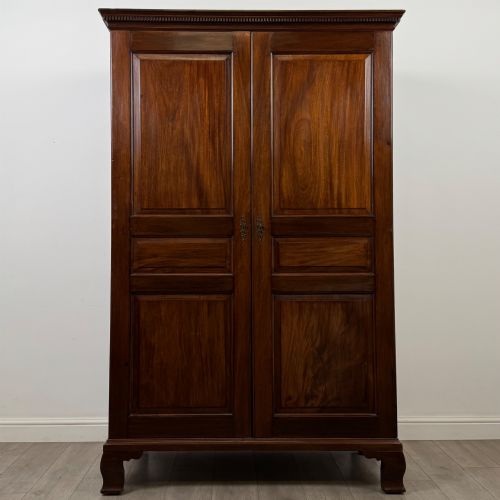
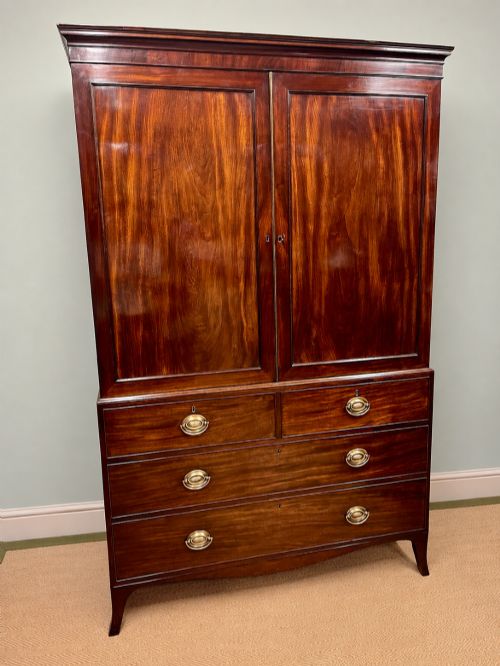

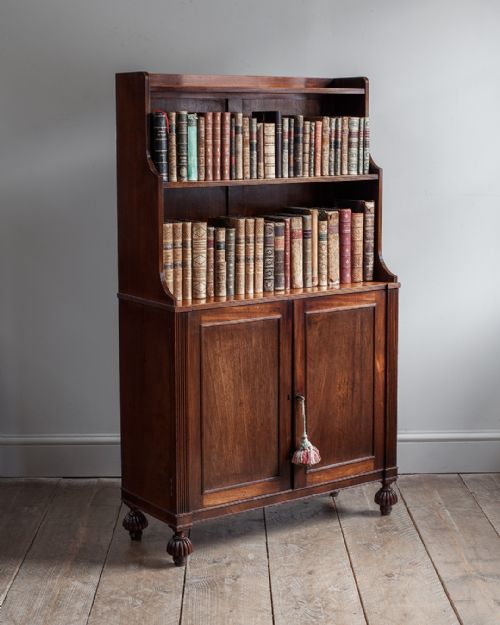
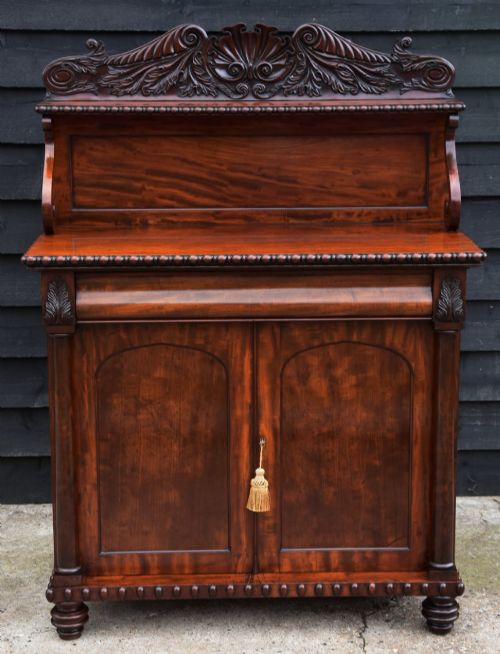
Period Mahogany Cabinet
A period mahogany cabinet brings rich timber tones and formal proportion to a room, spanning the Georgian, Regency, and Edwardian eras.
Period Mahogany Cabinet
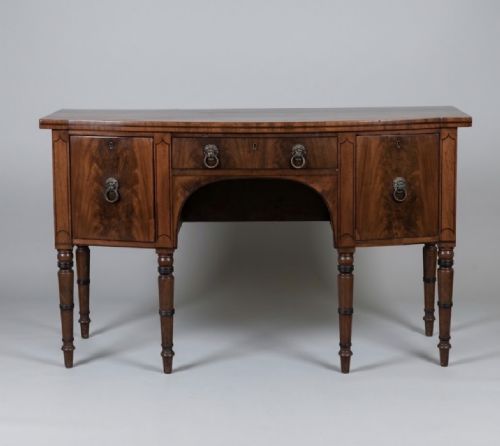
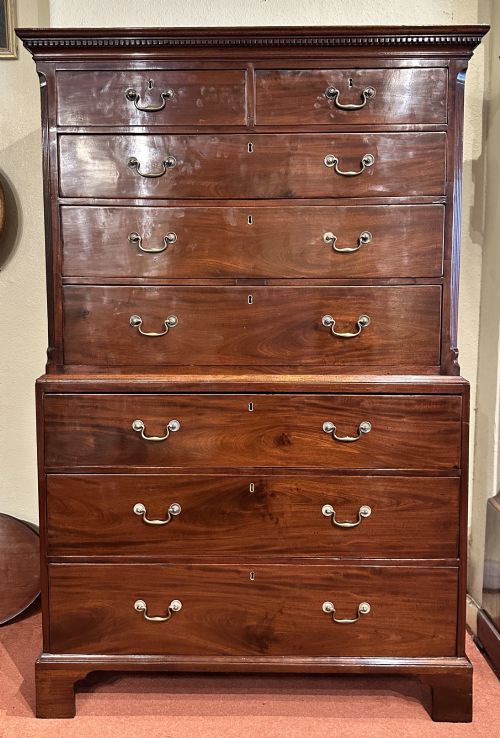
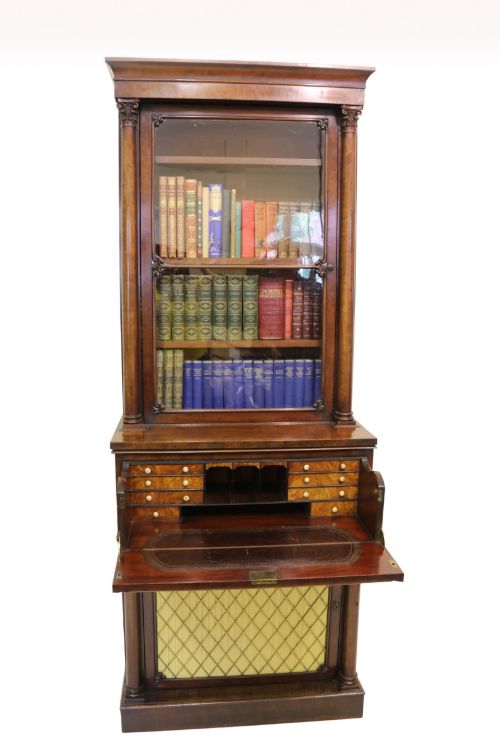
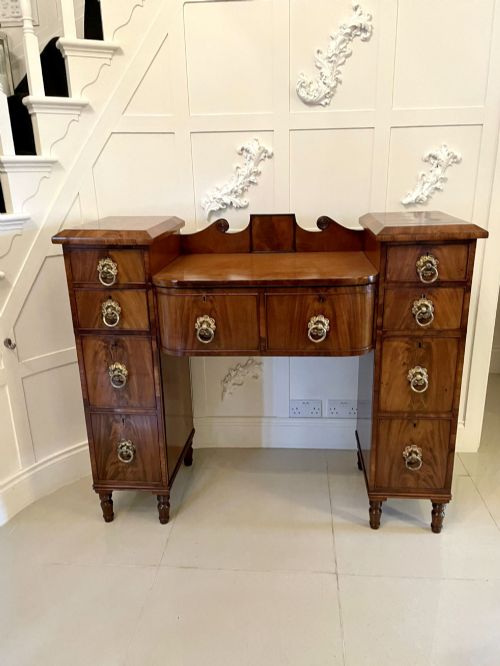
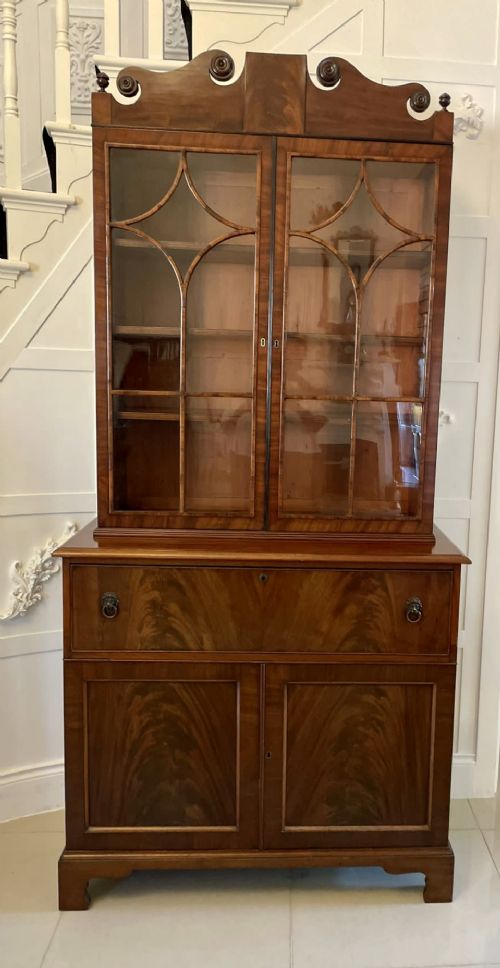
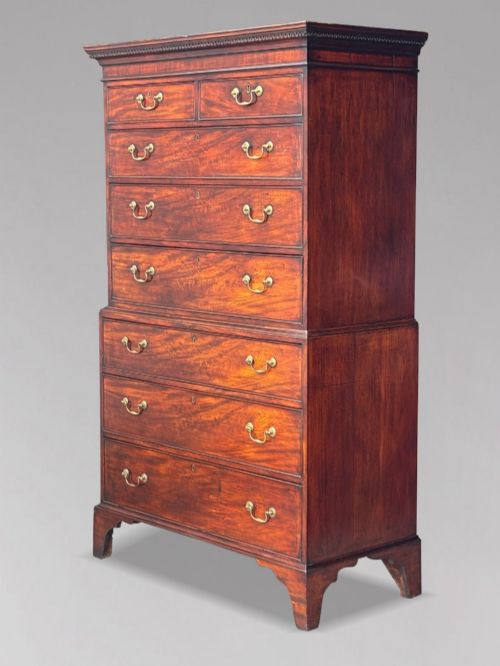
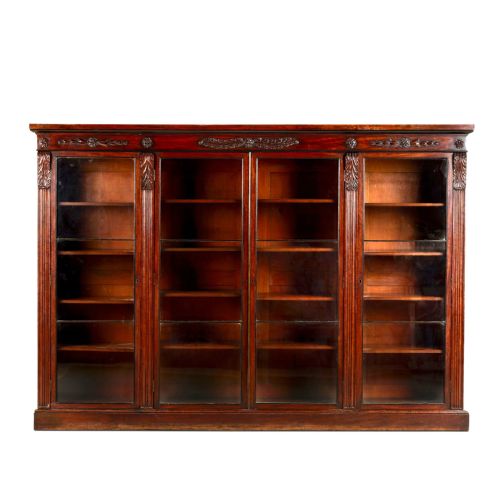
A period mahogany cabinet encompasses a broad selection of functional wooden furniture designed for storage and display across the eighteenth and nineteenth centuries. The pieces on this page range from compact waterfall bookcases and corner cupboards to large secretaire bookcases, linen presses, and sideboards.
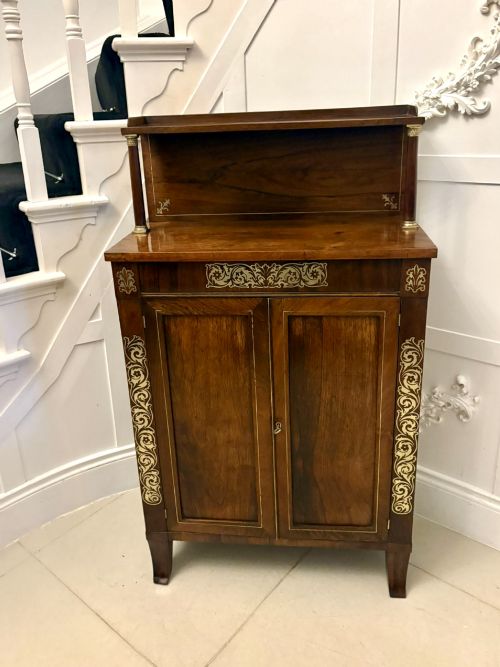
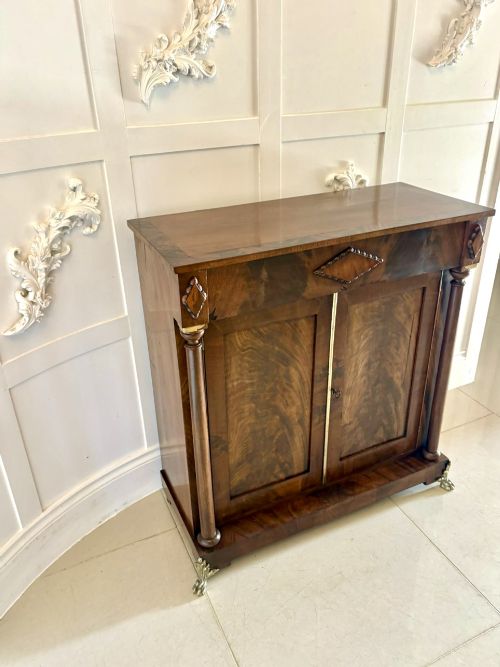
Regency and George III examples dominate the selection, showing the characteristic dark timber, brass mounts, and satinwood inlay of those eras. Buyers encounter various utilitarian and formal designs, including chiffoniers, chest-on-chest configurations, and pedestal cupboards suited to period interiors.
Materials and construction
Cabinet makers utilised solid mahogany and figured flame mahogany veneers over secondary timbers such as oak, applying grain patterns deliberately across drawer fronts and doors. Fine brass hardware, glass panels, and inlaid satinwood details completed the exterior surfaces.
Joinery methods included dovetail joints for drawer construction and panelled door assemblies designed to accommodate timber movement. Silk panels and bronze mounts occasionally supplemented the woodwork on specific Regency and Victorian designs.
Surprise drinks cabinets from the Edwardian era hide miniature cellars behind innocent panels, ready for afternoon hospitality.
Factors of quality
The choice of mahogany veneer sets individual pieces apart, with highly figured flame timber indicating superior material selection by the maker. Crispness in inlay work, original brass handles, and well-balanced proportions distinguish finer examples from simpler vernacular pieces.
Structural integrity depends on the precision of the joinery and the survival of original glass and timber surfaces without excessive restoration. Pieces retaining their original interior fittings, such as adjustable shelving or fitted writing drawers, hold greater coherence.
Gillows of Lancaster·Thomas Chippendale
The Period Mahogany Cabinet Glossary
- Secretaire
- A cabinet or desk featuring a drop-front drawer that conceals a writing surface and small pigeonholes. This hybrid form offers concealed desk space within the footprint of a standard chest or bookcase.
- Chiffonier
- A low sideboard or cabinet developed during the Regency period, often featuring shelves or a small superstructure on top. It served for the storage of plate or books in the dining room or library.
- Linen Press
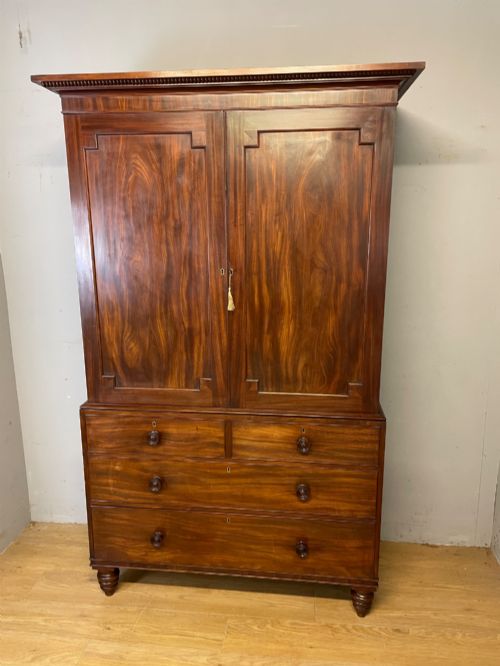
- A tall double-door cupboard containing sliding trays or shelves originally intended for storing textiles. These substantial pieces frequently sit on a base fitted with drawers.
- Flame Mahogany
- A veneer cut from the branch junctions of the mahogany tree to create a distinctive, flickering flame pattern. Cabinet makers reserved this highly decorative timber for prominent surfaces like drawer fronts.
- Bow Front
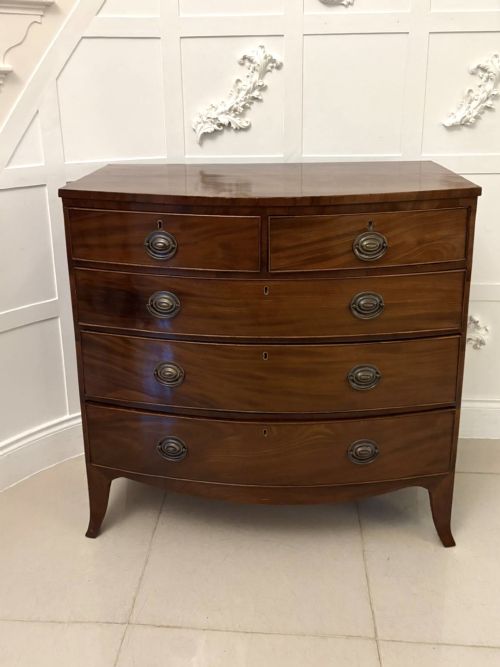
- A convex curved cabinet front popular during the Georgian period. This shaping softens the linear geometry of case furniture and requires skilled joinery.
Period Mahogany Cabinet: Frequently Asked Questions
How do I date a mahogany cabinet?
Dating relies on stylistic markers, construction methods, and timber characteristics associated with specific eras like the Georgian or Regency periods. Secondary woods and handle types also provide clues to the decade of manufacture.
Cabinet feet, cornice designs, and the presence of hand-cut dovetails help narrow down the age. Comparing the piece to documented examples from the same period confirms its chronological placement.
Where should I place a chiffonier?
A chiffonier fits well in a dining room, sitting room, or hallway where its low profile provides both surface display and concealed storage. The upper shelves suit books or decorative ceramics.
Keep the cabinet away from direct heat sources and strong sunlight to protect the polished mahogany surface and any veneer work. Regular placement in a stable indoor climate preserves the timber.
What is a secretaire bookcase?
A secretaire bookcase combines a glazed upper bookcase with a lower cabinet featuring a pull-down writing drawer. This dual purpose made it popular in libraries and studies.
The fitted interior usually contains small drawers and pigeonholes for correspondence. When closed, the piece maintains the clean appearance of a standard bookcase.
How do I care for antique mahogany?
Maintain antique mahogany by dusting with a soft, dry cloth and applying natural wax polish sparingly when the timber appears dry. Avoid silicone-based sprays that can penetrate the aged finish.
Maintain consistent room humidity to prevent the solid mahogany and veneer from splitting or warping. Gentle care preserves the patina developed over centuries.