



Period Library Shelves
These period library shelves bring warmth and architectural order to a room, offering sturdy housing for centuries of books.
Period Library Shelves
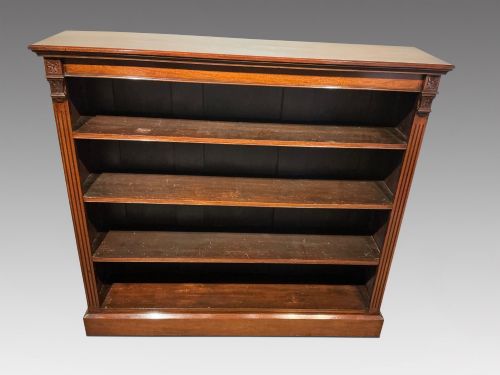
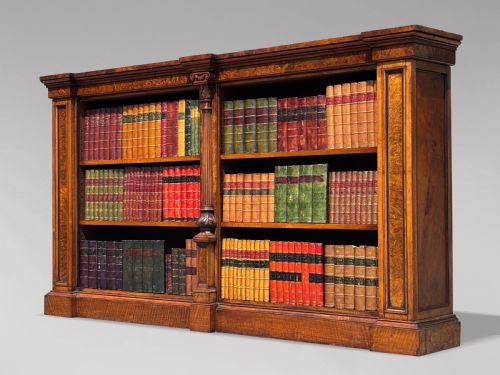
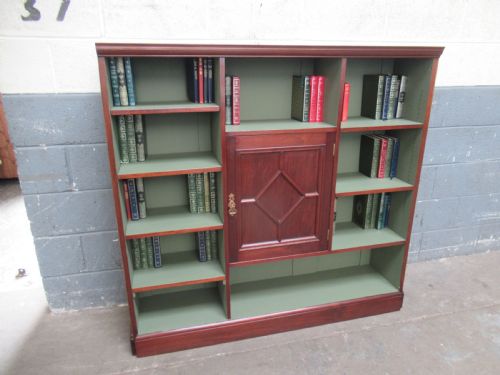
When you search for period library shelves, you encounter open bookcases, low open bookcases, and breakfront bookcases designed to hold significant volumes. These pieces provide immediate character to a study or sitting room through traditional proportions and timber construction.
The versions most commonly met on this page belong to the Regency, Victorian, William IV, and Edwardian eras. They appear primarily as open shelves, sometimes with low profiles or breakfront configurations that suit domestic spaces.
Makers fashioned these units to stand against walls, housing working collections rather than acting as pure display cabinets. Mahogany and rosewood predominate, frequently featuring adjustable shelving supported by brass fittings.
How they were made
Cabinet makers utilised dense hardwoods such as mahogany and rosewood, often applying flame mahogany veneer or burr walnut to prominent surfaces. Timber selection governed the visual weight of the piece, pairing structural pine or oak carcases with fine face veneers.
Construction techniques included dovetailed joints for stability and recessed brass tracks or pilasters for adjustable shelf heights. Metal elements like brass inlay and gallery rails added functional refinement to Regency and Victorian designs.
Period Library Shelves Retail Price Guide 2026
Typical asking prices for period library shelves among the pieces listed under this phrase on Sellingantiques today, from the lower quarter to the upper quarter. They describe what is for sale here now, not the wider market.
Current listings feature materials including mahogany, rosewood, burr walnut, and paint, spanning Regency, Victorian, William IV, and Edwardian periods.
What varies in quality
Quality rests in the choice of timber figure, such as rich flame mahogany or figured rosewood, alongside the crispness of applied mouldings. Superior examples display thoughtful grain matching across breakfront facades and drawer fronts.
The sophistication of the internal engineering marks the difference between standard production and finer commissions. Robust brass shelf supports and well-executed backboards demonstrate longevity and care in original manufacture.
The Period Library Shelves Glossary
- Breakfront
- A cabinet design where the central section projects forward from the flanking wings. This architectural arrangement creates depth and shadow on a library wall.
- Waterfall bookcase
- A set of open shelves that progressively deepens from top to bottom, following a stepped outline. It offers a lighter profile than standard rectilinear bookcases.
- Flame mahogany veneer
- A sliced timber finish showing a distinctive, flickering flame pattern derived from the fork of the mahogany tree. Cabinet makers used it to create dramatic focal points on doors and friezes.
- Simulated rosewood
- A painted or grained finish applied to a secondary timber to imitate the rich dark figuring of genuine rosewood. This technique provided a luxurious appearance with alternative materials.
Period Library Shelves: Frequently Asked Questions
What periods do these bookcases cover?
The listings span from the early nineteenth century through to the Edwardian era, encompassing Regency, William IV, and Victorian periods. Each era brings distinct proportions and decorative treatments to the woodwork.
Regency and William IV pieces often display rosewood and classical brass details, while Victorian examples lean towards substantial mahogany and burr walnut constructions.
Are the shelves adjustable?
Many period bookcases feature adjustable shelving systems, often utilising brass pegs or slotted uprights concealed within the interior sides. This adaptability allowed owners to accommodate volumes of varying heights.
Original mechanisms remain a desirable feature for collectors who value intact historical hardware.
How do I distinguish Regency from Victorian styles?
Regency pieces, dating from the early nineteenth century, frequently highlight rosewood, brass inlay, and restrained classical lines. They lean towards architectural symmetry and refined proportions.
Victorian pieces, emerging later in the century, often feature heavier mahogany or walnut timbers with deeper moulding profiles and robust structural forms.
How should I care for timber library shelves?
Maintain stable humidity and temperature in the room to prevent the solid hardwoods and veneers from splitting or warping. Keep them away from direct sunlight to preserve the depth of the natural wood tones.
Dust regularly with a soft, dry cloth and apply occasional appropriate wax feeds to nourish the polish.