




Period Library Furniture
Period library furniture brings together mahogany bookcases, rosewood tables and leather armchairs designed for serious study and quiet reading.
Period Library Furniture
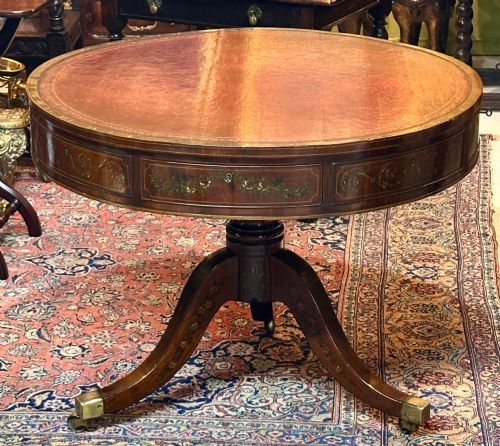
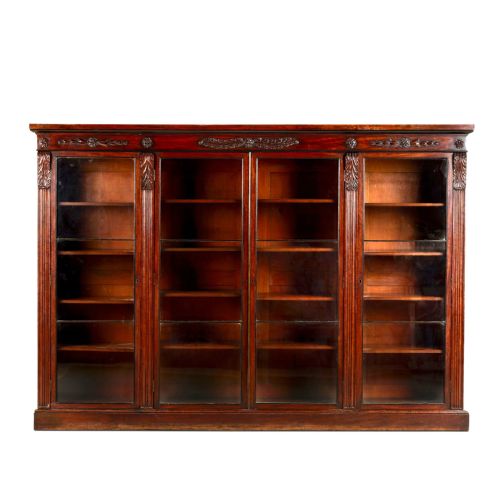
Period library furniture encompasses large breakfront bookcases, partners desks, drum tables and metamorphic library chairs designed for domestic study spaces. These items date primarily from the Georgian, Regency and Victorian eras, reflecting the evolving needs of historical home scholars.
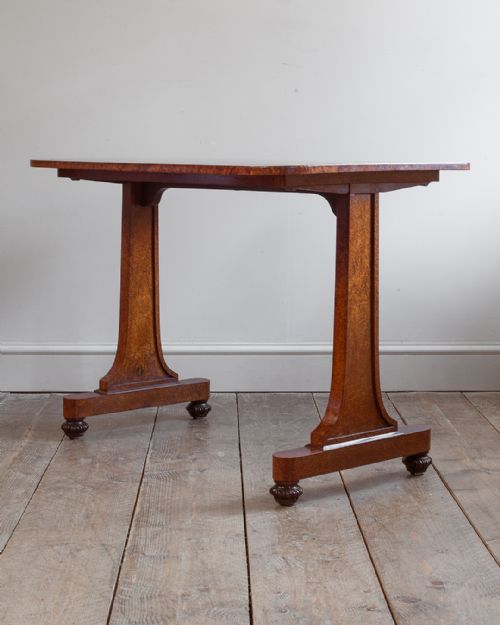
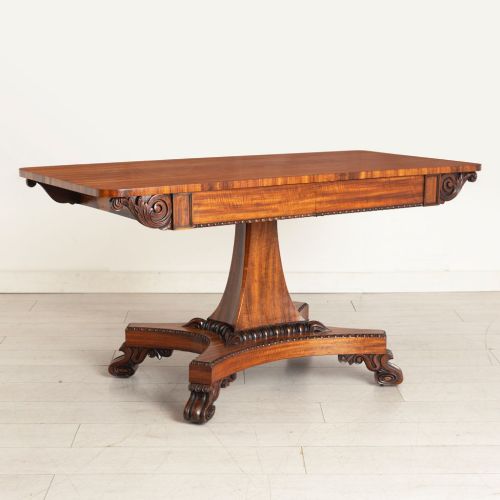
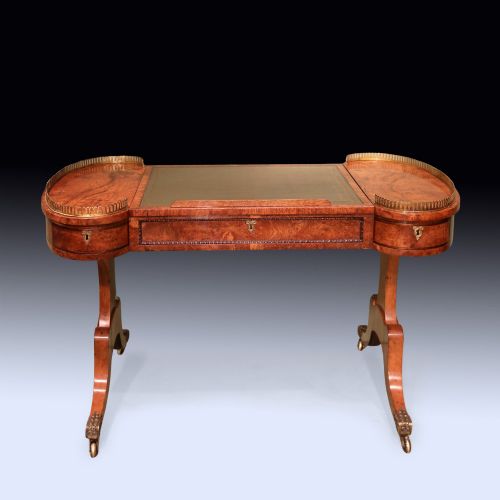
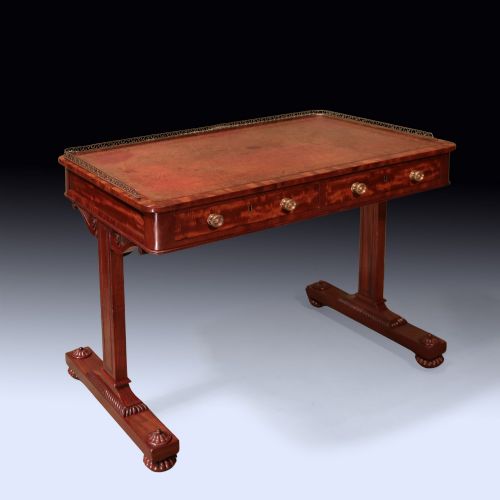
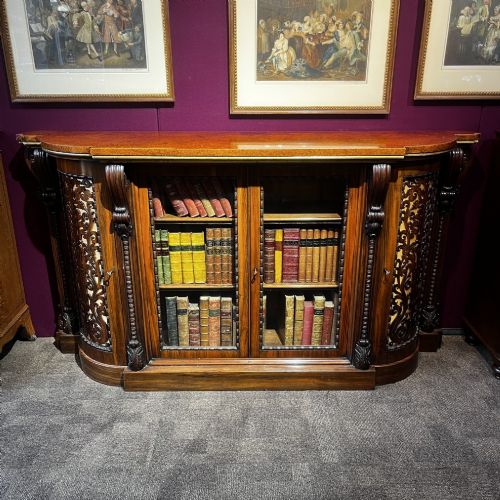
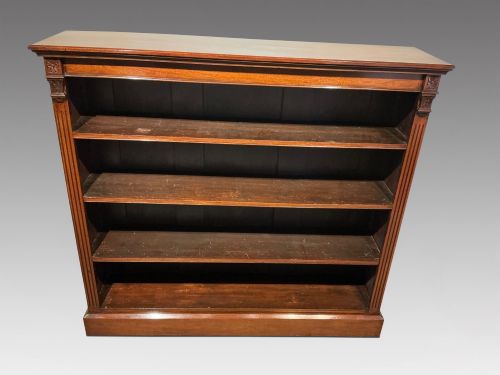
Mahogany and rosewood feature heavily across open bookcases, writing tables and sofa tables, often detailed with brass inlay or cane inserts. Pieces span styles from George III and Sheraton through to William IV and early Victorian craftsmanship.
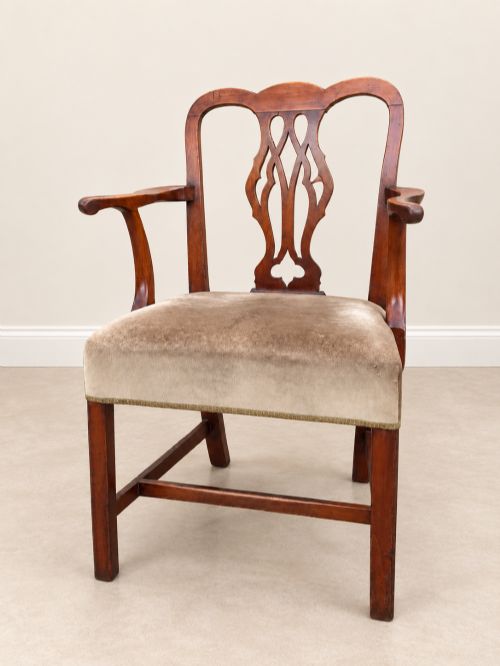
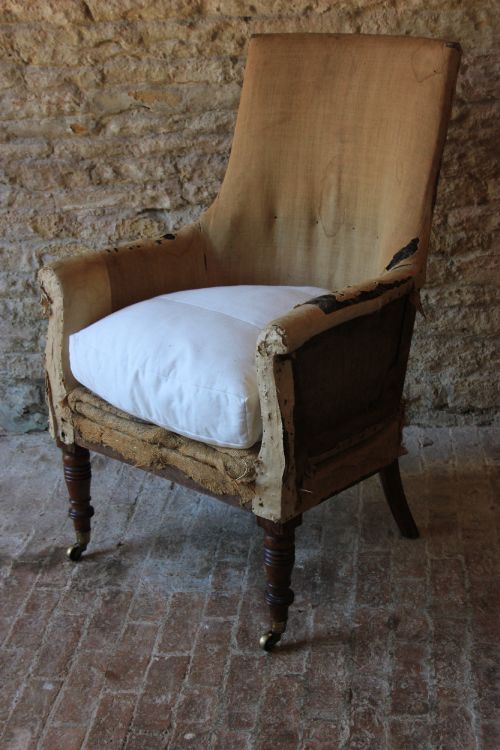
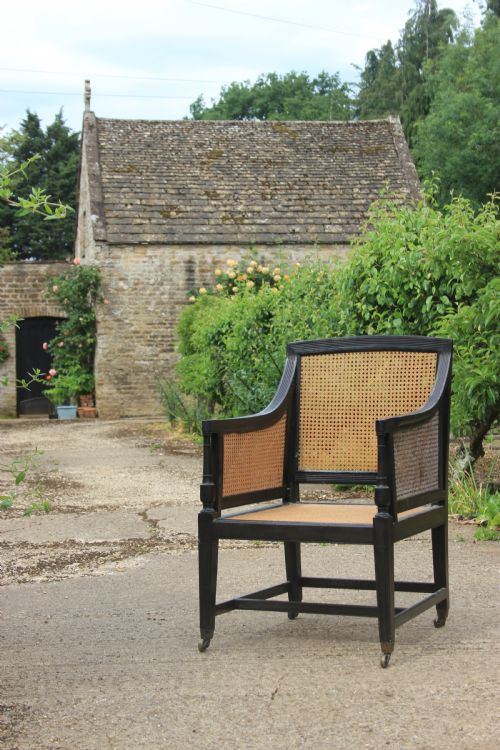
Armchairs and bergères frequently incorporate leather or velvet upholstery alongside solid mahogany, burr oak or ebonised wood frames. The selection centres on functional furniture built for reading, writing and holding extensive book collections.
Materials and Construction
Cabinet makers utilised dense hardwoods such as mahogany, rosewood and gonçalo alves, alongside decorative veneers like burr oak and amboyna. These primary timbers provided the structural stability required for heavy bookcases and large partners desks.
Brass inlay, cut brass details and glass panel doors frequently accent the woodwork on Regency tables and bookcases. Secondary materials include cane for seating inserts and leather or velvet panels for writing surfaces.
Some chairs double as wooden staircases, letting scholarly readers climb their own furniture to reach top-shelf poetry.
Indicators of Quality
Excellence in these pieces rests upon the selection of timber figures, such as highly grained rosewood or burr oak, paired with precise joinery. Superior examples maintain crisp carving on solid wood components and restrained, well-executed brass inlay.
Proportion and structural honesty separate standard utilitarian items from finer library pieces. Thoughtful integration of functional mechanisms, such as metamorphic library steps or well-fitted desk drawers, marks the upper tier of craftsmanship.
Gillows·Morgan and Sanders
The Period Library Furniture Glossary
- Partners desk
- A large double-sided desk designed so two people could work opposite one another, featuring drawers on both faces. These pieces were standard in large institutional and domestic libraries.
- Bergère
- An enclosed upholstered armchair with wooden sides, often caned, popular during the Regency period. They provide deep, supportive seating suited to long hours of reading.
- Gonçalo Alves
- A dense tropical hardwood with striking contrasting dark brown and golden-brown figuring. Cabinet makers utilised this exotic timber for high-status Regency library tables and bookcases.
- Metamorphic chair
- A dual-purpose piece of furniture engineered to transform from a library armchair into a set of library steps. This clever design aided access to upper bookshelves.
- Breakfront
- A bookcase or cabinet facade where the central section projects forward from the flanking wings. This architectural arrangement creates depth and visual balance in large rooms.
Period Library Furniture: Frequently Asked Questions
What defines period library furniture?
These items comprise desks, bookcases, reading tables and seating created during the Georgian, Regency and Victorian eras. They utilise dense timbers and functional designs tailored for organising books and manuscripts.
Such pieces reflect the scholarly pursuits of their time, prioritising durable hardwoods like mahogany and rosewood alongside practical writing surfaces and deep shelving.
How do I care for leather desk inserts?
Leather writing surfaces require gentle cleaning with a damp cloth and occasional treatment with appropriate leather dressings to prevent cracking. Avoid harsh chemical cleaners that strip natural dyes and patination.
Keep these surfaces away from direct sunlight and excessive moisture to maintain the supple texture of the hide over decades of use.
Where should I place a partners desk?
A partners desk is finished on all four sides, making it ideal for the centre of a room rather than pushed against a wall. This placement allows access to drawers and writing space from both directions.
Ensure adequate clearance around the desk for chairs to pull out fully, accommodating its substantial proportions within the room layout.
How can I distinguish Regency from Victorian pieces?
Regency items, produced in the early nineteenth century, frequently feature classical restraint, brass inlay, rosewood, and clean architectural lines. Cabinet work from this era often draws inspiration from ancient Greek and Roman forms.
Victorian pieces tend to be heavier in scale, incorporating darker woods, elaborate carving, and denser ornamentation that reflects later nineteenth-century industrial capabilities.