

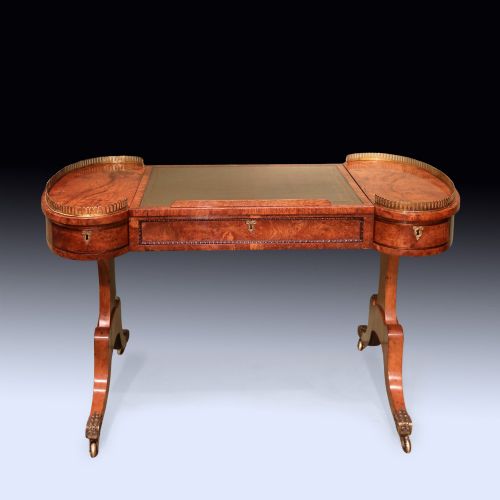
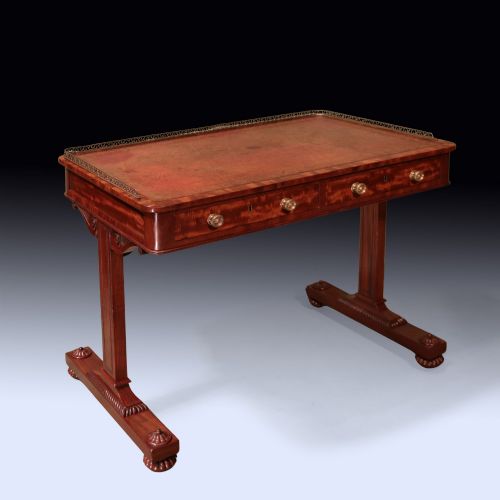
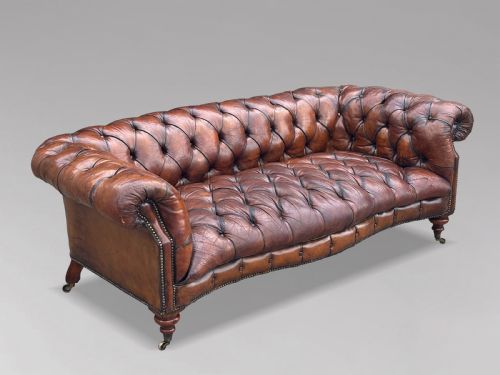


Period Leather Sofa
These period leather sofa examples offer classic seating crafted with fine wood frames and traditional hide upholstery.
Period Leather Sofa
A period leather sofa brings nineteenth-century seating into a room, combining substantial timber frames with upholstery of genuine hide. These items reflect the craftsmanship of eras including the Regency, William IV, George IV, and Victorian periods.
The versions most commonly met on this page span the nineteenth century, taking forms such as the Chesterfield sofa and upholstered settees. They often feature robust woods like mahogany, rosewood, burr oak, and goncalo alves.
Each piece serves as a functional seat while displaying the distinct decorative vernacular of its decade, from carved herms to bold structural scale.
How they were made
Makers utilised dense timber species such as mahogany, rosewood, and burr oak to construct sturdy frames capable of supporting heavy upholstery. These woods were frequently polished to a high sheen, highlighting natural grain patterns.
Upholstery relied on quality leather hides, fitted closely to the frame and occasionally accented with brass details or inlay work. Skilled cabinetmakers shaped structural elements like carved herms and curved supports by hand.
Period Leather Sofa Retail Price Guide 2026
Typical asking prices for period leather sofa among the pieces listed under this phrase on Sellingantiques today, from the lower quarter to the upper quarter. They describe what is for sale here now, not the wider market.
Listings for this phrase exclusively feature nineteenth-century items, spanning the Regency, William IV, George IV, and Victorian periods.
What varies in quality
The standard of execution in the timber frame dictates much of the distinction, separating straightforward construction from ambitious sculptural forms. Pieces featuring intricate carvings, brass inlay, or exotic woods such as goncalo alves sit at the upper end of the scale.
The integrity and preservation of the leather upholstery also define the standing of a piece. Original hide showing appropriate patination holds greater distinction than extensive modern replacements.
Robert Strahan & Co
The Period Leather Sofa Glossary
- Chesterfield
- A traditional style of upholstered sofa characterised by deep buttoning and rolled arms of equal height. This form has remained a staple of nineteenth-century seating.
- Regency
- A stylistic period spanning the early nineteenth century, known for classical motifs and refined proportions. Furniture from this era often incorporates brass inlay and exotic timbers.
- Mahogany
- A durable tropical hardwood widely utilised by nineteenth-century cabinetmakers for its rich colour and stability. It forms the structural basis of many tables and seating frames.
- Herm
- A sculpted bust or figure tapering from the waist down, often integrated into the wooden supports or armrests of seating. This decorative element draws directly on classical antiquity.
Period Leather Sofa: Frequently Asked Questions
What defines a period leather sofa?
A period leather sofa is a nineteenth-century seating item constructed from woods like mahogany or oak and upholstered in genuine leather. These pieces originate from specific design eras including Regency and Victorian.
They combine robust framing with traditional upholstery techniques, often featuring distinct stylistic ornaments such as deep buttoning or carved wooden supports.
How do I care for nineteenth-century leather?
Nineteenth-century leather requires gentle cleaning and regular conditioning to maintain the hide's flexibility and prevent cracking over time. Avoiding direct sunlight and excessive heat is essential for preserving the historic material.
Applying specialised leather balms helps retain the natural oils without damaging the historic patination accumulated across the decades.
How can I tell the Regency period from the Victorian?
Regency pieces typically date from the early decades of the nineteenth century and lean heavily on classical lines, brass inlay, and exotic timbers like rosewood. They often display restrained elegance and archaeological motifs.
Victorian items, emerging later in the century, frequently showcase bolder proportions and heavier upholstery styles such as the Chesterfield. The decorative carving tends to be more exuberant and varied.
Where should I place a large settee?
A large nineteenth-century settee requires sufficient floor space to allow its structural form and carved wooden details to remain fully visible. Positioning it away from direct heat sources protects both the timber frame and the leather upholstery.
These substantial items anchor a room effectively when paired with complementary library tables or writing desks from the same era.