






Period Grandfather Clock
These tall cases house precision timekeeping, bringing measured weight and architectural timber into a room.
Period Grandfather Clock
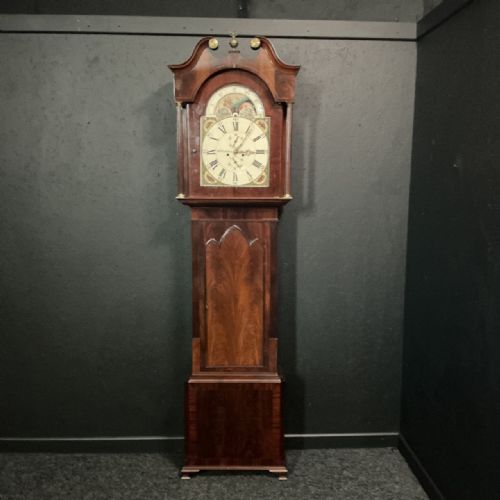
A period grandfather clock stands tall on the floor, enclosing a pendulum and weights that drive the dial. These tall timepieces appear most frequently in oak or mahogany timber.
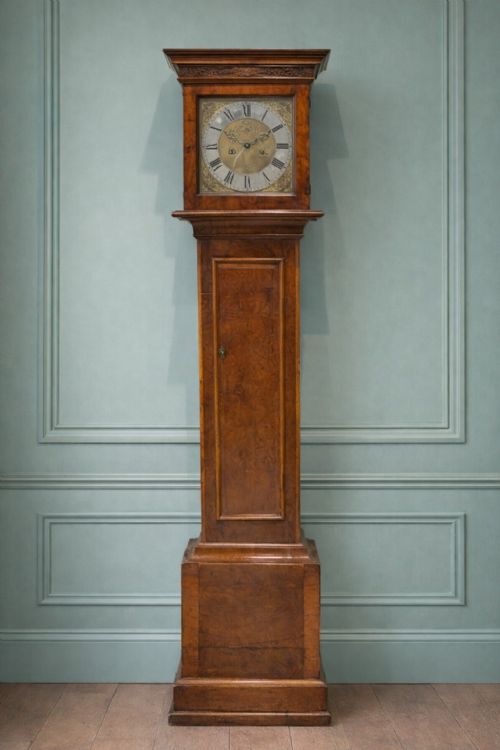
The material evidence shows pieces spanning the seventeenth century through to the middle of the nineteenth century. Oak and mahogany dominate the examples, accompanied by walnut and burr elm.
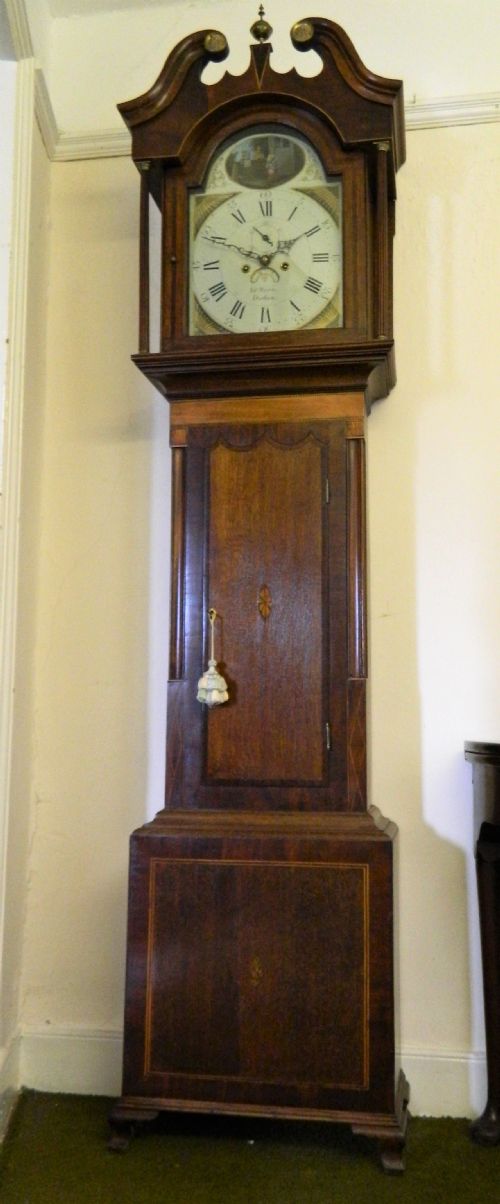
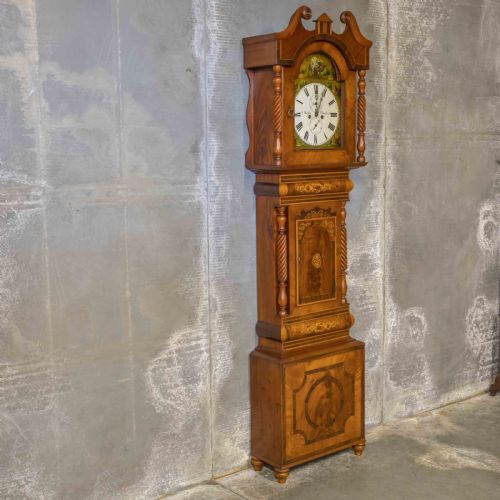
The formal variation ranges from plain architectural oak cases to refined George III mahogany examples and Queen Anne walnut pieces. Certain forms arrive in smaller proportions while others carry lancet tops or chequered inlaid decoration.
Materials and construction
Woodworkers built the tall cases using solid timbers of oak, mahogany, walnut, and burr elm, occasionally applying ebonised wood details. Carpenters joined these panels to house the movement safely away from dust and drafts.
Dials combine brass chapter rings and painted iron faces protected behind glass panels. Makers shaped the metals for the internal movements and mounted them within the timber housings.
Period Grandfather Clock Retail Price Guide 2026
Typical asking prices for period grandfather clock among the pieces listed under this phrase on Sellingantiques today, from the lower quarter to the upper quarter. They describe what is for sale here now, not the wider market.
Listings feature oak, mahogany, walnut, and burr elm timber housings alongside brass and painted iron dials.
Distinctions in standard
The choice of cabinet timber creates the primary tier of distinction, moving from utilitarian oak towards figured mahogany, walnut, and burr elm veneers. Finer executions incorporate decorative elements such as chequered inlaid patterns.
Joseph Saer·Williams·Raine of Durham
The Period Grandfather Clock Glossary
- Longcase clock
- The formal term for a grandfather clock, describing the tall wooden case that encloses the movement, weights, and pendulum. This housing protects the mechanics while displaying the dial at eye level.
- Dial
- The face of the clock where the hours and minutes are read. These surfaces utilise brass or painted iron.
- Chapter ring
- The circular band on the dial bearing the numerals for the hours. This component is typically formed of brass.
- Lancet top
- An architectural arched pediment shape crowning the top of the clock case. This form appears on specific mahogany examples.
Period Grandfather Clock: Frequently Asked Questions
What is a period grandfather clock?
A tall floor-standing timepiece enclosed in a timber case with a swinging pendulum and hanging weights. These clocks measure time through mechanical movements housed within architectural wooden bodies.
They appear across several centuries from the seventeenth to the nineteenth century, constructed in materials like oak, mahogany, and walnut.
How do I tell oak from mahogany cases?
Oak displays a distinct visible grain with prominent medullary rays, often appearing in earlier Georgian or seventeenth-century pieces. It carries a robust and heavier texture.
Mahogany presents a smoother, deeper reddish-brown surface which became prevalent during the Georgian period and later centuries.
Where were these clocks placed?
These tall timepieces stood in hallways, stairwells, or principal living rooms where their striking mechanism could be heard throughout the house. Their height required adequate ceiling clearance.
Positioning them against a stable interior wall ensured the pendulum swung without interference from uneven floors.
What periods do these clocks cover?
The evidence spans from the seventeenth century through the Queen Anne, William and Mary, and Georgian eras, extending into the mid-nineteenth century around eighteen fifty.
Styles shift from early oak and walnut forms to later refined mahogany cases with painted iron dials and lancet tops.