

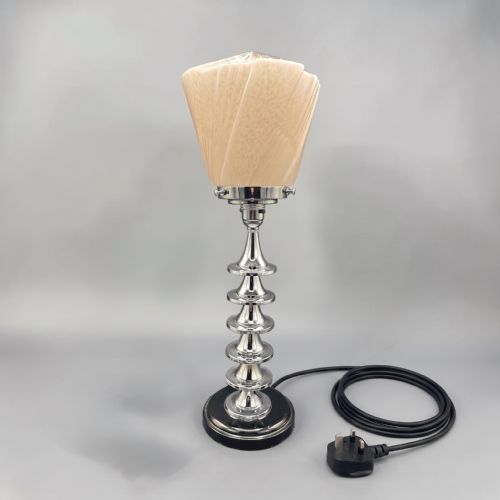
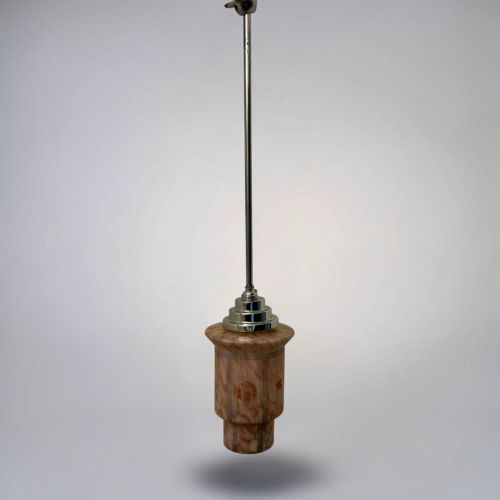
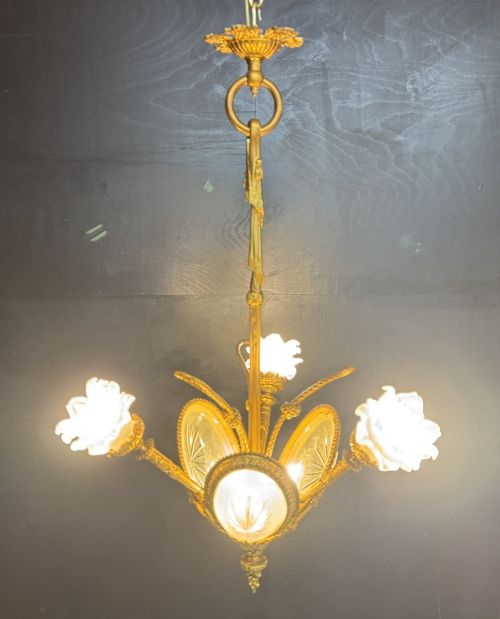
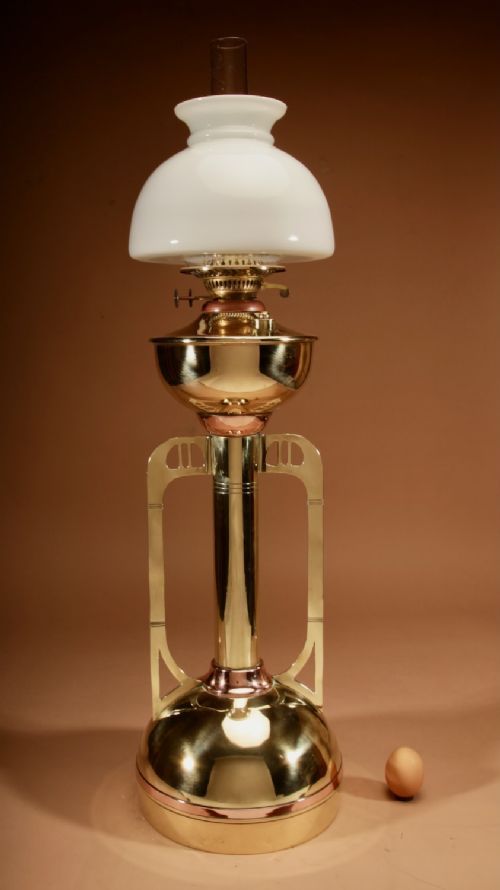
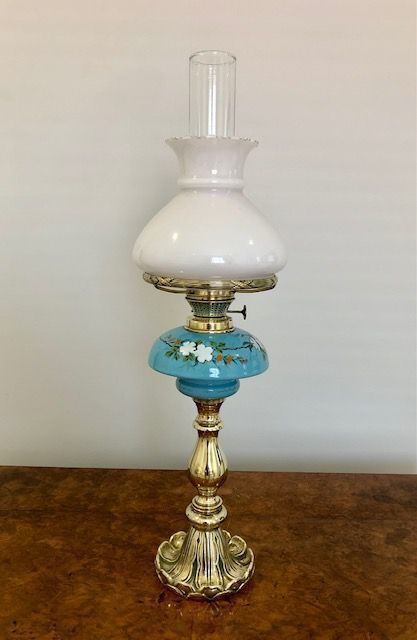


Period Glass Shade
These period glass shade examples bring genuine historical character and diffused light to a room, making them essential for a thoughtful interior.
Period Glass Shade
When you search for period glass shade, you find fittings designed for oil lamps, wall sconces, ceiling lights, and pendants. These items survive from the nineteenth century, the Edwardian era, and the art deco period.
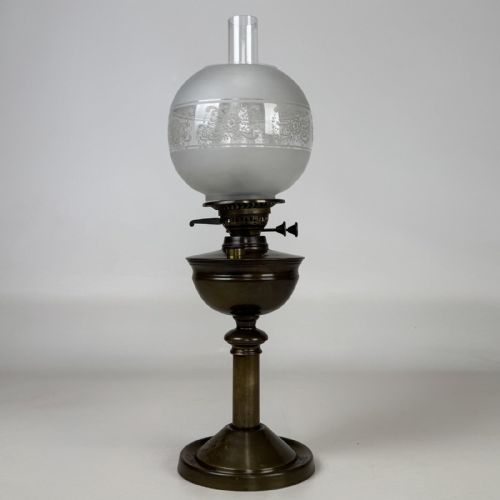
The most common versions met on this page are Victorian brass oil lamps and ceiling lighting featuring etched, frosted, or cut glass. They appear across styles ranging from Gothic Revival and French Louis XVI to Art Nouveau and Secessionist designs.
How they were made
The makers formed the shades from blown, moulded, frosted, opaline, or cut glass, pairing them with mounts of brass, copper, or silver plate. Gilt bronze and ormolu also appear on finer French and English frames.
Metalwork involved casting, spinning, and hand-finishing, while glass production relied on traditional blowing and mould-pressing techniques to achieve the desired thickness and surface texture.
Period Glass Shade Retail Price Guide 2026
Typical asking prices for period glass shade among the pieces listed under this phrase on Sellingantiques today, from the lower quarter to the upper quarter. They describe what is for sale here now, not the wider market.
Listings feature items from the Victorian, Edwardian, and Art Deco periods, constructed using brass, copper, silver plate, and various types of glass.
What varies in quality
Quality rests in the crispness of the metal casting and the weight and clarity of the glass. Heavier brass frames and deeply cut or evenly frosted glass indicate superior workmanship.
Proportion and decorative detail dictate the hierarchy, where finely detailed mounts and well-balanced forms stand apart from simpler utility pieces.
Gustave Serrurier Bovy·F&C Osler
The Period Glass Shade Glossary
- Frosted glass
- Glass treated to scatter light and reduce transparency, often achieved by acid etching or sandblasting. This finish softens the glare from early oil or electric light sources.
- Opaline glass
- An opaque, milky-white glass popular in nineteenth-century lighting and decorative objects. It diffuses a soft, even glow across the room.
- Ormolu
- Gilt bronze mounts used on decorative light fittings, particularly those of French origin. The technique gives a rich gold appearance to the metal surface.
- Secessionist
- A stylistic movement from around 1900 characterised by geometric forms and rejection of traditional historicism. It bridges late nineteenth-century design and Art Deco.
Period Glass Shade: Frequently Asked Questions
What periods do these shades cover?
The selection spans the nineteenth century, Victorian era, Edwardian period, and the nineteen thirties. Each era brings distinct stylistic traits to the glass and metal mounts.
You will encounter designs influenced by Gothic Revival, French Louis XVI, Art Nouveau, and Secessionist movements.
How were these light fittings originally used?
They served as functional illumination in homes, burning paraffin in oil lamps or holding early electric bulbs in pendants and wall sconces. Many hung in hallways, antechambers, and principal living rooms.
Their primary purpose was to provide both practical illumination and decorative elegance to domestic interiors.
How do I live with period lighting?
Integrating these pieces into a modern interior requires careful consideration of wiring and ceiling heights. Many are adaptable for contemporary electrical standards while retaining their historical fixtures.
Positioning them as central ceiling lights or statement wall sconces allows the glass texture to become a focal point in the room.
How do I tell Victorian pieces from later styles?
Victorian examples often feature heavier brass oil lamp structures and ornate floral or frosted glass shades. They lean towards traditional forms and rich ornamentation.
Later Edwardian and nineteen thirties pieces show cleaner lines, cut glass details, or geometric art deco patterns that reflect changing industrial aesthetics.