



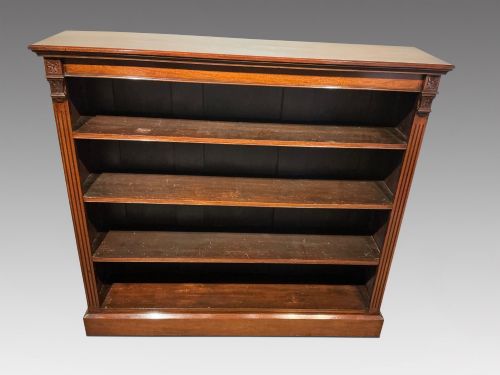


Period Furniture Shelving
Period furniture shelving encompasses versatile timber bookcases, multi-tiered étagères, and hanging wall shelves designed to organise and display books and objects.
Period Furniture Shelving
When you search for period furniture shelving, you encounter timber storage units designed to hold books and display decorative objects across domestic interiors. These pieces span centuries of design, reflecting the changing tastes of Georgian, Regency, and Victorian households.
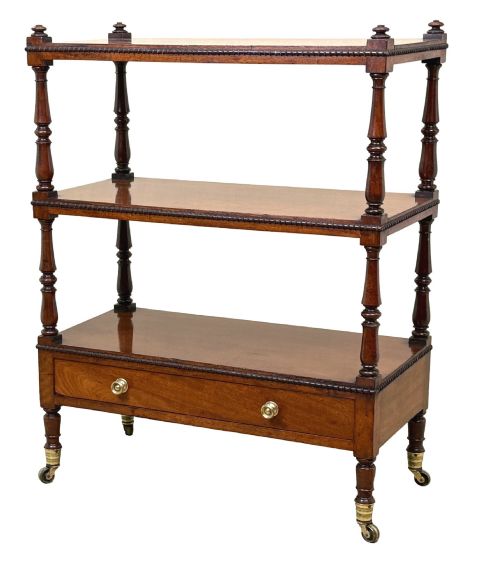
The most common formats on this page are mahogany whatnots, tiered étagères, and open bookcases originating from the Regency and Victorian eras. Makers constructed these items in various heights, from low hanging wall shelves to tall floor-standing bookcases and cabinets.
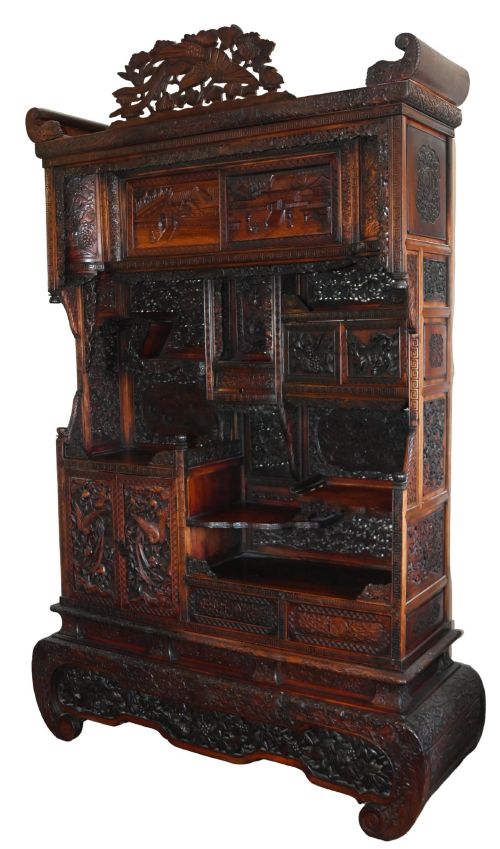
Originating from British and continental workshops, these items served practical storage functions in parlours, libraries, and drawing rooms. Alongside traditional European hardwoods, the selections include Japanese lacquer and bamboo cabinets from the Meiji period.
Materials and construction
Cabinetmakers relied heavily on dense hardwoods like mahogany, rosewood, walnut, and oak to build sturdy shelving units capable of supporting heavy volumes. Workshops frequently utilised brass for gallery rails, castors, and decorative mounts on finer Regency étagères.
Surface treatments ranged from clear French polishing that highlighted the natural grain of mahogany and rosewood to elaborate hand-carved details and parcel gilding. Simulating exotic timbers and applying lacquer finishes allowed makers to achieve desired aesthetic effects across different regional traditions.
Period Furniture Shelving Retail Price Guide 2026
Typical asking prices for period furniture shelving among the pieces listed under this phrase on Sellingantiques today, from the lower quarter to the upper quarter. They describe what is for sale here now, not the wider market.
The inventory encompasses diverse object types, ranging from multi-tiered étagères and whatnots to Japanese display cabinets.
Markers of construction quality
Superior examples distinguish themselves through the selection of tightly grained timber veneers and solid secondary woods that provide structural stability without excess weight. Expert joinery in the assembly of tiers, drawers, and upright supports ensures longevity and smooth daily operation.
Refined decorative elements, such as finely turned columns, crisp brass inlay, and well-executed carvings, separate standard utility pieces from high-status furniture. The depth of colour and patination achieved through traditional polishing techniques further indicate the original tier of manufacture.
The Period Furniture Shelving Glossary
- Whatnot
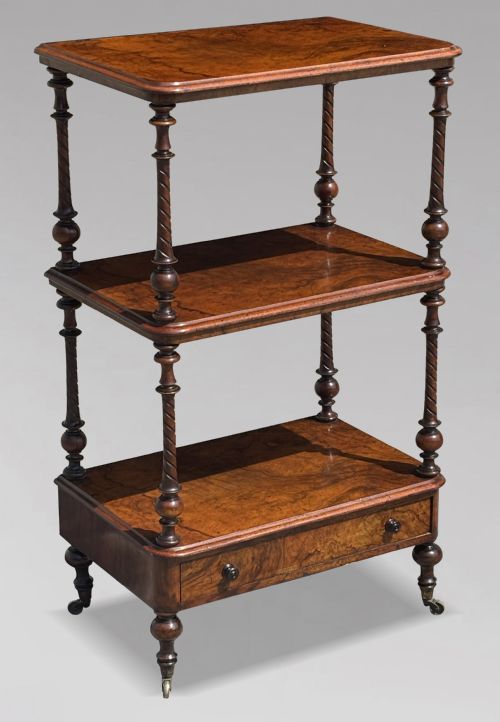
- An open multi-tiered piece of furniture designed for displaying ornaments, books, or collections. These typically feature three or more shelves supported by slender upright columns.
- Étagère
- A French term for a set of open shelves used for display, closely related to the English whatnot. They appear frequently in Regency and Victorian interiors.
- Waterfall bookcase
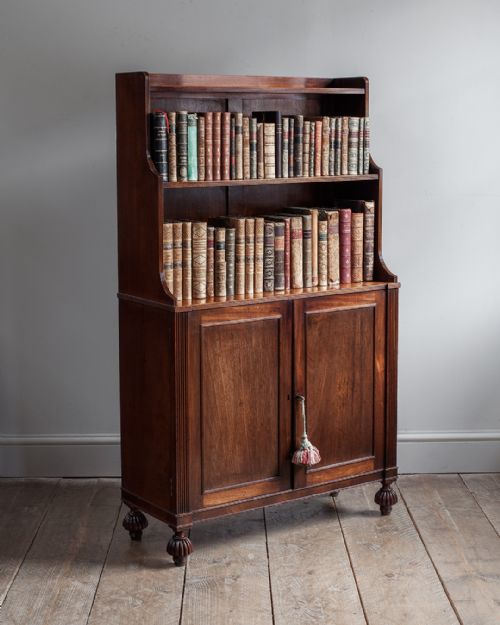
- A graduated set of open shelves where each tier steps back from the one below, creating a silhouette resembling a falling stream of water.
- Breakfront
- A cabinet or bookcase whose central section projects forward from the flanking outer sections. This architectural arrangement creates depth and visual interest in larger floor pieces.
- Parcel-gilt
- Partially gilded with gold leaf or paint to highlight specific carved details, mouldings, or decorative motifs on wood furniture.
Period Furniture Shelving: Frequently Asked Questions
What is a whatnot used for?
Whatnots served as versatile display stands in nineteenth-century drawing rooms for holding small decorative items, ceramics, and books. Their open tiered design allowed owners to exhibit collections within easy reach.
Over time, these pieces adapted to various domestic settings, functioning as bedside stands, side tables, or auxiliary library storage depending on their height and tier count.
How do I identify a Regency bookcase?
Regency bookcases typically feature classical proportions, elegant brass gallery rails, and rich mahogany or rosewood veneers. Many examples incorporate turned columns or pilasters reflecting the influence of Greek and Roman revival architecture.
Makers of this period also produced waterfall bookcases and open shelving units with integrated cupboards or dummy book spines concealed on cabinet doors.
Where should I place period shelving?
Period shelving units suit studies, living rooms, and hallways where they can safely accommodate books or display ornaments away from direct heat sources. Hanging wall shelves require secure wall fixings to support the weight of timber and volumes.
Maintaining stable room humidity preserves the integrity of nineteenth-century veneers and polished wood surfaces against cracking or warping.
What is the difference between an étagère and a bookcase?
An étagère is primarily designed for open display with multiple accessible tiers for ornaments and small objects. A bookcase focuses on housing bound volumes, often featuring enclosed cabinets beneath or adjustable shelving.
Many listings blur these distinctions by offering pieces that combine open display tiers with lower cupboards or side cabinet storage.