



Period Footstool Seat
A period footstool seat grounds a room with low, solid presence, offering quiet utility and rich timber beneath tactile upholstery.
Period Footstool Seat
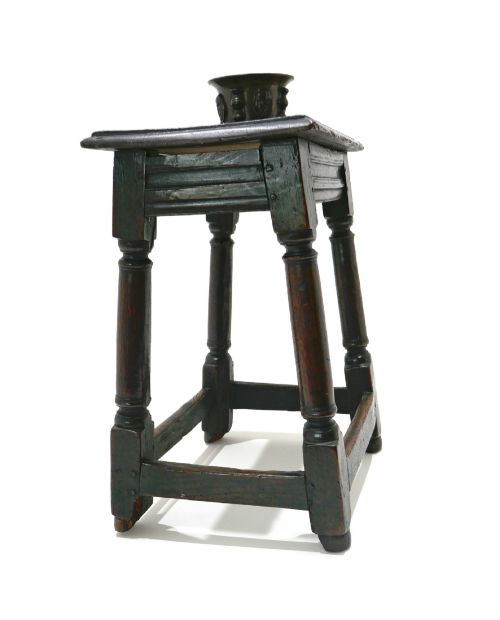
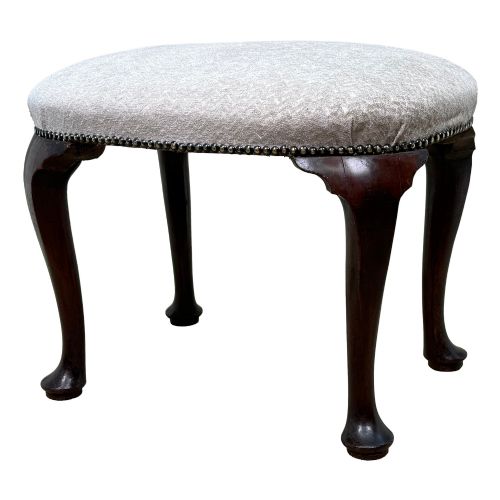
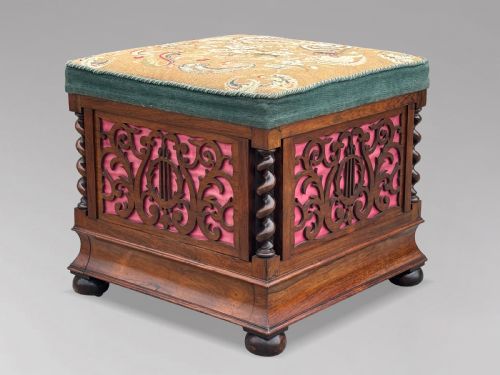
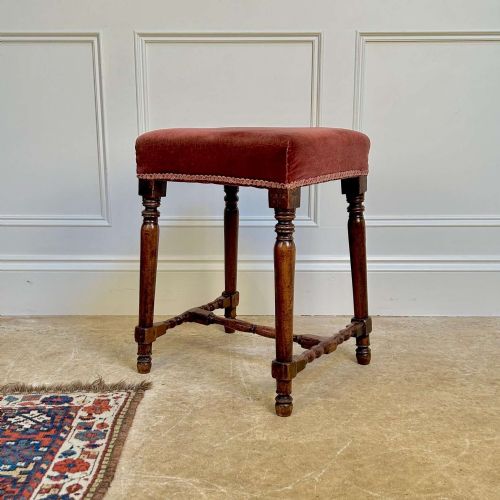
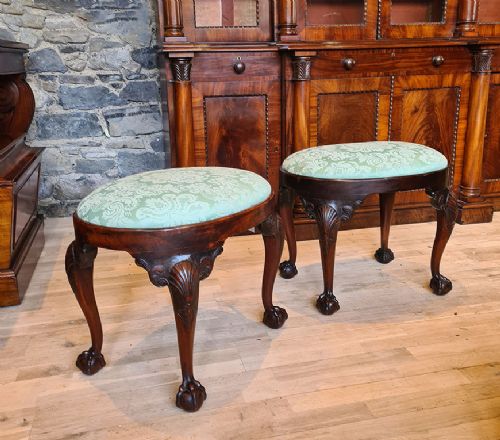
When you search for a period footstool seat, you encounter low timber supports designed to elevate feet or provide auxiliary seating, drawing from centuries of domestic craftsmanship. These range from sturdy 17th-century joint stools in oak to elegant Regency rosewood designs and walnut Queen Anne examples.
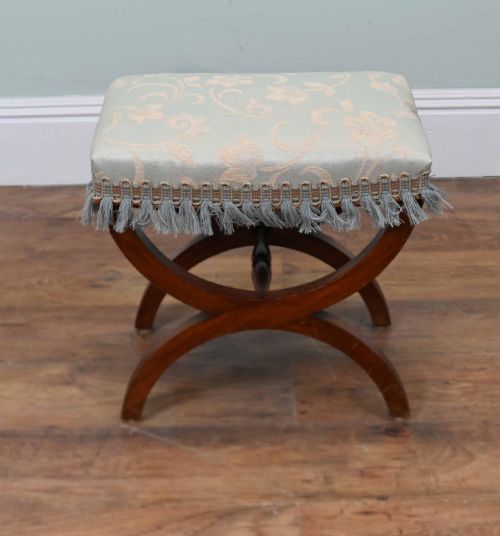
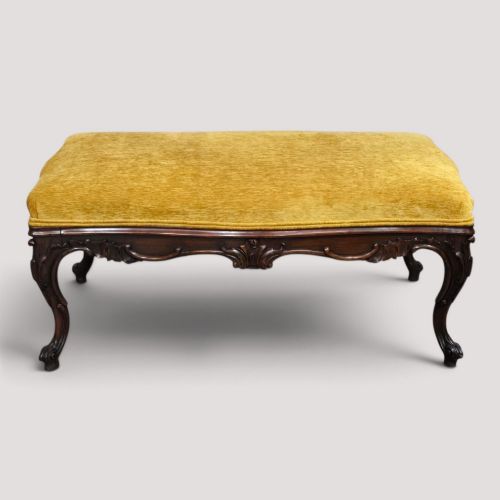
The most common pieces on this page are 19th-century interpretations and earlier forms fashioned from mahogany, rosewood, and oak. You will find various formats including dressing table stools, piano stools, ottomans, and X-frame supports.
Originating across British, French, Irish, and Swedish workshops, these pieces reflect the shifting formal tastes of the Georgian, Victorian, and Jacobean eras. Their survival testifies to the enduring utility of compact seating within the domestic interior.
How they were made
Makers shaped these supports primarily from dense hardwoods like mahogany, walnut, oak, and rosewood, often combining structural timber frames with turned or carved legs. Joinery methods such as mortise and tenon ensure the stability of early oak forms, while later pieces employ sophisticated veneering and curving.
Upholstery forms a vital component, utilising traditional textiles, leather, and floral trellis tapestry over supportive stuffing. Details such as brass mounts, ebonizing, and gilt accents further distinguish the execution of specific Victorian and Regency pieces.
Period Footstool Seat Retail Price Guide 2026
Typical asking prices for period footstool seat among the pieces listed under this phrase on Sellingantiques today, from the lower quarter to the upper quarter. They describe what is for sale here now, not the wider market.
Listings span from the 17th century through the early 20th century, encompassing oak, walnut, mahogany, and rosewood.
What varies in quality
The distinction between standard examples and superior pieces rests on the crispness of timber carving, the integrity of the original frame construction, and the harmony of proportions. Finer items exhibit thoughtful detailing such as shaped aprons, precise joint work, and well-chosen grain figures.
The survival of authentic period upholstery or sympathetic historical re-covering adds significant character to a piece. Conversely, heavy alterations or mismatched timber elements diminish the integrity of the design.
I.M. Gillows of Lancaster
The Period Footstool Seat Glossary
- Joint Stool
- A sturdy wooden stool constructed with mortise and tenon joints rather than turned legs glued into holes. These early forms date primarily to the seventeenth century.
- X-Frame
- A structural furniture design where intersecting diagonal timbers form an X shape beneath the seat. This form appears frequently in Regency and revival styles.
- Ebonised
- Wood treated with a chemical or dark finish to imitate the appearance of ebony. This technique gained prominence during the Victorian aesthetic period.
- Tapestry
- A heavy hand-woven or needlepoint textile used for upholstery. These decorative panels frequently feature floral or geometric patterns on period seats.
- Ottoman
- A low, upholstered seat without arms or a back, designed for resting feet or sitting. Nineteenth-century examples often feature waisted or rectangular proportions.
Period Footstool Seat: Frequently Asked Questions
What is a joint stool?
A joint stool is an early form of wooden seating constructed with pegged mortise and tenon joints, built for heavy domestic use before chair seating became universal.
These pieces offer exceptional structural stability and serve well as compact side tables or occasional seats in modern rooms.
How do I style a footstool seat?
Place a low timber stool beside a fireside armchair, beneath a dressing table, or as a standalone accent piece in a hallway. Their compact proportions allow them to tuck easily beneath console tables when not in active use.
Allow the grain of the mahogany or walnut and the texture of the tapestry top to contrast against modern upholstery.
How do I tell an 18th-century stool from a 19th-century copy?
Examination of the timber undersides, tool marks, and construction techniques reveals the age of the frame. Earlier pieces display hand-cut joinery and mature timber oxidation.
Nineteenth-century makers frequently revived earlier George I or Queen Anne styles, producing faithful interpretations with distinct nineteenth-century secondary woods.
Can I use an antique footstool for everyday seating?
Most period footstools and dressing table stools were built to bear weight and function reliably for daily domestic tasks. Regular use keeps the timber conditioned and integrates the antique naturally into daily life.
Inspect the frame stability periodically to ensure dry household environments have not loosened the historic joints.