





Period Fold Over Table
A period fold over table brings dual-purpose ingenuity to a room, shifting seamlessly from a compact console to a broad surface for cards or tea.
Period Fold Over Table
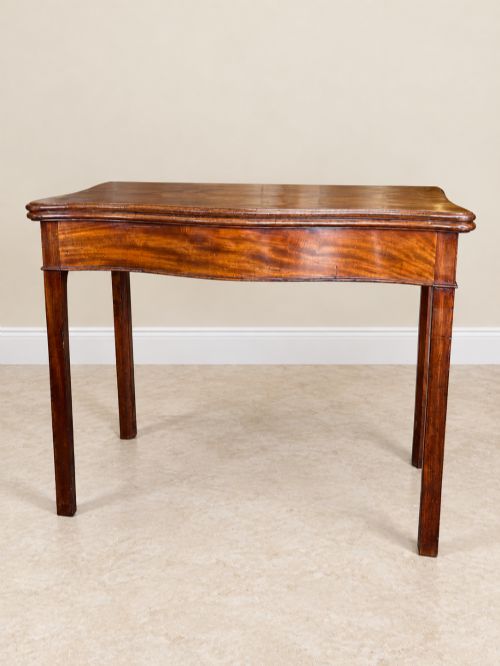
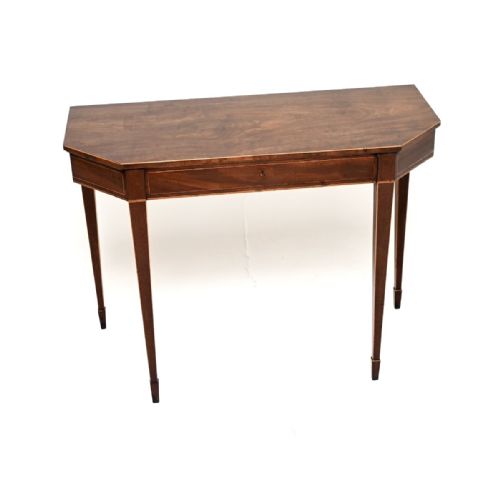
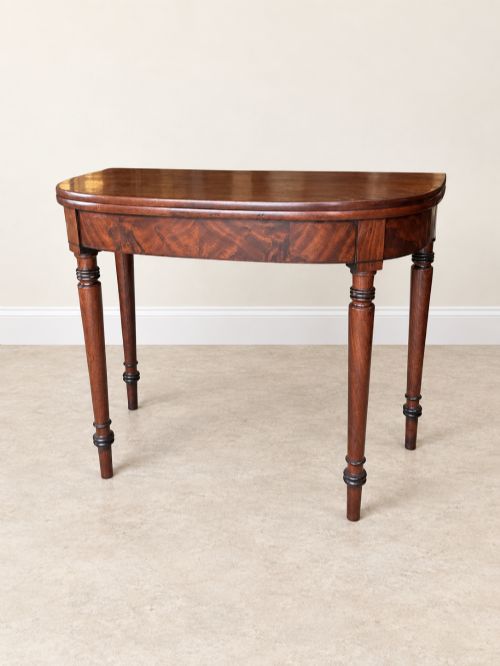
A period fold over table serves as a versatile furniture form designed to double its top surface when opened, functioning primarily as card tables, tea tables, and games tables. These pieces span the eighteenth and nineteenth centuries, encompassing Georgian, Regency, and William IV eras.
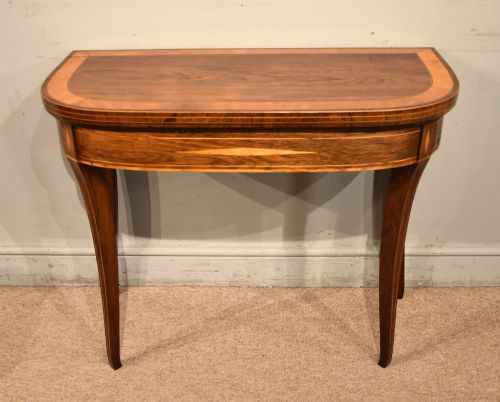
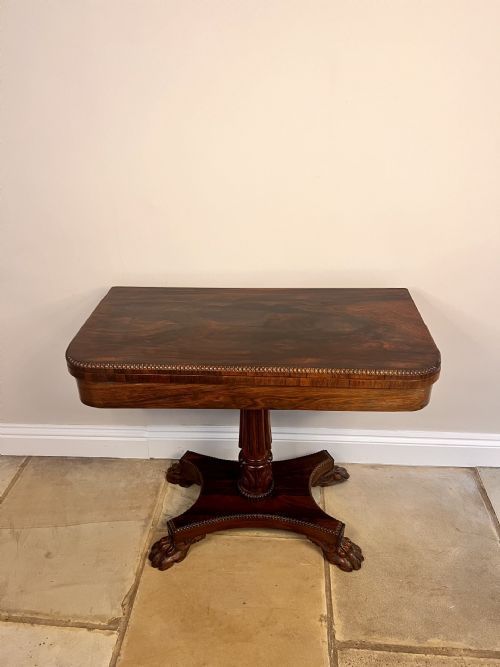
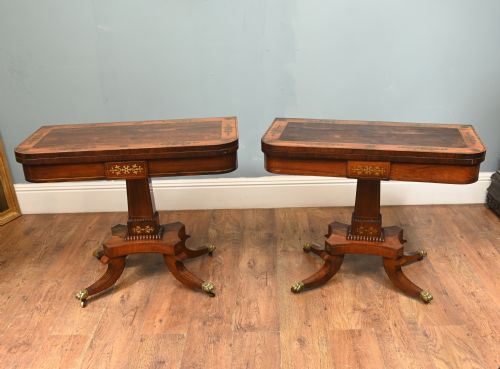
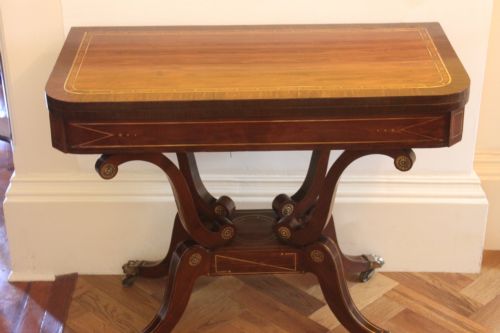
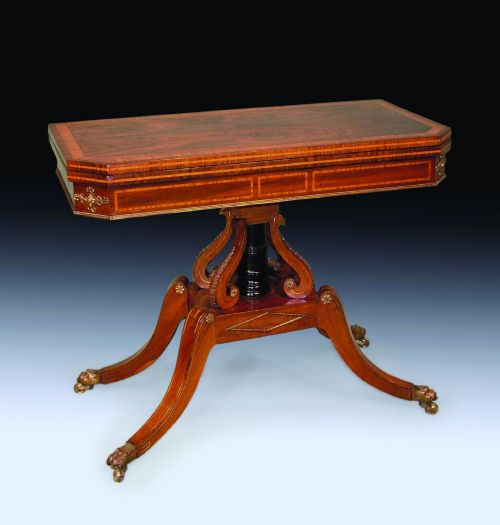
The versions most commonly encountered on this page feature mahogany or rosewood timbers, often styled with brass inlay, satinwood banding, or pedestal bases supported by scroll work, lyres, or carved dolphins.
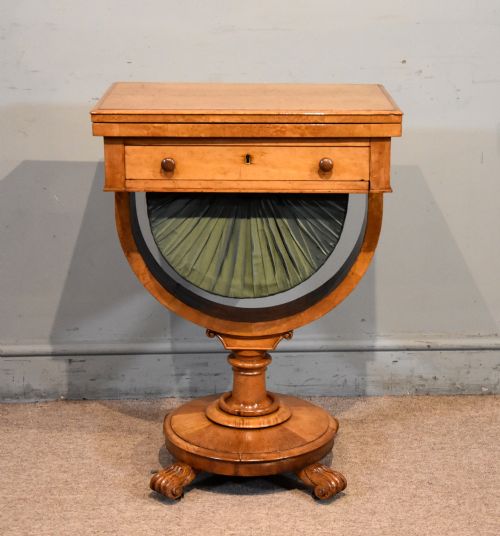
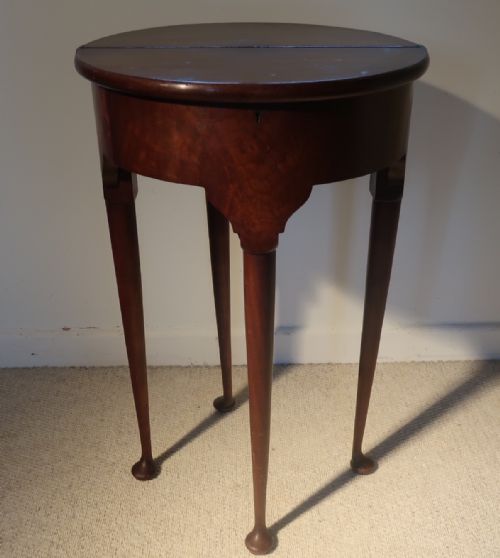
Forms range from demi-lune tea lamp tables to rectangular console and card combinations, reflecting the social habits of period parlours where gaming and hosting tea were central entertainments.
Materials and Construction
Cabinet makers utilised dense primary timbers such as mahogany and rosewood, frequently applying flame mahogany veneer or satinwood and boxwood inlay to create geometric and contrasting borders.
Structural embellishments relied on contrasting details like brass stringing, mounts, and gilding, alongside carved wooden elements such as scroll pedestals, dolphin bases, and lyre supports.
Working hinges and swivel-top mechanisms allowed the dual leaves to open smoothly, revealing polished timber surfaces and occasionally concealed compartments beneath the folding top.
Period Fold Over Table Retail Price Guide 2026
Typical asking prices for period fold over table among the pieces listed under this phrase on Sellingantiques today, from the lower quarter to the upper quarter. They describe what is for sale here now, not the wider market.
Listings demonstrate a strong presence of Regency and Georgian eras, predominantly utilising mahogany and rosewood with satinwood, boxwood, and brass inlay.
Markers of Distinction
The hierarchy of quality rests upon the selection of timber figures, where rich flame mahogany veneer or well-figured rosewood paired with crisp satinwood and boxwood stringing separates standard pieces from exceptional ones.
Craftsmanship shows in the integration of decorative elements, such as finely chased brass inlay, precise edge-banding, and the sculptural execution of carved supports like dolphin bases and lyres.
Structural integrity of the folding mechanism and the alignment of the top when closed dictate the enduring success of the piece, reflecting the skill of the original workshop.
William Trotter
The Period Fold Over Table Glossary
- Fold-over top
- A hinged wooden surface that doubles the footprint of the table when opened for use.
- Cross-banding
- A border of veneer laid with the grain running perpendicular to the surrounding wood, often in a contrasting timber such as satinwood.
- Demi-lune
- A half-moon shape characteristic of tables designed to stand flat against a wall when closed.
- Lyre support
- A base carved in the form of an ancient stringed instrument, popular during the Regency and George IV periods.
- Card table
- A specialised table featuring a baize-lined interior designed specifically for playing card games.
Period Fold Over Table: Frequently Asked Questions
How were these tables used originally?
These tables stood flat against a drawing room wall as slim console or side tables when not in use.
When guests arrived, the top leaf folded open to provide a stable surface for social pastimes such as taking tea or playing card games.
How do I care for a rosewood or mahogany surface?
Maintenance requires keeping the timber away from direct sunlight and sudden temperature changes to protect the aged wood and delicate veneers.
Applying a traditional beeswax polish helps nourish the grain and preserves the historic lustre of the polished surface.
How do I distinguish between Georgian and Regency examples?
Georgian tables tend to display restrained classical proportions, straight or cabriole legs, and understated mahogany grain.
Regency examples frequently introduce bolder elements such as brass inlay, rosewood timbers, pedestal bases, and carved supports like lyres or dolphins.