

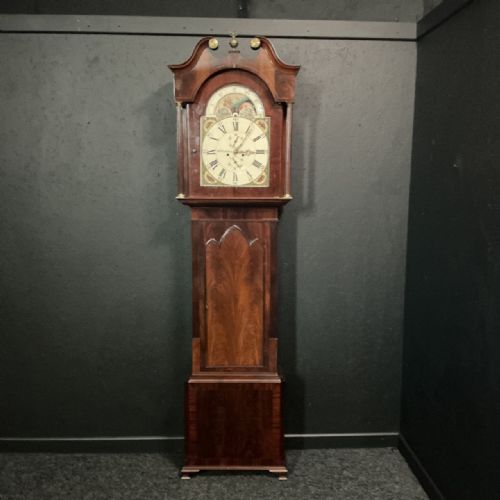


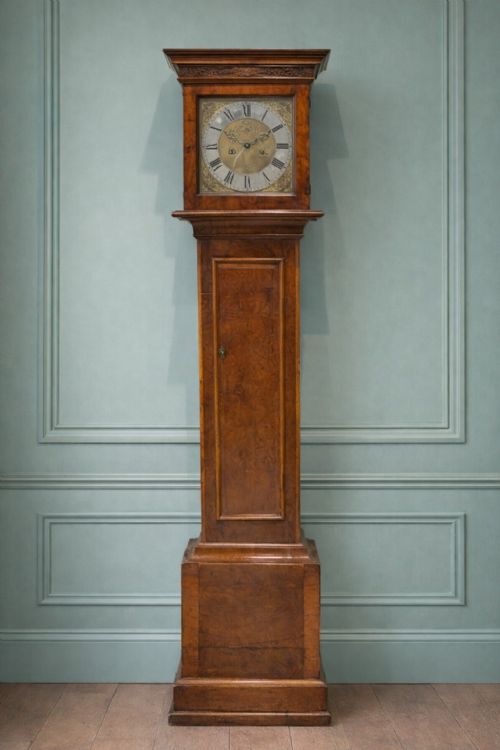

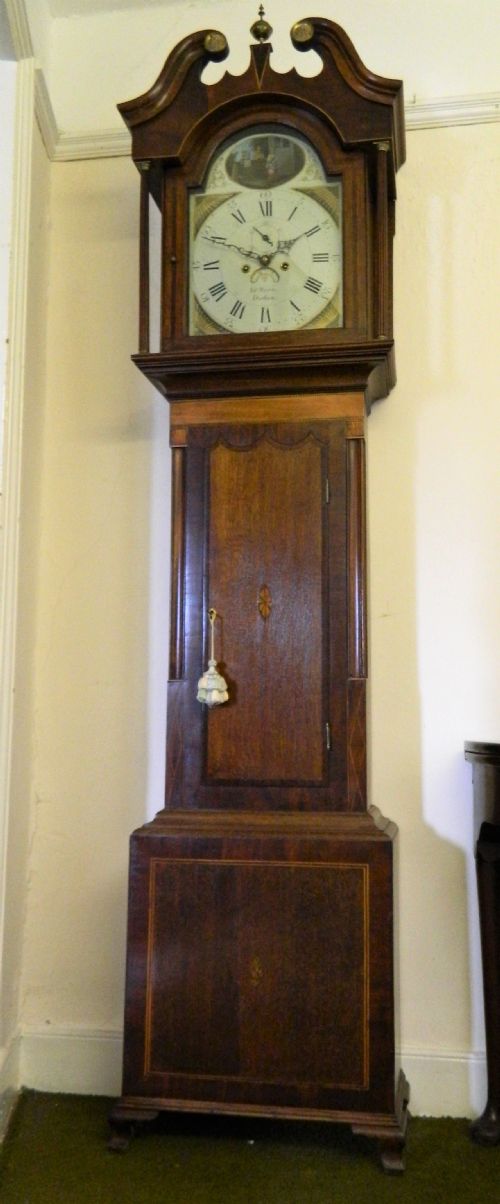
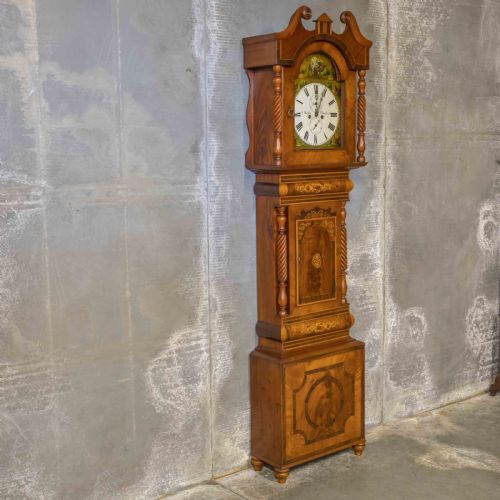


Period Floor Clock
A period floor clock anchors a room with steady gravity, bringing mechanical life and timber warmth from centuries past.
Period Floor Clock
A period floor clock stands tall to house a weight-driven movement inside a protective wooden case, often called a grandfather clock or longcase clock. These tall timekeepers mark the hours with pendulum swings and striking bells, serving as both utilitarian instruments and architectural furniture.
The versions most often met on this page date from the seventeenth, eighteenth, and early nineteenth centuries. They span simple regional oak housings to sophisticated London examples in figured mahogany, walnut, and burr elm.
How they were made
Cabinetmakers constructed the tall cases using native timbers such as oak and imported luxury veneers like mahogany, walnut, and burr elm. Surfaces received polish or wax to highlight the natural grain, sometimes enhanced with chequered inlaid decoration or ebonised wood details.
Dials combined brass chapter rings with painted iron or engraved metal faces behind glass doors. Movements relied on brass gears and iron weights suspended inside the trunk by cords or chains, built by skilled horologists to maintain steady tension.
Period Floor Clock Retail Price Guide 2026
Typical asking prices for period floor clock among the pieces listed under this phrase on Sellingantiques today, from the lower quarter to the upper quarter. They describe what is for sale here now, not the wider market.
Materials recorded across the inventory include brass, glass, mahogany, oak, walnut, ebonised wood, painted iron, and burr elm.
What varies in quality
The sophistication of the cabinetwork dictates much of the standing, separating simple regional pine or oak carcases from master-built London pieces featuring rich burr veneers and lancet tops. Proportion and crispness of timber mouldings reveal the original joiner's skill.
Complexity and provenance of the movement also divide the range, particularly signed London works by makers such as Joseph Saer or Williams against unsigned provincial clocks. Dial execution, from engraved brass to delicate painted iron, reflects the workshop's investment in the piece.
Joseph Saer of London·Williams
The Period Floor Clock Glossary
- Longcase clock
- A tall pendulum clock enclosed in a wooden case that rests directly on the floor. This is the primary technical term used by horologists before the colloquial grandfather name became common.
- Chapter ring
- The metal ring on the dial that bears the hour numerals. These are often made of silvered brass.
- Burr elm
- A woody growth on an elm tree that produces intricate, swirling grain patterns highly prized by cabinetmakers. It creates rich decorative surfaces on premium clock doors.
- Lancet topped
- A pointed, gothic-arch shape applied to the top of the clock hood. This architectural detail appears on later Georgian examples.
- Ebonised wood
- Timber treated to imitate ebony, usually through staining or chemical darkening. It provides sharp dark contrast against lighter woods like oak or mahogany.
Period Floor Clock: Frequently Asked Questions
What is a period floor clock?
A period floor clock is a tall, weight-driven timepiece housed in a fitted wooden trunk designed to stand directly on the floor. They combine tall cabinetry with intricate mechanical movements to measure hours through swinging pendulums.
These pieces were essential household installations before the era of portable timekeeping, serving families for generations.
How do I tell an 18th century clock apart?
Eighteenth-century examples often display square brass dials, simpler oak or early mahogany cases, and distinct regional joinery details. Proportion and timber choice change noticeably between early walnut pieces and later mahogany designs.
Maker signatures on the dial or movement backplate provide precise clues to origin and date.
Where should I place a longcase clock?
Longcase clocks require a stable, dry wall and a level floor to ensure the pendulum swings evenly. Hallways, landings, and principal living rooms provide suitable environments where the striking chimes can be heard.
Avoid placing them near heat sources or in damp rooms to protect the timber and delicate internal metals.
How do I care for the movement?
Maintenance involves regular winding using the correct key or crank, keeping the case level, and arranging periodic professional cleaning of the brass gears. The weights must be raised gently according to the specific running duration of the movement.
Avoid altering internal adjustments yourself if the clock begins to gain or lose time significantly.