




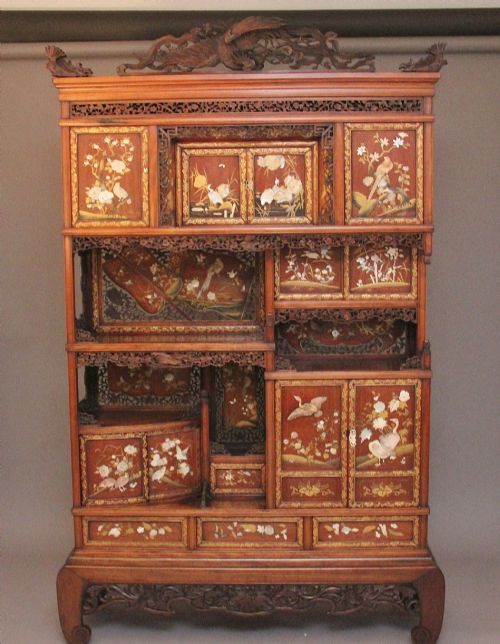
Period Display Cupboard
A period display cupboard brings architectural timber and clear glass together to hold cherished collections.
Period Display Cupboard
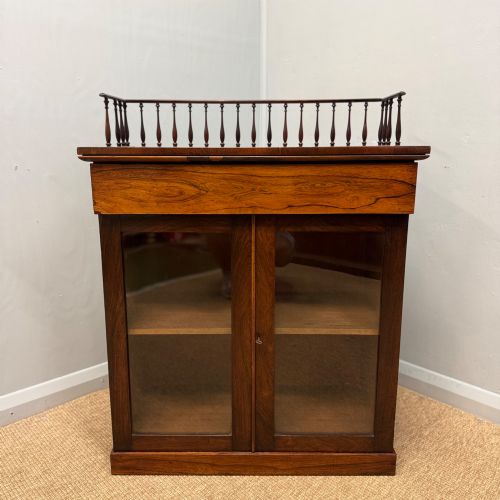
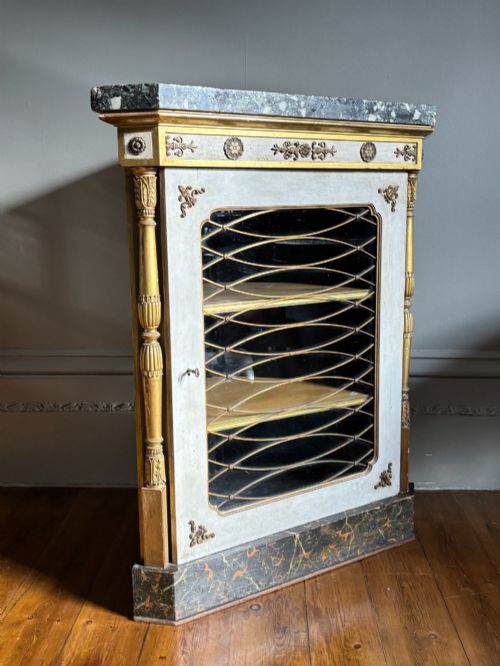
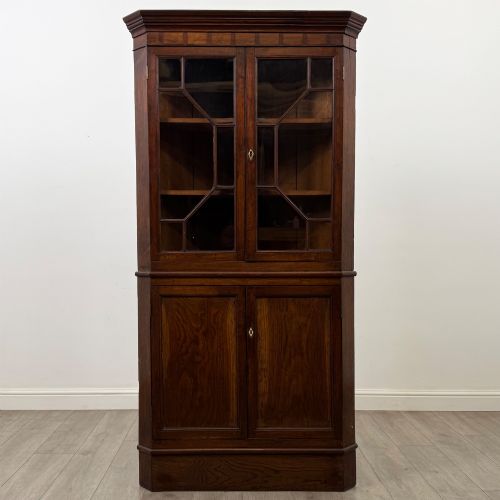
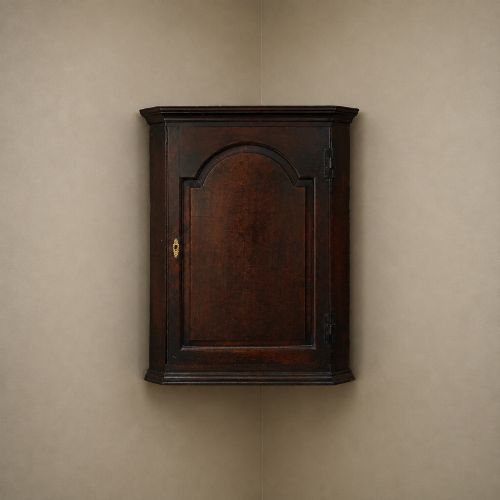
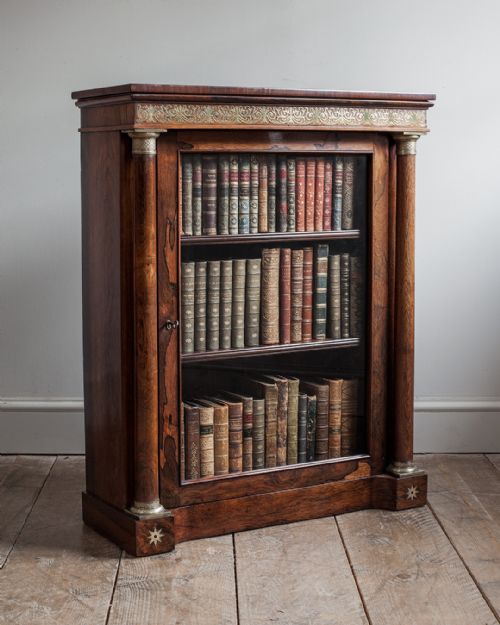
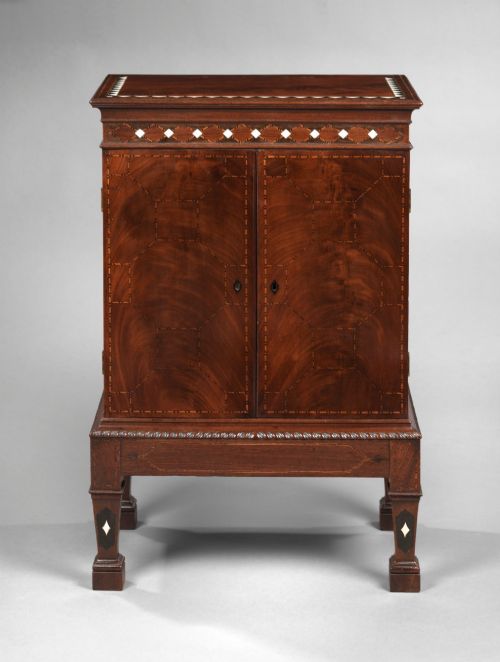
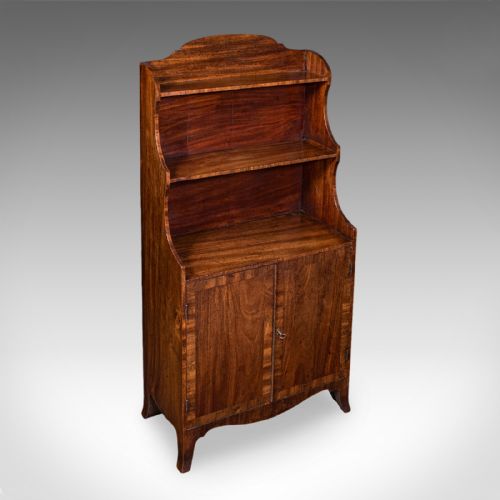
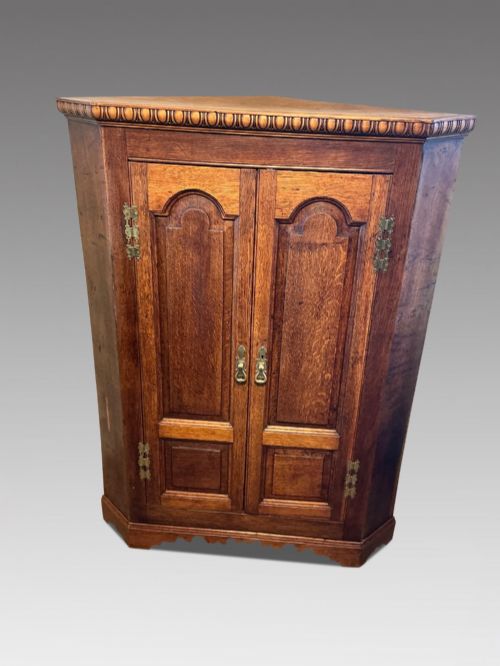
A period display cupboard combines timber cabinetry with glazed doors or open shelves to showcase treasured objects. These pieces range from compact wall-hanging corner cupboards to grand breakfront bookcases.
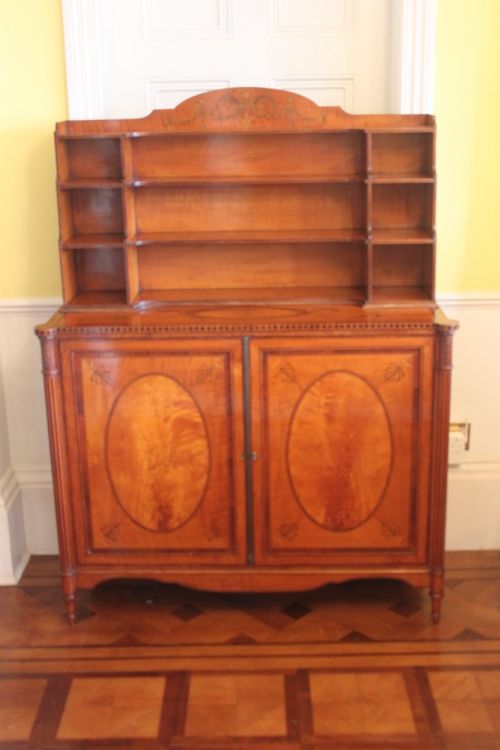
The selections span several centuries, drawing heavily on Georgian, Regency, and Victorian eras. Oak and mahogany dominate the structural forms, supplemented by exotic timbers like rosewood and satinwood.
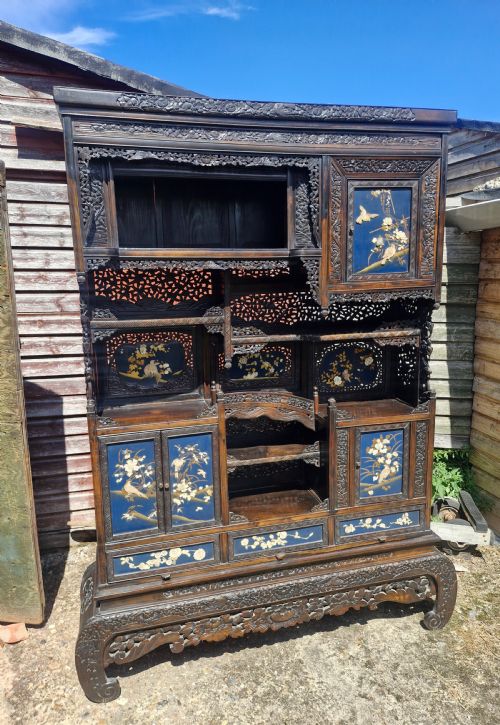
Buyers frequently encounter corner cabinets and side cabinets adapted for domestic display. Provincial French oak cupboards and Japanese Meiji period shodana cabinets also appear within the inventory.
Materials and construction
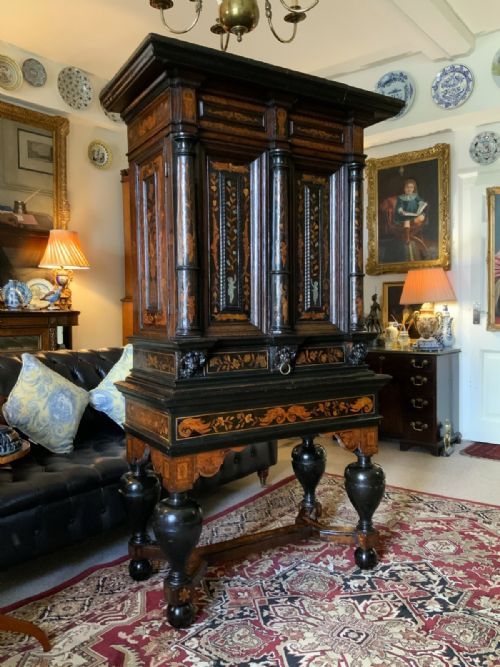
Cabinet makers utilised solid hardwoods including mahogany, oak, and walnut to build robust carcasses. Finer decorative surfaces relied on rosewood veneers, satinwood inlay, and intricate marquetry.
Glass panes, fitted within timber framing, protect the interior while offering visibility for display. Brass hardware, such as hinges and escutcheons, secures doors and drawers across diverse periods.
Period Display Cupboard Retail Price Guide 2026
Typical asking prices for period display cupboard among the pieces listed under this phrase on Sellingantiques today, from the lower quarter to the upper quarter. They describe what is for sale here now, not the wider market.
Certain bamboo cabinets from the Aesthetic period bring a surprisingly breezy botanical charm to formal nineteenth-century interiors.
Quality factors
The calibre of a piece rests upon timber selection and the precision of its joinery. Figured mahogany, precise inlay work, and original glass panes elevate a cabinet above standard utility pieces.
Proportion and decorative restraint dictate the desirability of items across different styles. Sophisticated carvings, marquetry panels, and intact period finishes distinguish superior examples.
The Period Display Cupboard Glossary
- Breakfront
- A cabinet design where the central section projects forward from the flanking wings. This architectural feature creates depth and visual interest.
- Shodana
- A traditional Japanese multi-tiered display cabinet featuring staggered shelving and sliding doors. These pieces often showcase intricate joinery and decorative lacquer.
- Pier cabinet
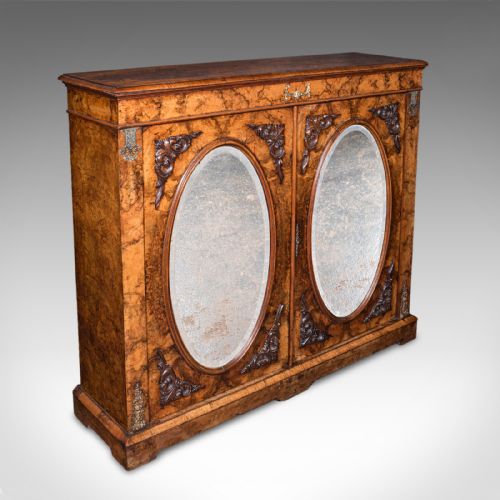
- A low cabinet designed specifically to fit the wall space between windows. They frequently incorporate glazed doors for displaying porcelain or small objects.
- Marquetry
- The art of applying decorative veneer pieces to a structure to form intricate patterns or pictures. Craftsmen utilise various coloured woods to achieve tonal contrast.
- Whatnot
- An open set of shelves supported by slender pillars used for displaying ornaments. Originating in the nineteenth century, these versatile pieces suit smaller reception rooms.
Period Display Cupboard: Frequently Asked Questions
Where should I place a corner cupboard?
A corner cupboard fits neatly into unused room angles, maximising floor space while offering functional display storage.
Wall-hanging versions suit smaller areas, whereas floor-standing corner cabinets anchor larger dining or reception rooms.
How do I care for antique mahogany?
Keep timber surfaces away from direct sunlight and sudden temperature shifts to prevent warping and fading.
Apply a traditional beeswax polish sparingly to maintain the natural lustre of the wood.
What is a shodana cabinet?
A shodana is a Japanese display cabinet featuring asymmetrical shelving and enclosed compartments. These pieces emerged strongly during the Meiji period.
They serve as striking focal points for displaying ceramics and small collectibles.
How do I distinguish a bookcase from a display cabinet?
Bookcases typically feature open shelving designed primarily for holding volumes. Display cabinets incorporate glazed doors to protect fragile ornaments from dust.
Many period variations combine both functions with upper glass doors and lower solid cupboards.