



Period Dining Room Buffet
A period dining room buffet anchors a traditional interior with timber depth and formal proportion.
Period Dining Room Buffet
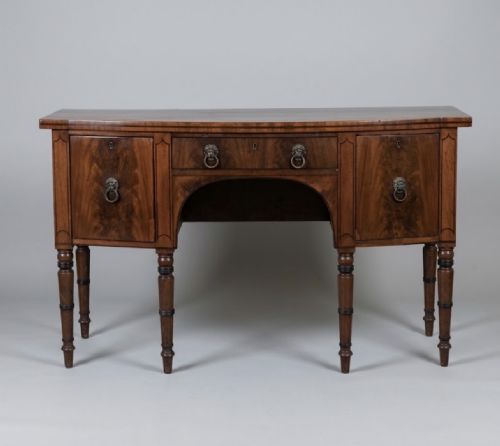
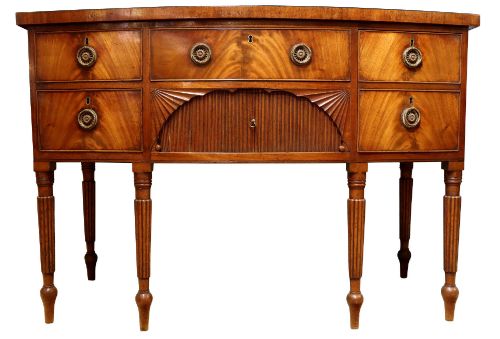
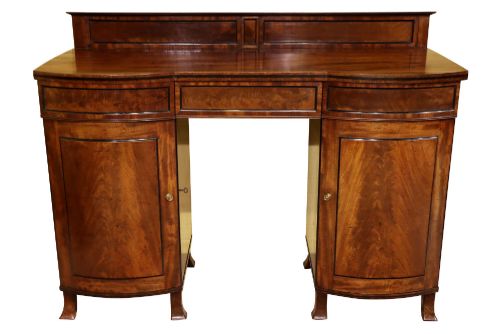
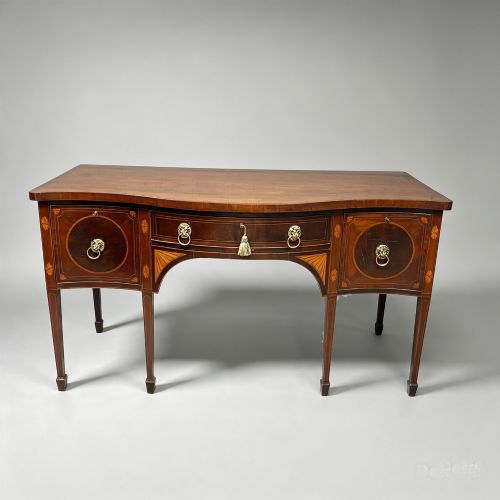
When searching for a period dining room buffet, buyers encounter formal serving furniture designed for historic dining spaces. The selections span Georgian, Regency, William IV, and Edwardian eras, reflecting changing domestic entertainments.
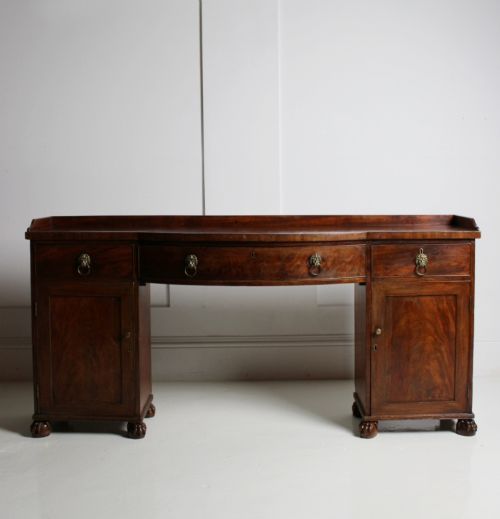
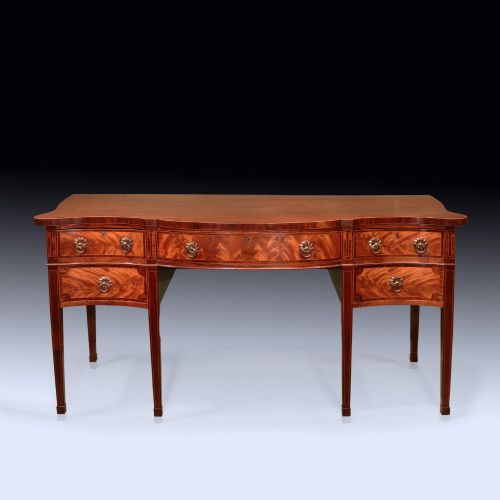
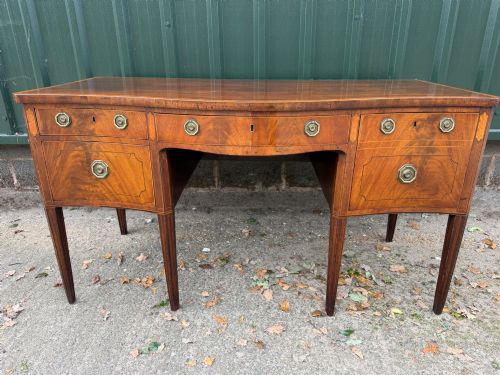
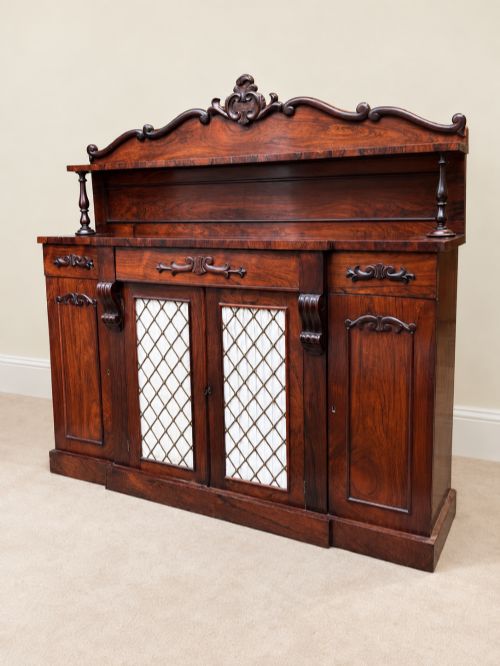
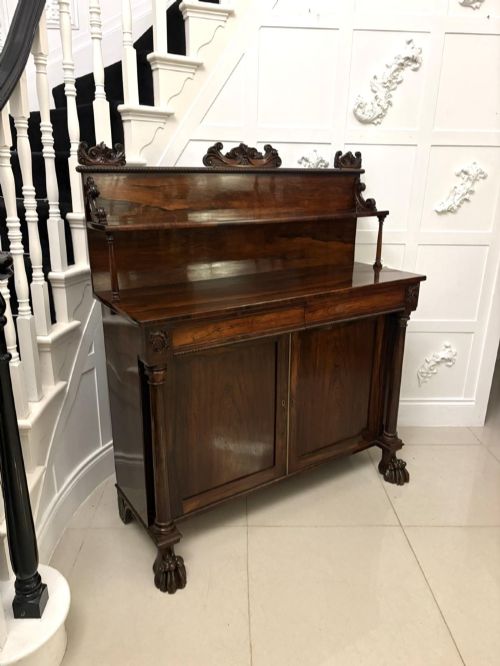
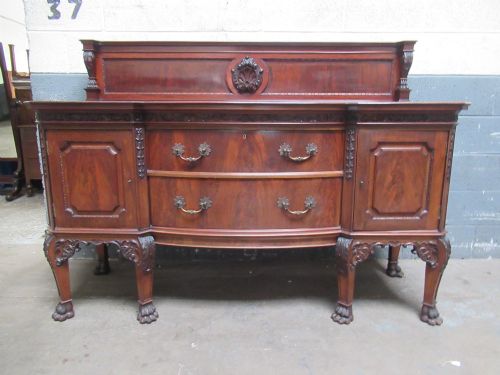
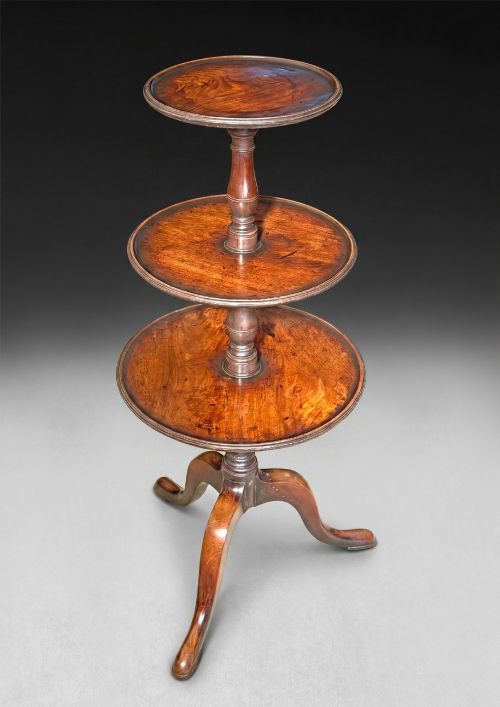
The dominant forms on this page include bowfront sideboards, serpentine servers, pedestal sideboards, and occasional dumb waiters or three-tier buffets. These pieces originate primarily from the eighteenth and nineteenth centuries, executed in solid timber and substantial veneers.
Most examples function as substantial storage and serving stations within a dining room. They combine cupboards, drawers, and flat top surfaces intended for the display and organisation of tableware.
How they were made
Cabinetmakers constructed these pieces predominantly from solid mahogany and flame mahogany veneer, often enhanced by satinwood inlay and satinwood cross-banding. Brass fittings such as handles, castors, and gallery rails provide structural accents.
Joinery techniques relied on dense framing, precision dovetails for drawer construction, and careful application of figured veneers over secondary woods. Surfaces received hand-rubbed polish finishes that accentuated the natural grain patterns of the timber.
Period Dining Room Buffet Retail Price Guide 2026
Typical asking prices for period dining room buffet among the pieces listed under this phrase on Sellingantiques today, from the lower quarter to the upper quarter. They describe what is for sale here now, not the wider market.
Listings feature mahogany, rosewood, and satinwood across George III, Regency, William IV, and Edwardian periods.
What varies in quality
The caliber of a piece rests on the selection of timber, particularly the choice of figured flame mahogany and the precision of contrasting satinwood inlay. Superior examples display seamless grain matching across drawer fronts and harmonious proportions that balance the heavy bases.
Execution of secondary details, such as the crispness of carved mouldings, the originality of brass hardware, and the stability of pedestal or leg assemblies, dictates the standing of an individual buffet.
Gillows
The Period Dining Room Buffet Glossary
- Bowfront
- A convex curved front contour popular on eighteenth and nineteenth-century sideboards. This shape softens the room's geometry while increasing internal drawer capacity.
- Serpentine
- A front outline featuring a central convex curve flanked by concave sweeps. It requires advanced cabinetmaking skill to shape the solid timber and veneer accurately.
- Pedestal sideboard
- A form consisting of two distinct pedestals flanking a central section or serving well. They frequently incorporate cupboards and wine coolers within the pedestals.
- Cross-banding
- A decorative border technique where veneer strips are laid perpendicular to the main grain. This frames the primary timber panel with a contrasting linear border.
Period Dining Room Buffet: Frequently Asked Questions
What is a period dining room buffet used for?
These pieces served historically for staging food, storing silverware, and displaying fine porcelain during formal meals.
Today, they function similarly in traditional dining rooms while offering substantial concealed storage for modern tableware and linens.
How do I identify a Georgian buffet?
Georgian pieces typically exhibit restrained classical proportions, rectilinear or serpentine outlines, and subtle stringing or inlay. They rely on the natural figure of mahogany rather than heavy ornamentation.
Later Victorian and Edwardian iterations often introduce bolder veneers, mirrorbacks, or revival styling drawn from earlier centuries.
Where should I place a large sideboard?
A large sideboard requires a dedicated wall within a dining room or spacious hallway where its length and depth can be appreciated without obstructing traffic flow.
Ensure adequate clearance around the piece for opening heavy cupboard doors and pulling out deep drawers.
How do I care for mahogany surfaces?
Maintain the polish by dusting regularly with a soft, dry cloth and avoiding placement near direct heat sources or strong sunlight.
Occasional application of appropriate wax preserves the historic finish and protects the underlying timber grain.