


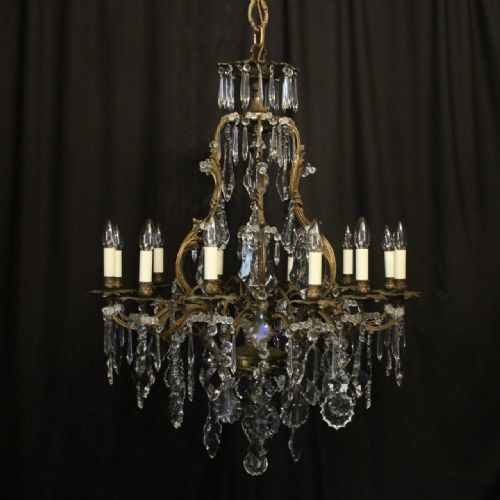


Period Crystal Chandelier
A period crystal chandelier brings unmatched atmosphere and brilliance to a room, casting intricate light patterns through genuine cut glass.
Period Crystal Chandelier
A period crystal chandelier offers a dramatic overhead focal point, combining intricate glass components with sturdy metal frames. When you search for a period crystal chandelier, you will encounter grand multi-light fixtures designed to illuminate substantial spaces with reflected candlelight or early electricity.
The selections available on this page lean heavily towards French and English origins, spanning from the nineteenth century into the Edwardian era and the nineteen-twenties. These pieces take the form of chandeliers and pendant lights, ranging from simpler single-tier arrangements to elaborate multi-arm cage designs.
Styles represented across the inventory include French Rococo Revival, French Chateau, Victorian, and Art Deco. Buyers will frequently find designs featuring substantial light counts, such as ten, twelve, or fifteen arm configurations supported by gilded bronze, brass, or silver-plated frames.
Materials and construction methods
The primary visual elements of these fixtures rely on crystal, cut glass, and plain glass components shaped to refract light effectively. Artisans suspended these glass drops and prisms from robust metal armatures built from brass, gilded bronze, silver-plated metals, and silver-gilded bronze.
Metalwork frames were cast and chased to support multiple branching arms and internal cage structures. Glass elements were individually hand-cut and polished before being wired or pinned to the metal framework using traditional metal connectors.
Some fifteen-light chandeliers require an extraordinary amount of patience when polishing every single hanging prism by hand.
Distinctions in quality and execution
Superior examples are distinguished by the depth of hand-cutting on the glass and the crispness of detail in the gilded bronze or brass mounts. Finer fixtures utilise heavier gauge metals and more complex arm arrangements, such as multi-tier or cage constructions, which demand greater skill from the maker.
The clarity and weight of the crystal or cut glass dictate the brilliance of the piece, with purer glass materials producing sharper refraction. The integration of the metal frame with numerous individual glass drops also marks the difference between standard production and exceptional craftsmanship.
The Period Crystal Chandelier Glossary
- Crystal
- High-grade glass containing lead oxide, which increases weight, clarity, and the dispersion of light into spectral colours. It forms the shimmering drops and prisms characteristic of fine chandeliers.
- Gilded Bronze
- Bronze metal coated with a thin layer of gold or gold-coloured alloy, frequently utilised for decorative mounts and frames in French lighting. This material provides a durable, lustrous foundation that complements clear glass.
- Electrolier
- A light fixture designed specifically for electricity from its inception or converted from gas or candle use. These pieces often date from the late nineteenth or early twentieth centuries.
- Cage Chandelier
- A style of light fixture featuring a central metal framework enclosed by curved bands or glass strands, resembling an open cage. This form allows for dense arrangements of drops and internal illumination.
- Pendant Light
- A single light fixture suspended from the ceiling by a chain, cord, or rod rather than branching arms. These items provide focused overhead illumination for specific rooms.
Period Crystal Chandelier: Frequently Asked Questions
How do I clean a crystal chandelier?
Cleaning requires a specialised glass cleaner and soft cloths, wiping each drop individually while the fixture remains supported. Many owners prefer cleaning components in place to avoid disturbing the delicate wire fixings.
Harsh chemical sprays should be avoided to protect the underlying bronze, brass, or silver-plated metal surfaces from discolouration or damage.
Were these chandeliers originally wired for electricity?
Many examples from the nineteenth century were originally configured for candles or gas before being adapted for modern electric bulbs. Later pieces from the Edwardian period and the nineteen-twenties were frequently designed with electrical wiring integrated from the start.
Checking the internal wiring with a qualified electrician ensures safe operation while preserving the historic metal and glass components.
What ceiling height do I need?
These fixtures require adequate vertical clearance to hang safely without obstructing movement through a room. Multi-arm chandeliers with numerous lights demand higher ceilings to properly balance their visual and physical weight.
Shorter pendant lights or two-tier designs can often suit more modest room dimensions while maintaining period character.