



Period Clothes Storage
Period clothes storage brings together mahogany presses, oak cupboards and cedar tansu chests that solve your wardrobe needs with genuine historical character.
Period Clothes Storage
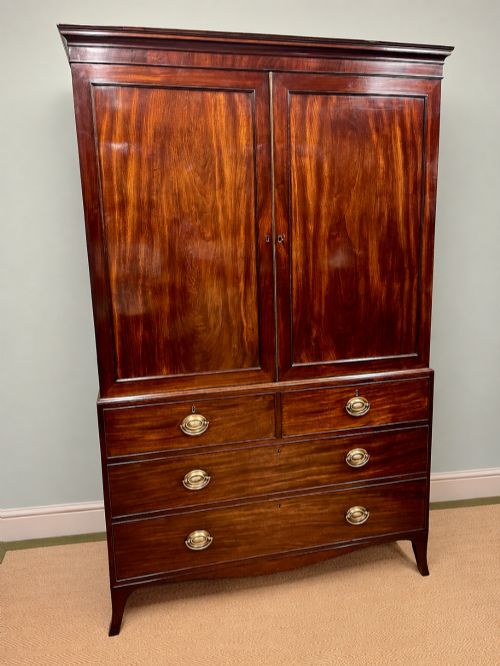
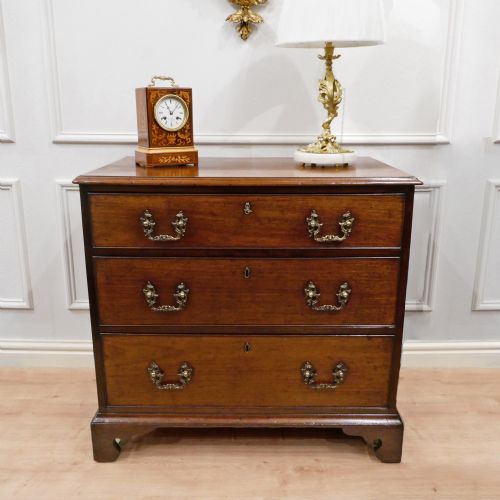
The most common examples on this page are mahogany chests of drawers and linen presses from the Georgian and Regency eras. These large case pieces provide deep drawer capacity and upper sliding tray sections originally intended for household textiles.
Alternative forms include Japanese Meiji period tansu chests made of cedar and wood, offering compartmented storage with distinct iron hardware. Oak livery cupboards represent the earlier eighteenth-century tradition of hanging and folding garments in substantial timber enclosures.
Construction and Materials
Cabinet makers utilised dense hardwoods such as mahogany, oak, and cedar to build durable carcasses that withstand heavy daily use. Satinwood embellishments appear on late eighteenth-century examples to create contrasting stringing and panel details.
Joinery techniques relied on dovetailed drawer construction and mortise and tenon frames to maintain structural stability across centuries. Iron hardware and brass handles secure doors and drawers while adding functional metalwork detail to both English and Japanese pieces.
Period Clothes Storage Retail Price Guide 2026
Typical asking prices for period clothes storage among the pieces listed under this phrase on Sellingantiques today, from the lower quarter to the upper quarter. They describe what is for sale here now, not the wider market.
Current listings feature nineteenth-century, Georgian, Regency, and 1920s periods, executed in mahogany, oak, cedar, pine, and iron.
Evaluating Quality
Superior examples demonstrate refined proportions and high-grade timber selection, such as figured mahogany or clean cedar grain, matched evenly across the primary surfaces. Finer pieces incorporate architectural elements like swan-neck pediments and well-executed satinwood stringing.
The sophistication of the internal configuration also distinguishes better pieces, particularly linen presses retaining original sliding trays alongside deep lower drawers. Hardware originality, from brass drop handles to traditional iron tansu lockplates, contributes significantly to the integrity of the piece.
The Period Clothes Storage Glossary
- Linen Press
- A tall piece of furniture featuring upper doors enclosing sliding trays and lower drawers for folded garments. This form evolved from storing household linens to housing general clothing.
- Tansu
- A traditional Japanese mobile storage chest constructed from cedar, zelkova wood, and iron fittings. These cabinets divide into modular sections designed for household organisation.
- Livery Cupboard
- A traditional oak storage cabinet from the eighteenth century used for keeping provisions or garments. These sturdy timber units predate the standard modern wardrobe.
- Pediment
- The decorative architectural crowning feature above the cornice of a tall cabinet or linen press. Swan-neck variations employ curved scrolls meeting centrally.
- Satinwood
- A durable, lustrous timber used for decorative inlay and stringing on late eighteenth-century furniture. It provides a pale, contrasting border against darker mahogany surfaces.
Period Clothes Storage: Frequently Asked Questions
What is a linen press?
A linen press is a large two-part cabinet featuring upper doors that open to reveal sliding wooden trays, mounted above a chest of lower drawers. They were originally built to store household textiles flat before modern wardrobes became common.
Today, these versatile pieces serve as excellent bedroom storage for folded clothes, jumpers, and bedding, combining deep drawer capacity with accessible upper shelving.
How do tansu chests differ from English chests?
Japanese tansu chests are constructed primarily from cedar and zelkova wood, incorporating heavy iron reinforcement brackets, corner plates, and flush-fitting handles. They often feature multiple smaller compartments and sliding doors designed for modular household organisation.
In contrast, English period pieces rely on dense hardwoods like mahogany and oak with classical architectural proportions, standing on bracket feet or plinth bases with brass drawer pulls.
How do I date an eighteenth-century press?
Dating an eighteenth-century linen press involves examining the timber grain, construction methods of the internal sliding trays, and the exterior decorative mouldings. Late examples often incorporate satinwood stringing and swan-neck pediments typical of the Georgian period.
Hand-cut dovetails on the drawer sides and the use of solid secondary woods inside the carcass further help verify the period of manufacture.
Can I use an antique press as a modern wardrobe?
Many period linen presses adapt well to modern clothing storage by utilising the sliding trays for folded items and knitwear. Some owners convert the upper tray section into a hanging space by removing the internal slides.
Checking the internal depth of the upper cabinet ensures it accommodates standard coat hangers if you choose to make this conversion.