



Period Childs Chair
A period childs chair brings centuries of domestic history into a room, scaled down for young occupants yet built with the same ambition as adult seating.
Period Childs Chair
A period childs chair encompasses scaled seating designed for young members of the household across several centuries. The selections span compact vernacular forms and formal high chairs suited to dining tables.
Examples on this page draw from the 17th Century, Georgian, Regency, and Victorian eras. These range from joined oak highchairs on stands to fruitwood lambing chairs and mahogany armchairs.
High chairs and low nursery seating form the bulk of the domestic items encountered here. Many retain functional elements such as footrests, trays, or stands that elevated the child to table height.
Materials and construction
Cabinetmakers and rural joiners built these miniature seats from robust hardwoods including oak, mahogany, ash, elm, and fruitwood. These timbers ensured the chairs could withstand robust domestic use by children.
Construction techniques mirror full-size furniture of the period, employing pegged joints, turned spindles, and carved details. Seats frequently integrate woven rush, cane panels, or upholstery in leather and fabric.
Period Childs Chair Retail Price Guide 2026
Typical asking prices for period childs chair among the pieces listed under this phrase on Sellingantiques today, from the lower quarter to the upper quarter. They describe what is for sale here now, not the wider market.
Distinctions in quality
Quality rests on the integrity of the timber framing and the fidelity of the proportional reduction from adult furniture. Pieces that retain original stands, trays, and surface finishes command greater interest.
The sophistication of the turning, carving, and joinery distinguishes workshop production from vernacular country pieces. Refined mahogany examples from the Georgian and Regency periods contrast with earlier joined oak work.
The Period Childs Chair Glossary
- High Chair
- A tall childs chair raised on legs or a stand to permit seating at a dining table. Many feature enclosed rails and footrests for security.
- Lambing Chair
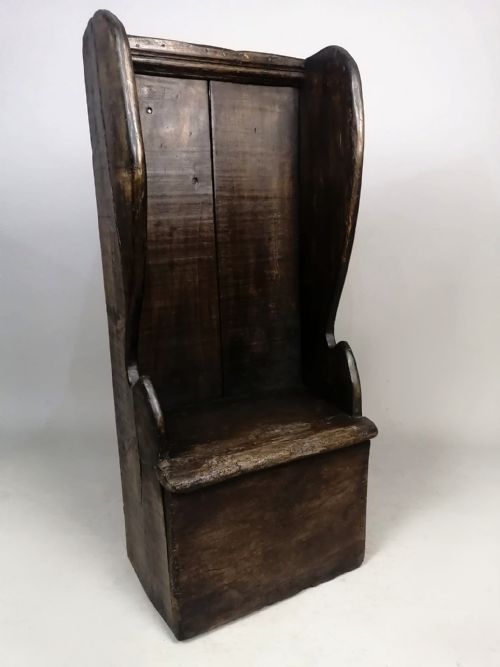
- A low vernacular armchair with solid wooden wings and sides to shield the occupant from drafts. Early fruitwood examples are exceptionally scarce.
- Wainscot Armchair
- A heavy wooden chair constructed with panelled backboards and solid arms, derived from 17th-century full-scale seating. They represent formal miniature cabinetwork.
- Ladderback
- A chair back constructed with horizontal slats between upright posts. Child-scale versions often incorporate rush seats.
- Vernacular
- Furniture built by regional tradesmen following local traditions rather than metropolitan stylistic dictates. These pieces utilise accessible woods like ash, elm, and fruitwood.
Period Childs Chair: Frequently Asked Questions
Were these chairs used daily?
Most of these miniature seats served active domestic roles in nurseries and dining rooms for generations of children. Their survival reflects robust original construction by skilled makers.
Signs of heavy wear often remain visible on footrests and arms where young hands and feet rested during meals and lessons.
What woods were used?
Cabinetmakers utilised durable hardwoods appropriate to the prevailing style and workshop location. Oak and fruitwood predominate in earlier centuries, while mahogany and rosewood appear in Georgian and Victorian iterations.
Secondary woods like ash and elm frequently support rustic vernacular seating.
Can I use these for children today?
These antique chairs function primarily as decorative objects or collector pieces rather than modern nursery seating. Safety standards for children's furniture have evolved significantly since the seventeenth and nineteenth centuries.
Displaying them in a living space allows their craftsmanship and history to be appreciated safely.