

Period Candle Lighting
Period candle lighting brings genuine historical illumination into a room, offering brass, bronze, and glass fittings crafted across multiple centuries.
Period Candle Lighting
Period candle lighting encompasses functional and decorative illumination devices designed to hold candles before the widespread adoption of electricity. The pieces available span several centuries, reaching from the seventeenth century through the Georgian, Regency, and Victorian eras into the early twentieth century.
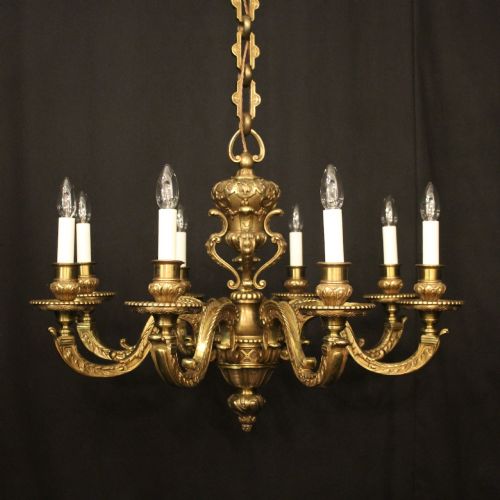
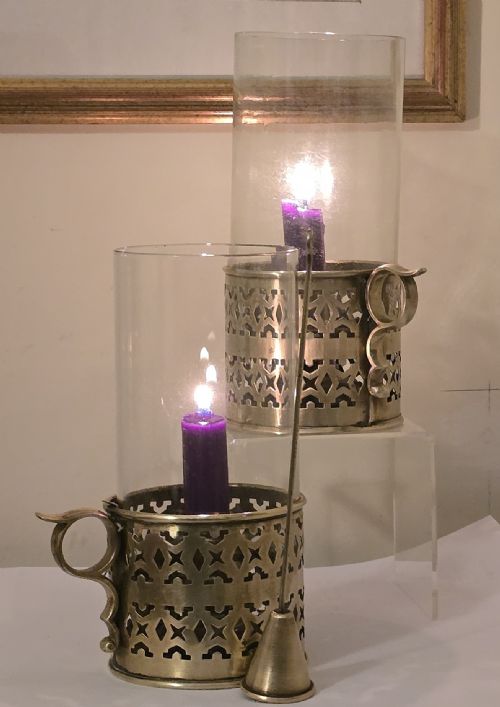
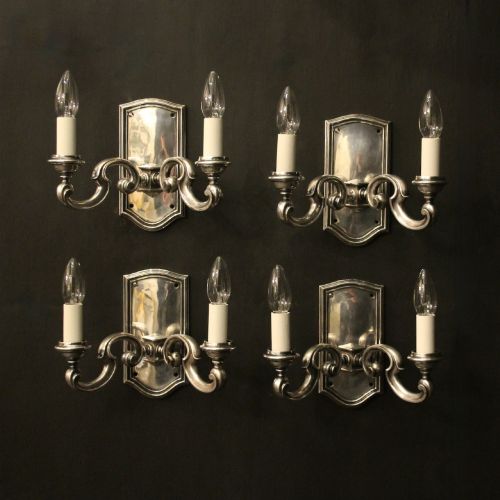
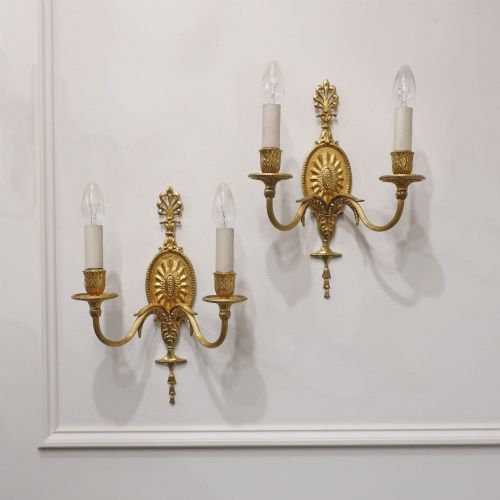
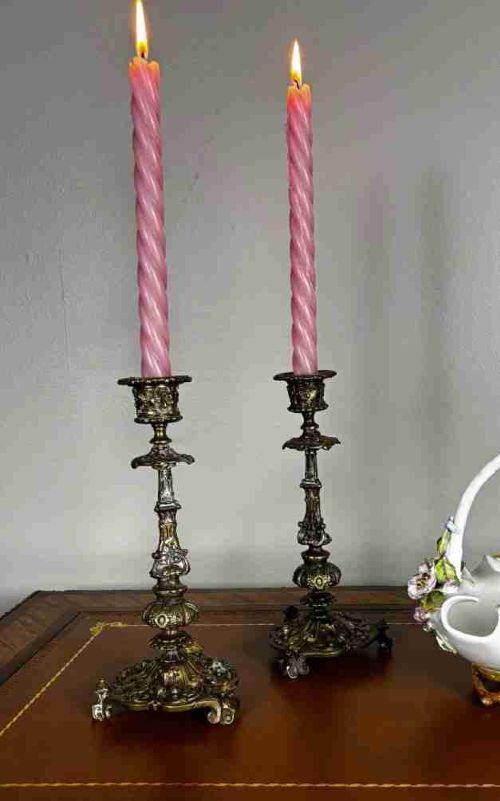
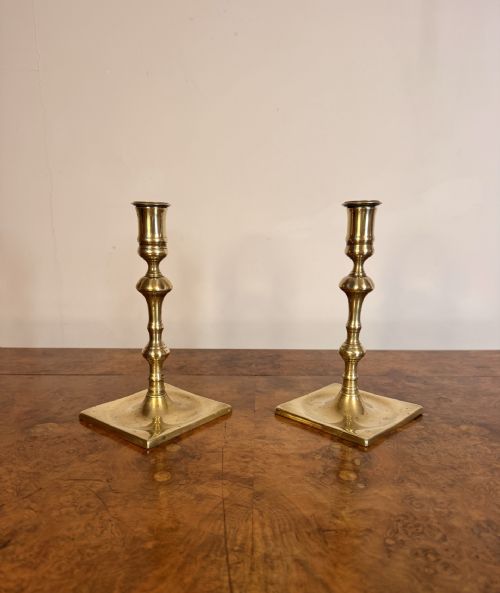
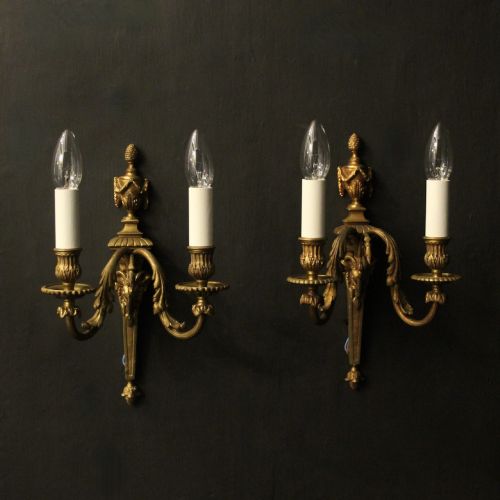
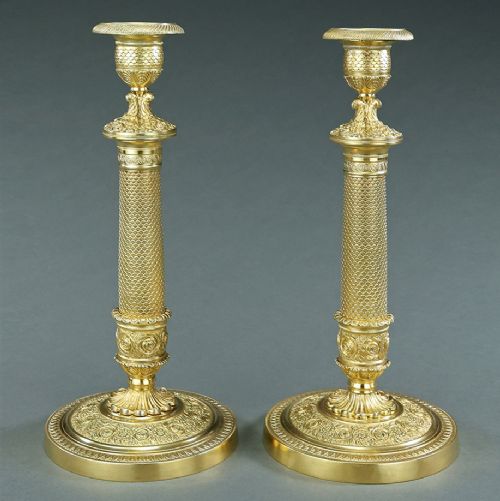
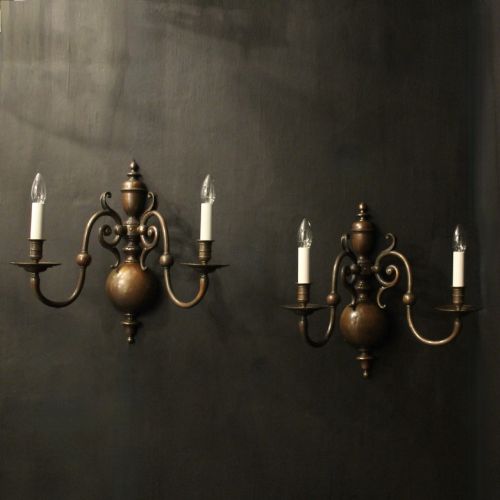
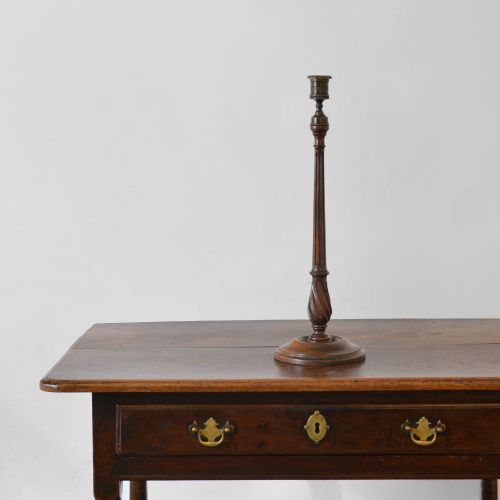
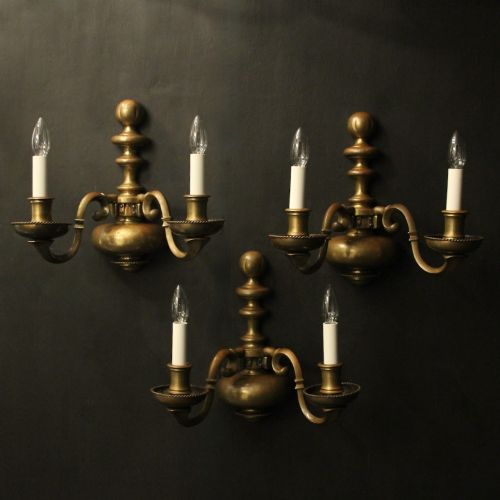
Candlesticks in brass and bronze form the core of what a buyer encounters on this page, alongside wall lights, multi-arm candelabra, and hanging lanterns. These objects originate from English, French, and Japanese workshops, varying from domestic table accessories to grander architectural fittings.
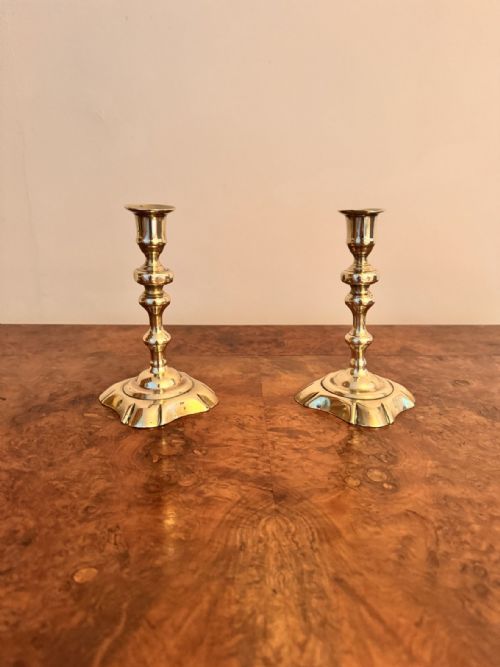
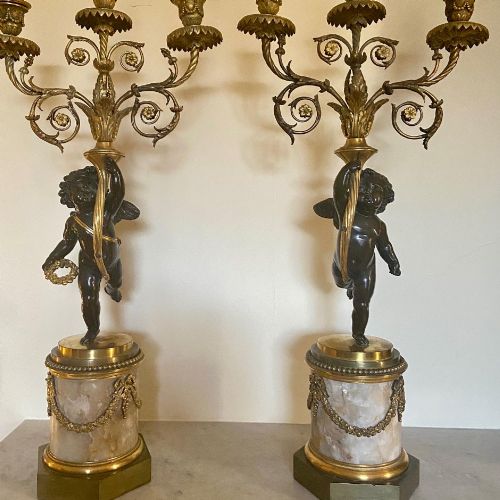
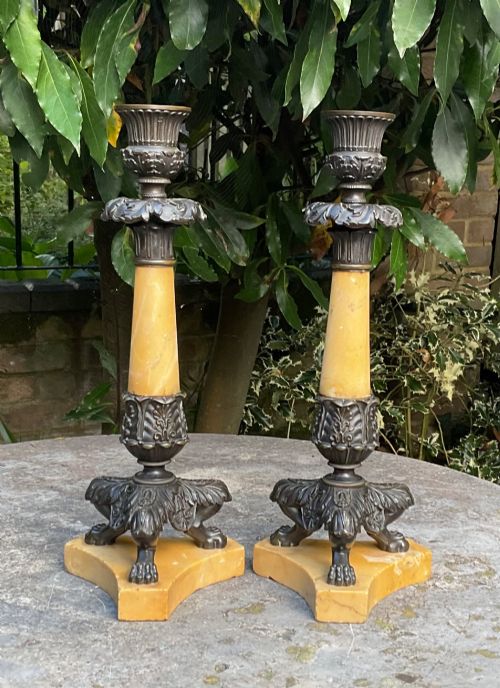
The selection ranges from simple mid-eighteenth-century seamed brass items with ejector mechanisms to elaborate French Empire gilt bronze candelabra mounted on marble plinths. Buyers find both individual items and balanced pairs suited to traditional interior placement.
Materials and Construction
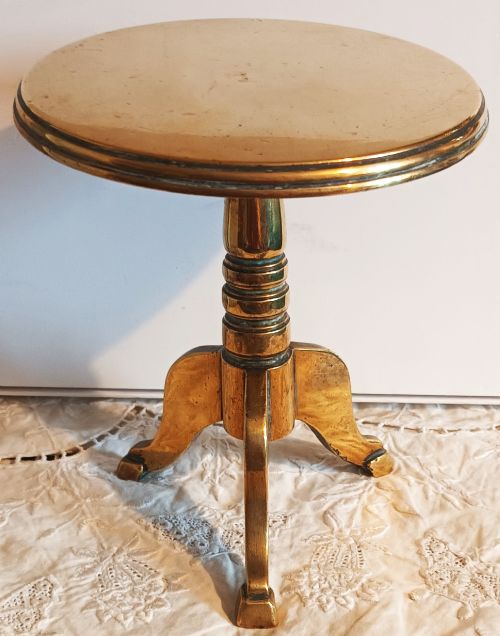
Metalworking techniques dictate the construction of these pieces, with brass and bronze dominating the material record. Many early candlesticks utilise seamed brass construction, where sheet metal is bent and joined, while others employ solid casting methods.
Surface finish defines much of the visual character, combining patinated bronze, fire-gilded ormolu, silver plating, and polished brass. Additional materials such as marble plinths, porcelain components, and fluorspar provide contrast and structural weight to the metal framework.
Period Candle Lighting Retail Price Guide 2026
Typical asking prices for period candle lighting among the pieces listed under this phrase on Sellingantiques today, from the lower quarter to the upper quarter. They describe what is for sale here now, not the wider market.
The material record on this page spans brass, bronze, ormolu, glass, and porcelain across the Georgian, Regency, and Victorian periods.
Measures of Quality
Quality reveals itself in the crispness of the casting detail and the integrity of the original assembly. Superior examples display sharply defined ornamentation, clean chased lines in bronze or ormolu, and proportional balance without clumsy repairs.
The presence of maker signatures, original patination, and matching components elevates an item above standard utility pieces. Finer lighting fixtures also integrate secondary materials like sienna marble or porcelain with precise mechanical fitting.
Francois Redmond·Rabiat·Barr, Flight & Barr·G.E.C
The Period Candle Lighting Glossary
- Candelabra
- A branched candlestick holding multiple candles on separate arms. These fixtures often feature central stems and decorative secondary branches.
- Ormolu
- Finely ground high-carat gold mercury-gilded to a bronze object, producing a warm yellow metallic lustre. This technique was widely utilised by French makers during the eighteenth and nineteenth centuries.
- Pricket
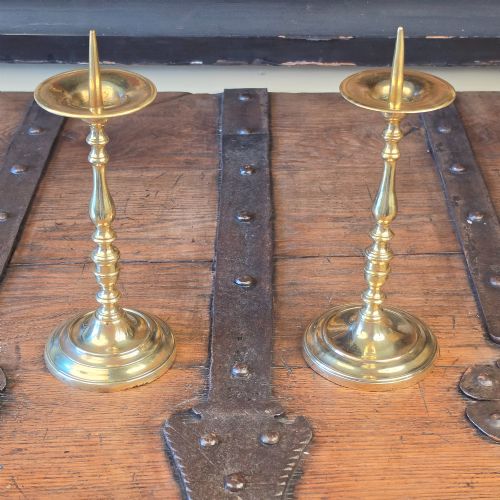
- A sharp metal spike upon which a candle is impaled, rather than inserted into a socket. This form appears frequently on ecclesiastical and earlier continental pieces.
- Ejector
- A small internal mechanism inside a candlestick tube designed to push out remaining candle wax and stub remnants. It operates via a small exterior thumbpiece sliding vertically in a slot.
- Patinated Bronze
- Bronze metal treated chemically or naturally to darken the surface and create a stable protective skin. This finish highlights the underlying sculptural contours of the piece.
Period Candle Lighting: Frequently Asked Questions
How do I clean period brass safely?
Clean period brass gently using warm soapy water and a soft cloth to remove dust and surface grime. Avoid abrasive scouring pads or harsh chemical dips that strip away the aged patination collected over centuries.
Dry the metal thoroughly with a soft towel after washing to prevent water spotting. A light application of microcrystalline wax can help protect the surface finish from further oxidation.
Are these antique lights wired for electricity?
The lighting listed here generally preserves its original form designed for wax candles rather than electrical wiring. Many buyers choose to display them with candles or employ specialist conservators to adapt them carefully.
Any electrical conversion requires professional consultation to ensure historical components remain unaltered where possible. Reversible methods of adaptation preserve the underlying integrity of the antique metalwork.
How can I tell Georgian brass from later copies?
Georgian brass often exhibits construction methods such as casting in multiple sections, hand-filed bases, and seamed vertical columns. Weight distribution and tool marks on the underside provide reliable clues regarding the period of manufacture.
Examining the wear patterns around the socket and base reveals how the object was handled over time. Genuine pieces show authentic signs of age that modern reproductions struggle to replicate accurately.
What is the difference between a sconce and a wall light?
A sconce specifically refers to a wall-mounted lighting fixture designed to project one or more candleholders outward into a room. The term dates back to medieval fortifications and domestic interiors alike.
Wall light serves as a broader descriptive term covering any lighting fixture attached directly to a vertical surface. Both terms frequently overlap in historical inventory records and dealer descriptions.