
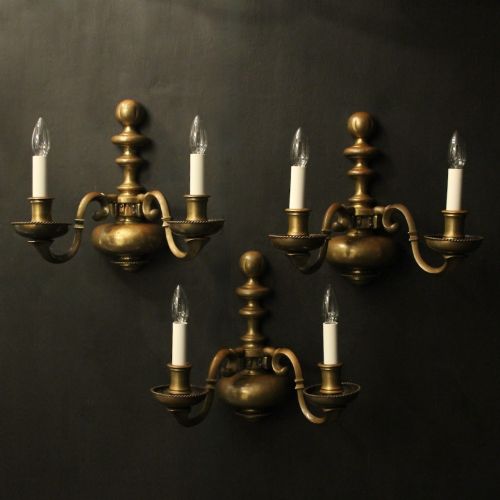
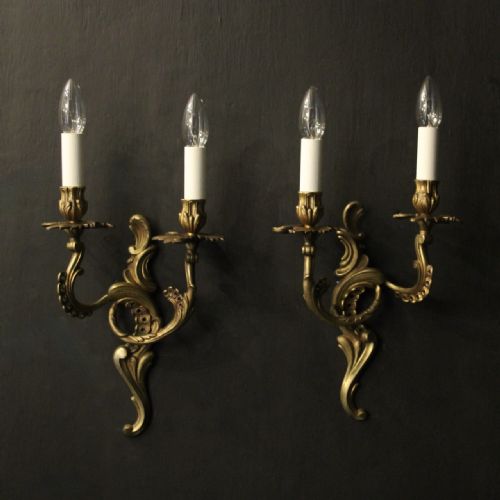
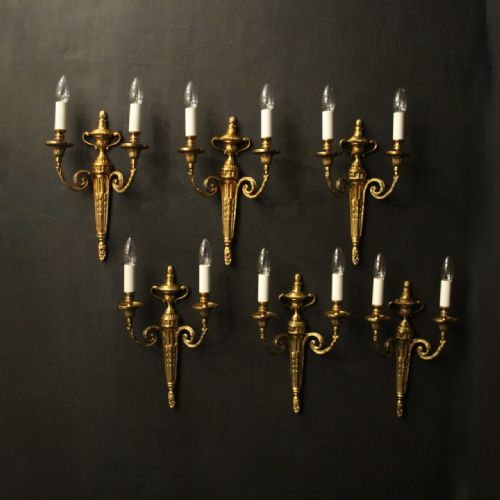


Period Brass Wall Sconces
Period brass wall sconces bring warmth and character to a room, illuminating spaces with the genuine glow of past centuries.
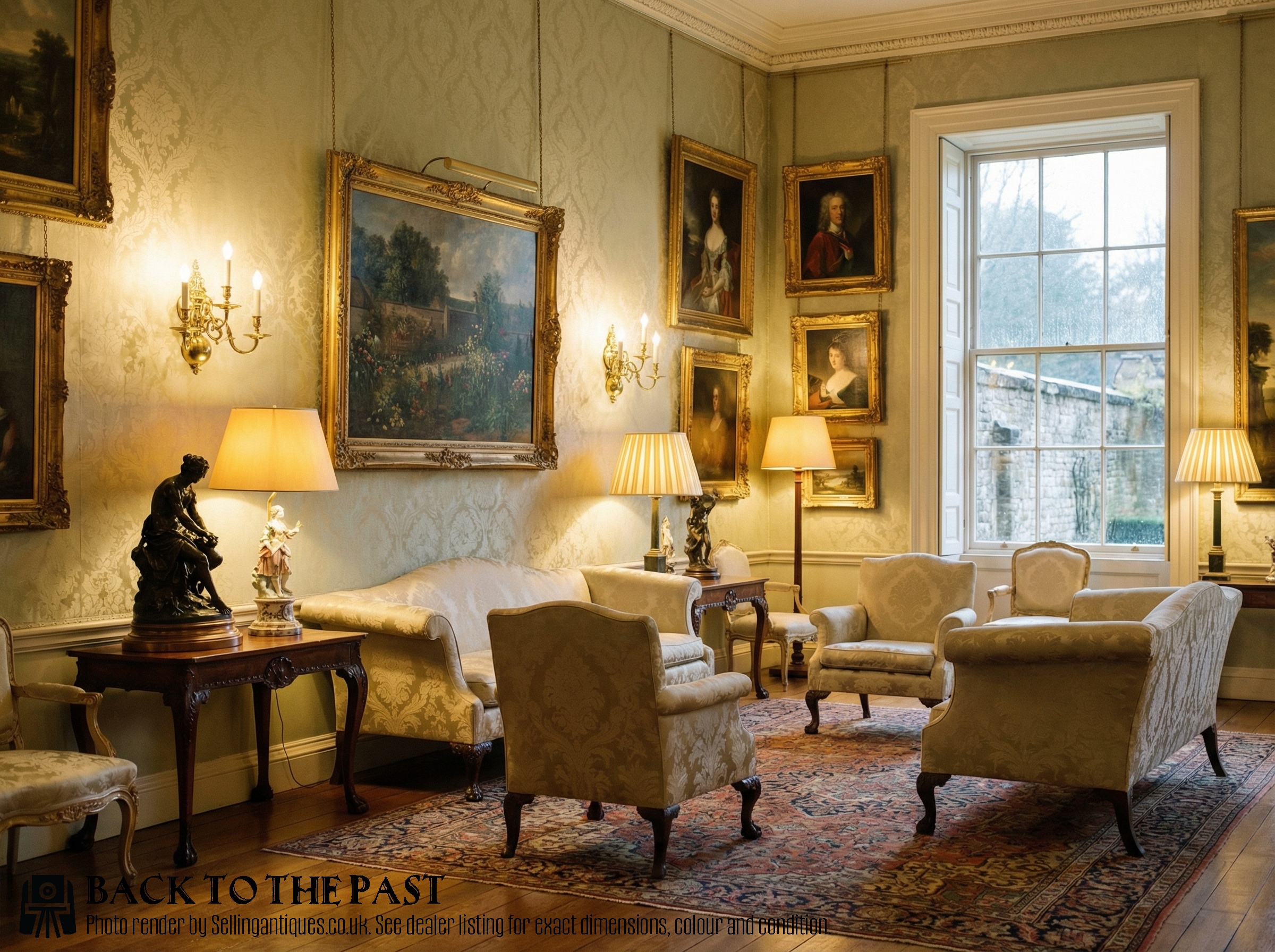
Period Brass Wall Sconces
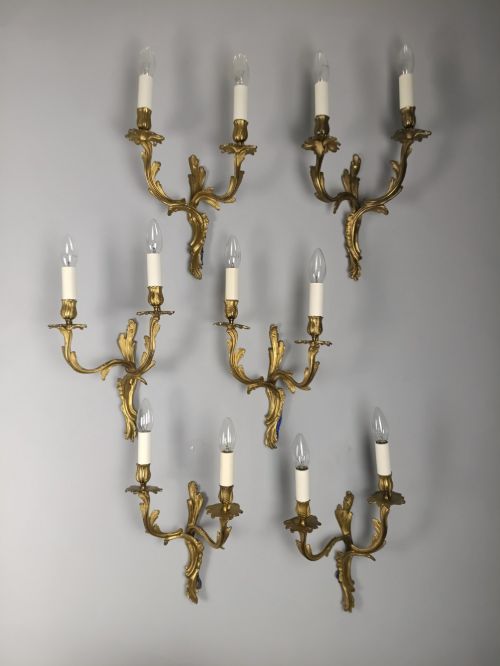
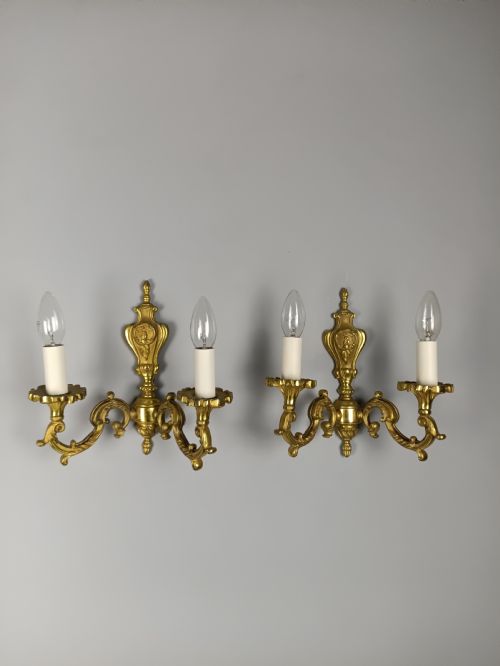
Period brass wall sconces encompass various lighting fixtures designed to mount directly onto vertical surfaces, providing functional illumination and decorative presence. When exploring period brass wall sconces, buyers encounter designs spanning from the eighteenth century through the Edwardian era and the nineteen-thirties.
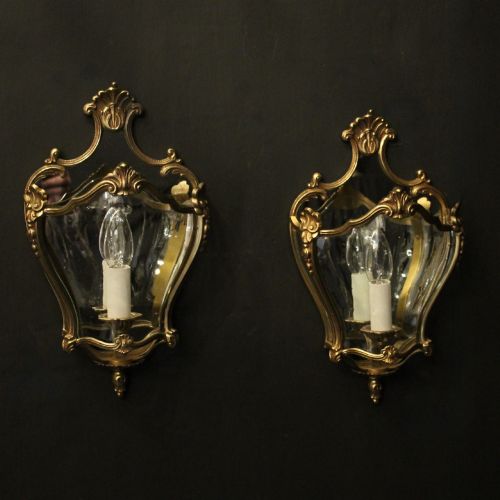
The selection ranges from French gilded bronze twin-arm models and Empire styles to English Victorian brackets and Edwardian brass lanterns. French pieces frequently demonstrate Rococo, Neoclassical, and Art Deco influences, while English examples often include gasolier conversions and carriage styles.
Materials and construction methods
Maker construction relies heavily on cast and worked brass, bronze, and copper, frequently enhanced with gilding, silverplating, or enamel finishes. Metal components are shaped through casting, chasing, and forging to create structural arms, backplates, and decorative motifs.
Gilded bronze and gilded brass surfaces receive careful finishing to achieve distinct metallic sheens, while glass elements such as green enamel or lantern panes integrate through traditional mounting techniques. Metalwork and structural joins reflect the period methods typical of nineteenth and early twentieth-century workshops.
French styles dominate the selection, ranging from Rococo and Neoclassical designs to Art Deco items.
Distinctions in craftsmanship
Quality differences stem from the crispness of the casting and the depth of the chasing on bronze and brass surfaces. Superior examples display sharply defined ornamentation and refined proportions that reveal careful hand-finishing.
The choice of base metal and the application of fire gilding or heavy plating separate standard production from finer creations. Fine quality pairs maintain architectural balance and structural integrity across matching components.
The Period Brass Wall Sconces Glossary
- Gilded bronze
- Metal alloy treated with a gold finish to create a lustrous decorative surface. This technique appears frequently on French nineteenth-century lighting.
- Twin arm
- A wall light bracket featuring two distinct branching arms for illumination. These configurations provide balanced light distribution.
- Half lantern
- A wall-mounted lighting fixture projecting outward with glazed panels on three sides. They were commonly used in hallways and porches.
- Gasolier
- A lighting fixture originally designed to burn coal gas before conversion to electricity. These fixtures often feature multiple arms and robust metal construction.
Period Brass Wall Sconces: Frequently Asked Questions
How do I date these wall lights?
Dating relies upon stylistic markers such as French Empire motifs, Edwardian simplicity, or Art Deco enamel details. Construction methods and metal finishes also offer clear chronological indicators.
Comparing backplate designs and casting styles helps align a piece with its specific historical period and regional origin.
Are these lights wired for modern use?
Many surviving fixtures have been rewired to accommodate contemporary electrical standards while preserving their original metal components. This allows safe integration into modern domestic settings.
Checking the internal wiring status ensures compatibility with current safety regulations upon installation.
Where should I place wall sconces?
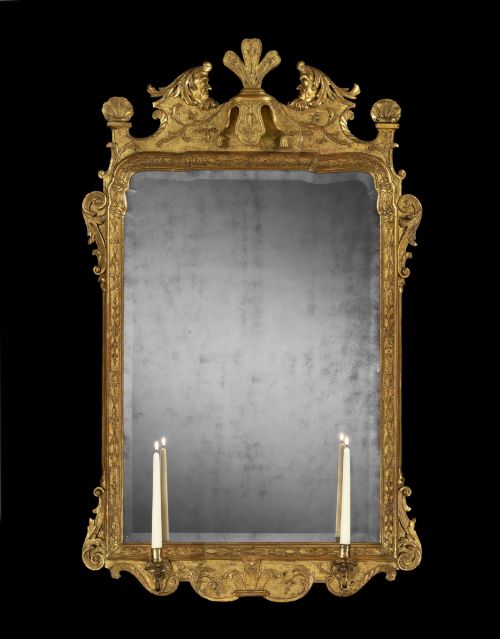
These fixtures suit hallways, living rooms, and dining areas, particularly when mounted to flank mirrors, sideboards, or architectural doorways. Pairs provide symmetrical illumination.
Height placement depends on ceiling proportions and the specific reach of the arms, ensuring optimal light spread.
What is the difference between brass and bronze?
Brass is an alloy primarily of copper and zinc, yielding a bright yellow metallic tone, whereas bronze is an alloy of copper and tin with a warmer, deeper hue. Both metals accept gilding and patination differently.
Distinguishing between them involves examining weight, colour depth, and the texture of the underlying cast metal.