



Period Brass Mirror
These period brass mirror examples combine polished metal with bevelled glass to anchor a room.
Period Brass Mirror
A period brass mirror brings reflective depth and metallic warmth into a domestic interior, drawing on designs from the Regency, Georgian, and later nineteenth and twentieth century eras. When you search for a period brass mirror, you encounter everything from small adjustable table mirrors to large wall-hanging pieces framed in giltwood or mounted with brass inlay.
The objects appearing in this category span several distinct styles, including French Empire, Arts and Crafts, Aesthetic Movement, and Art Deco. Wall mirrors and cheval mirrors predominate alongside associated furniture forms like chiffoniers and sideboards that incorporate mirrored glass and brass elements.
Makers and workshops of the Regency and subsequent periods utilised brass alongside rosewood, mahogany, and gilt gesso to construct functional items that doubled as decorative focal points. Buyers will find that many pieces integrate brass mounts, bezels, or inlay directly into timber frames.
Materials and construction
Frames are constructed from solid or veneered hardwoods such as mahogany and rosewood, often enhanced with cast or sheet brass mounts, bezels, and stringing. Gilding appears on carved gesso surfaces, while glass panels are hand-silvered and set into rebated frames.
Cabinetmakers utilised mechanical pivots for adjustable pedestal and cheval designs, securing mirrors with brass screws and hinges. Inlay work involves meticulous hand-cutting of brass wire or sheet to fit precisely into channelled timber surfaces.
Period Brass Mirror Retail Price Guide 2026
Typical asking prices for period brass mirror among the pieces listed under this phrase on Sellingantiques today, from the lower quarter to the upper quarter. They describe what is for sale here now, not the wider market.
Early table mirrors feature tiny brass thumb screws that occasionally retain their original threaded washers.
Assessing craftsmanship
The refinement of the cast brass elements and the crispness of the timber carving or brass inlay distinguish standard items from finer examples. Superior pieces exhibit well-balanced proportions and retain their original mercury or early silvered mirror plates.
Construction methods reveal the standard of manufacture, where tight joinery, original backboards, and substantial brass hardware indicate skilled workshop production rather than mass assembly.
The Period Brass Mirror Glossary
- Cheval mirror
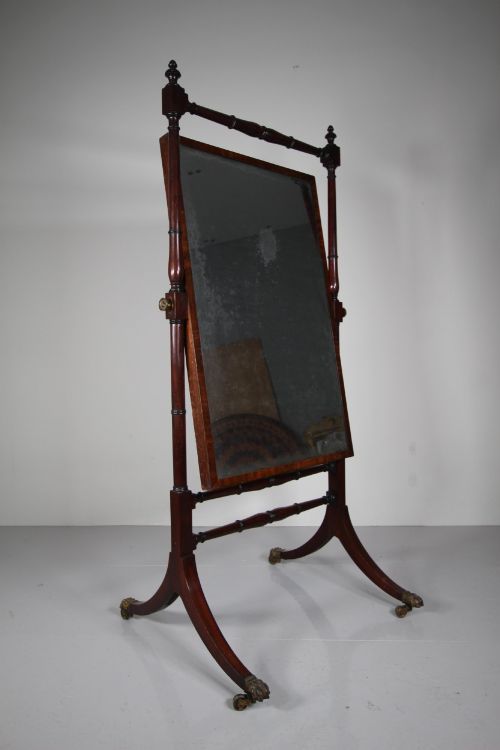
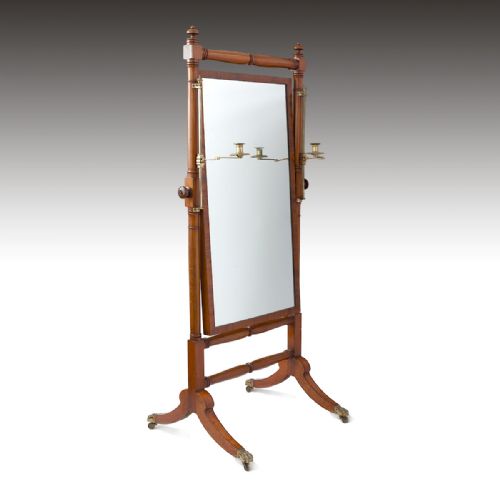
- A freestanding full-length mirror mounted on a vertical frame with pivots that allow the glass to tilt. These large pieces often stand on four legs or a sturdy pedestal base.
- Gesso
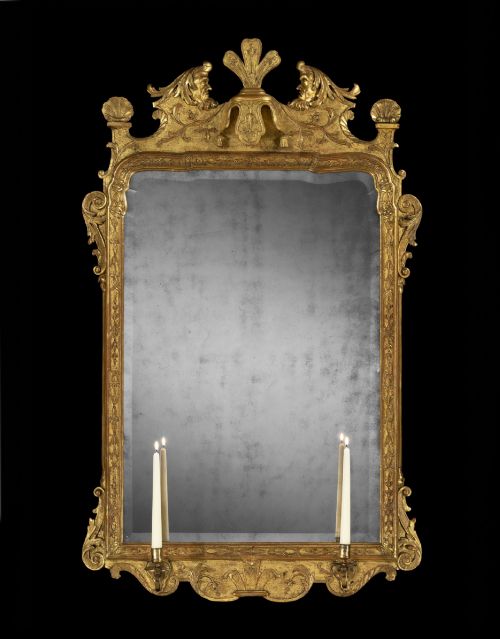
- A plaster-like mixture applied to a wooden substrate and carved or moulded before being gilded. It provides a smooth base for gold leaf application on decorative frames.
- Chiffonier
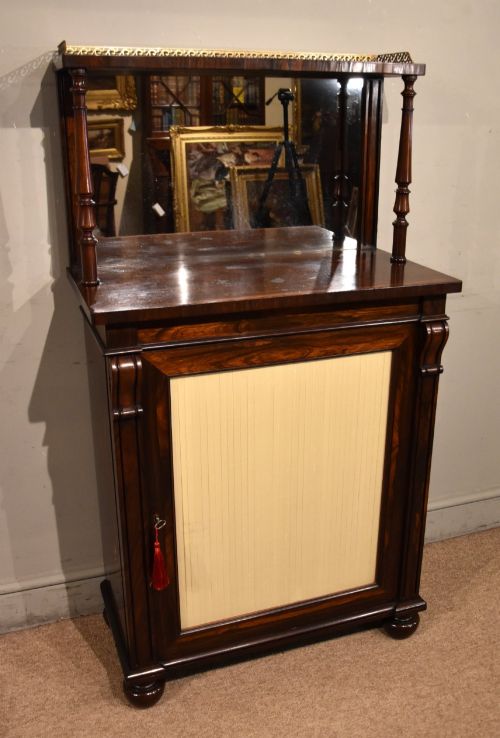
- A low cabinet featuring shelves or enclosed storage, frequently topped with a mirror or superstructure. Regency examples often incorporate brass inlay and gilt metal mounts.
- Aesthetic Movement
- A late nineteenth-century design style emphasising visual beauty over narrative content. Objects from this period often combine brass and copper elements with dark woods.
Period Brass Mirror: Frequently Asked Questions
How do I date a brass mirror?
Examine the construction methods of the frame, the type of timber used in the backing boards, and the characteristics of the glass plate. Hand-beveleing and specific fixing screws often point to particular decades.
Compare the decorative motifs against known historical styles such as Regency, Aesthetic Movement, or Art Deco to narrow down the period of manufacture.
Where should I hang a wall mirror?
Position a wall mirror opposite a window to maximise natural light distribution and create a sense of expanded space in smaller rooms. Ensure the wall fixings match the substantial weight of brass and timber frames.
Consider the height relative to mantelpieces or console tables to maintain balanced proportions within your interior layout.
Are cheval mirrors stable?
Cheval mirrors rely on heavy bases and well-adjusted pivot screws to maintain stability while tilting. Properly constructed examples distribute their weight evenly across the supporting legs or pedestal.
Check that the vertical side posts remain securely fastened to the base structure to prevent wobbling during adjustment.
What is brass inlay work?
Brass inlay involves recessing thin strips or cutouts of brass into channels carved within mahogany or rosewood surfaces. This technique creates geometric or floral patterns contrasting against the dark wood.
Craftsmen secure the metal using hide glue and pins, making careful alignment essential for a flush finish.