

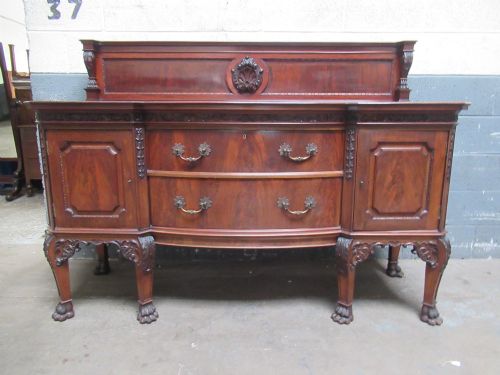


Period Bow Front Dresser
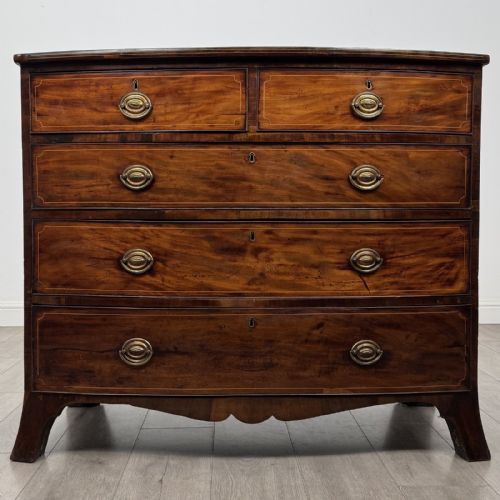
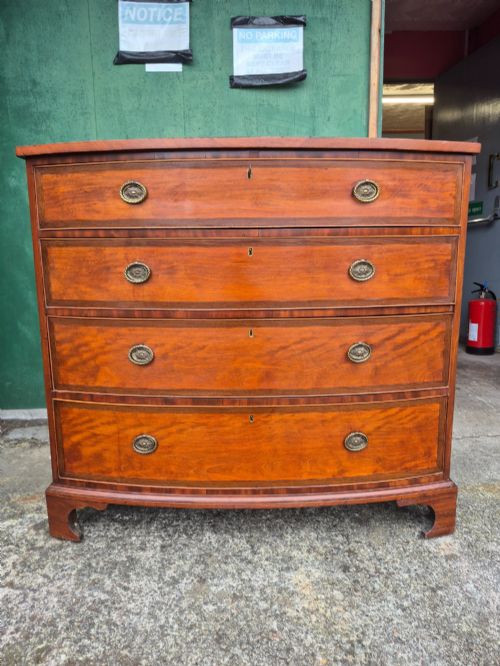
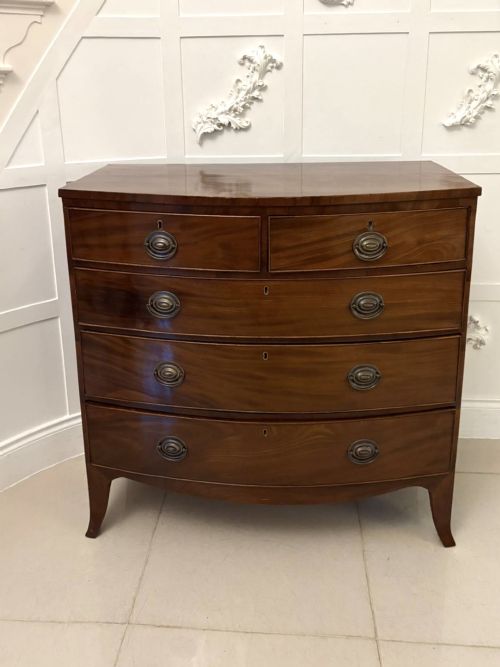
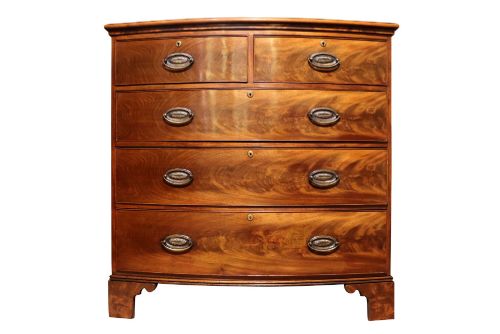
A period bow front dresser brings substantial presence and curved elegance into a room, offering deep storage within a refined silhouette.
Period Bow Front Dresser
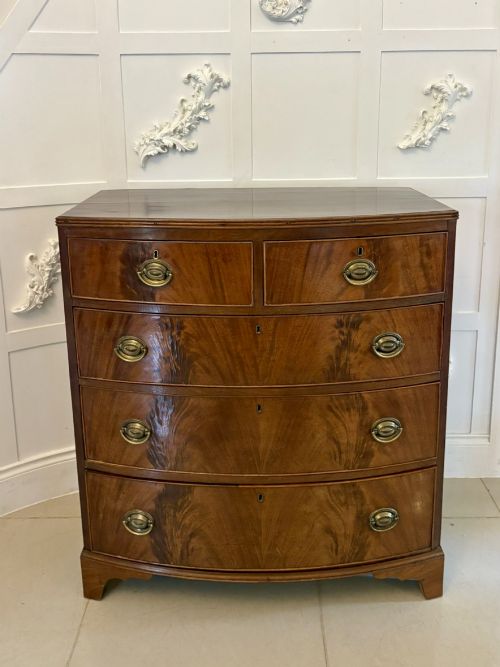
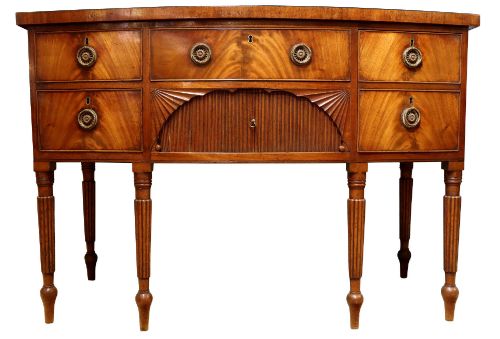
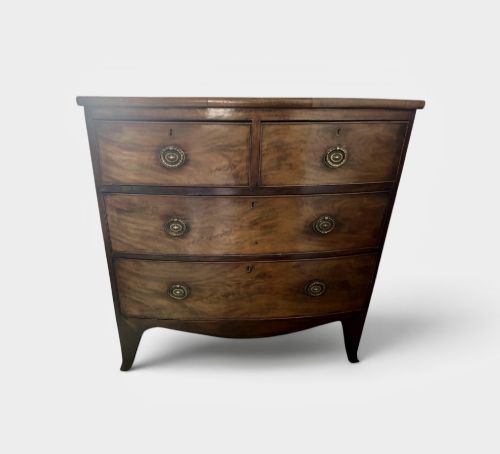
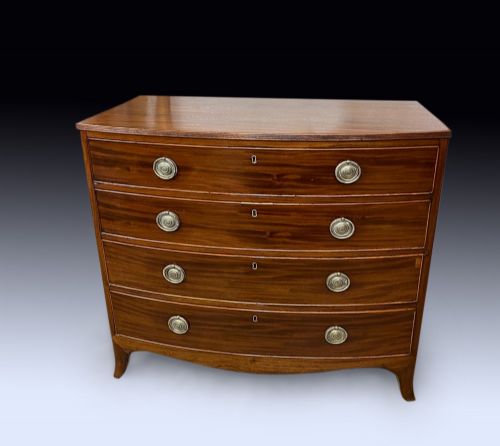
A period bow front dresser encompasses robust chests of drawers and grand sideboards shaped with a distinctive outward-curving front. These pieces primarily date from the Georgian, George III, Regency, and Edwardian eras.
The chests and sideboards found here span from the late 18th century through the 19th century and into the early 20th century. Mahogany remains the dominant wood, appearing alongside satinwood, kingwood, and ebonised timber.
What varies in quality
The distinction between standard examples and the finest pieces rests upon the selection of timber figure and the precision of the curved drawer joints. Superior proportion and an appealing natural patina elevate a piece above simpler utilitarian items.
Sophisticated border inlays and the integration of secondary woods like kingwood indicate a higher tier of workshop execution. Original brass fittings and smooth drawer action further separate better survivals from later alterations.
Period Bow Front Dresser Retail Price Guide 2026
Typical asking prices for period bow front dresser among the pieces listed under this phrase on Sellingantiques today, from the lower quarter to the upper quarter. They describe what is for sale here now, not the wider market.
Listings span the 18th, 19th, and early 20th centuries, uniting Georgian and Regency chests with Edwardian sideboards.
Gillows
The Period Bow Front Dresser Glossary
- Bow front
- A convex, outward-curving front facade typical of certain Georgian and Regency case furniture.
- Patina
- The soft sheen and deep colour developed on wood surfaces through age, handling, and wax polishing.
- Flame mahogany
- A veneer cut from timber fork sections that produces a flamelike, rippling grain pattern.
- Stringing
- Thin inlay lines of contrasting wood used to outline drawer fronts and tabletops.
- Escutcheon
- A protective metal plate surrounding a keyhole, frequently cast in brass.
Period Bow Front Dresser: Frequently Asked Questions
What is a bow front chest?
A bow front chest is a storage unit featuring a convex curved front facade that projects outward from the room. These pieces maximise internal storage capacity while softening the rigid corners typical of standard square chests.
Cabinetmakers utilised this curved design extensively during the Georgian and Regency periods to create visually dynamic furniture. The shape allows for deeper central drawers framed by narrower ends.
How do I date a mahogany chest?
Dating a mahogany chest involves examining the construction methods of the drawer linings, the type of timber grain, and the overall proportions. Earlier 18th century pieces often employ oak or pine secondary woods with hand-cut dovetails.
Stylistic shifts also provide clear chronological markers, transitioning from solid mahogany framing of the Georgian era to the figured veneers and ebonised details of the Regency period. Hardware styles and backboard construction offer further corroborating evidence.
Where should I place a sideboard?
A sideboard suits placement in a dining room, hallway, or living space where its length and surface area can be fully utilised. These substantial forms anchor a wall while providing practical storage for tableware or linens.
Positioning the piece away from direct heat sources protects the timber and veneer from drying out and warping. Adequate clearance ensures the deep drawers and cupboard doors open without obstruction.
What distinguishes Regency furniture?
Regency furniture is characterised by a clean classical restraint influenced by ancient Greek and Roman designs. Pieces from this period frequently showcase dark ebonised accents, brass inlay, and striking mahogany veneers.
The style moves away from heavy carving in favour of sleek architectural lines and bold geometric forms. Proportions tend to be strong and unpretentious, emphasising the natural beauty of the wood.