

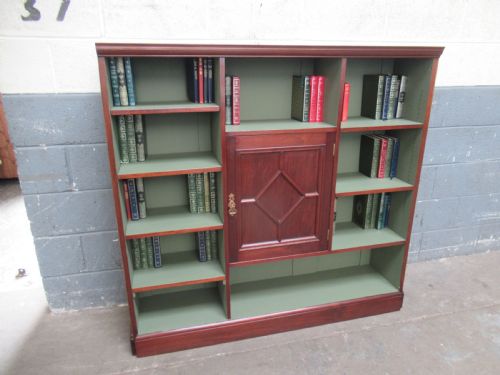


Period Bookshelves
These period bookshelves bring warmth and architectural order to a room, offering genuine timber craftsmanship from the Regency, Victorian, and Georgian eras.
Period Bookshelves
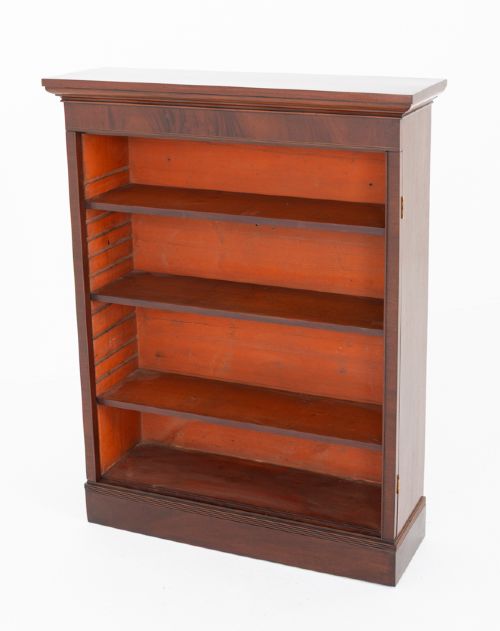
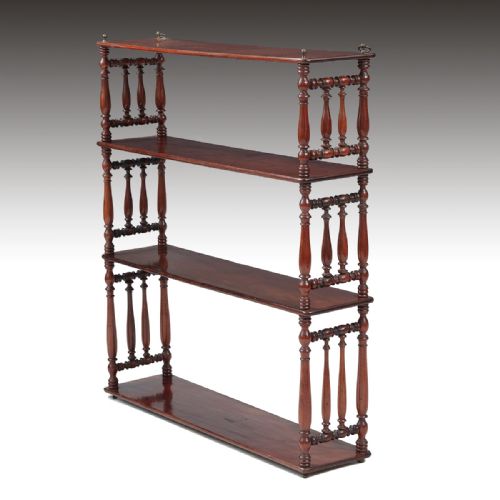
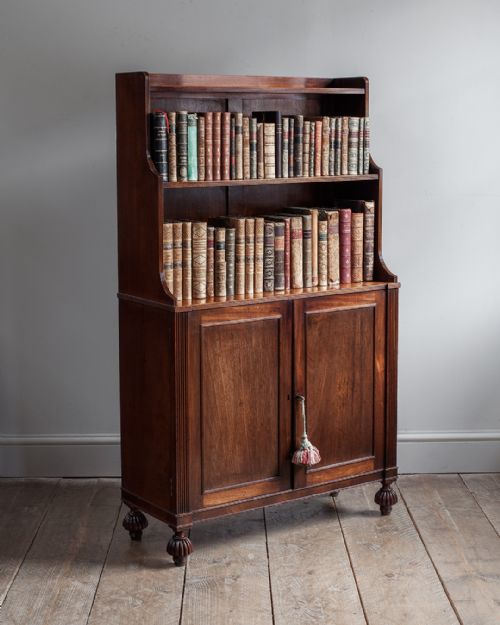
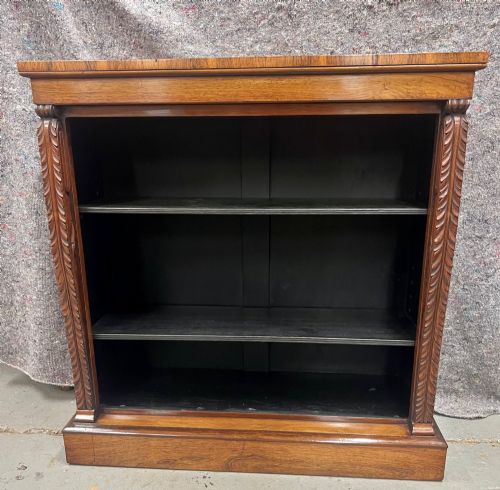
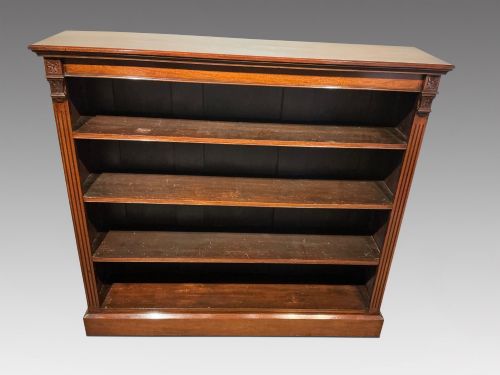
When you search for period bookshelves, you encounter open bookcases, waterfall bookcases, hanging shelves, and low open bookcases built during the Regency, Georgian, and Victorian eras. These items span from wall-mounted pieces to substantial breakfront floor bookcases designed to house substantial libraries.
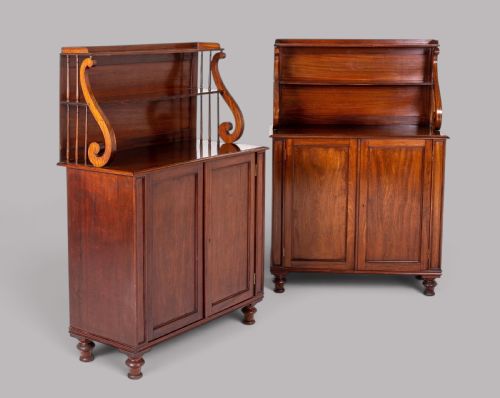
You are most likely to meet mahogany and rosewood open bookcases dating from the Regency period, often featuring graduated tiers or brass inlay. Alongside these, Victorian walnut pieces and Edwardian variations appear regularly in the listings.
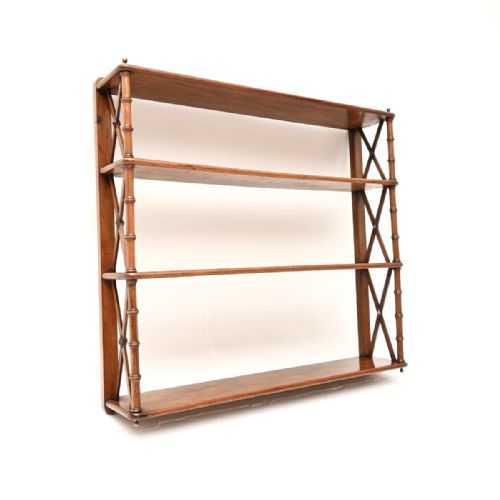
The forms range from compact hanging wall shelves and three-tier whatnots to low open bookcases and side cabinets fitted with leather dummy books. Each piece reflects the domestic storage needs of its specific decade, from the early nineteenth century onward.
What varies in quality
The distinction between standard items and finer examples lies in the precision of the timber matching and the subtlety of the decorative elements. Superior pieces display carefully chosen grain patterns across the main facade and harmonious proportions in the graduating tiers.
Integration of secondary materials like brass inlay, leather inserts, and ormolu mounts affects the overall refinement of the bookcase. Better workshops executed these details cleanly, ensuring that structural joins and decorative brasswork remained flush and secure over centuries of use.
Period Bookshelves Retail Price Guide 2026
Typical asking prices for period bookshelves among the pieces listed under this phrase on Sellingantiques today, from the lower quarter to the upper quarter. They describe what is for sale here now, not the wider market.
The listings feature pieces spanning the Regency, Georgian, Victorian, William IV, and Edwardian periods.
The Period Bookshelves Glossary
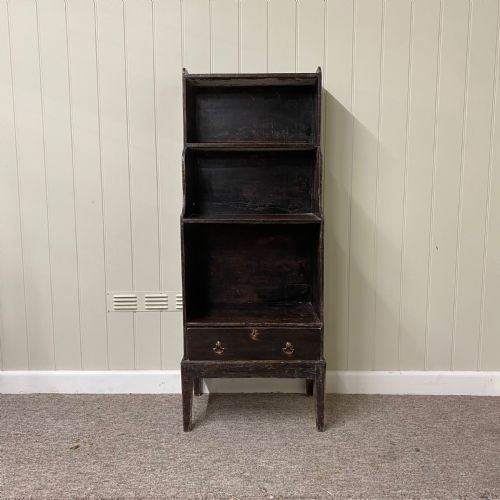
- Waterfall bookcase
- A standing bookcase with graduated shelves stepping back from bottom to top, popular during the Regency period. This tiered design creates a sloping silhouette resembling a cascading waterfall.
- Breakfront
- A cabinet design where the central section projects forward from the flanking wings. This configuration adds architectural presence to larger floor bookcases.
- Ormolu
- Gilt bronze ornamentation applied to furniture for decorative effect. It provides a bright metallic contrast against dark woods like rosewood and mahogany.
- Parcel gilt
- A finishing technique where specific carved areas or details are partially gilded with gold leaf. This highlights particular architectural mouldings on the bookcase.
Period Bookshelves: Frequently Asked Questions
How do I style a period bookcase?
Integrate the piece into a living room or study by balancing books with decorative objects, ceramics, and framed prints. Allow some empty shelf space to showcase the timber grain and back panels.
Position the bookcase away from direct heat sources and strong sunlight to protect the aged wood and delicate veneers from drying out or fading over time.
How do I identify a Regency bookcase?
Regency bookcases typically feature classical proportions, dark hardwoods like rosewood or mahogany, and refined decorative additions such as brass inlay or ormolu mounts. Look for clean architectural lines reflecting the early nineteenth century.
Open shelves and graduated waterfall tiers are common formats from this period, sometimes incorporating side cabinets or fitted leather dummy books.
Are hanging shelves sturdy enough for heavy books?
Hanging shelves were originally built to hold lighter volumes, pamphlets, and decorative ceramics rather than heavy reference sets. Their wall-mounting brackets require secure fixing into solid masonry or studs to support weight safely.
Use wall mounting shelves for lighter collections to preserve the historical joinery and prevent strain on the suspension points.