





Period Bedside Chests
Period bedside chests are small storage pieces that bring timber warmth and period character right beside the bed.
Period Bedside Chests
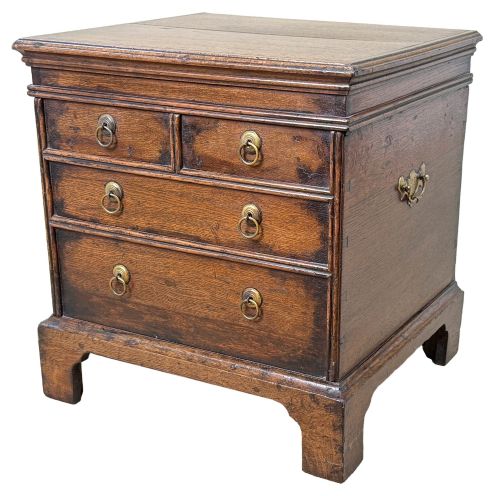
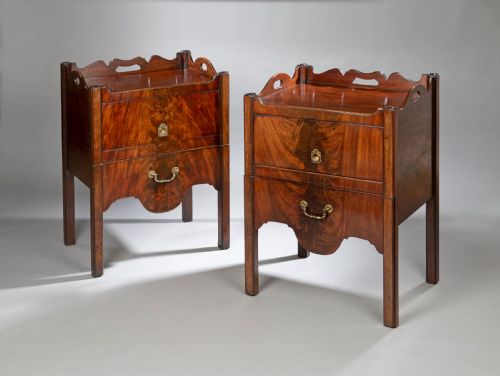
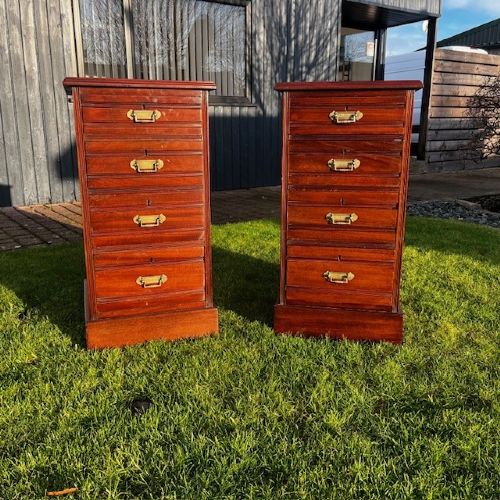
Period bedside chests encompass compact storage pieces built across the Georgian, Regency, and Victorian eras, taking forms such as bedside tables, cabinets, and commodes. When buyers search for period bedside chests, they encounter varied configurations like tray tops, bowfronts, and serpentine facades.
The versions most commonly met on this page include mahogany examples from the Georgian period alongside later Victorian alternatives. These items function primarily as bedside storage while retaining the distinct proportions of their respective centuries.
How they were made
Cabinet makers utilised solid timbers such as mahogany and oak, often incorporating secondary woods for drawer linings and internal framing. Grain selection dictated the exterior visual weight of each chest.
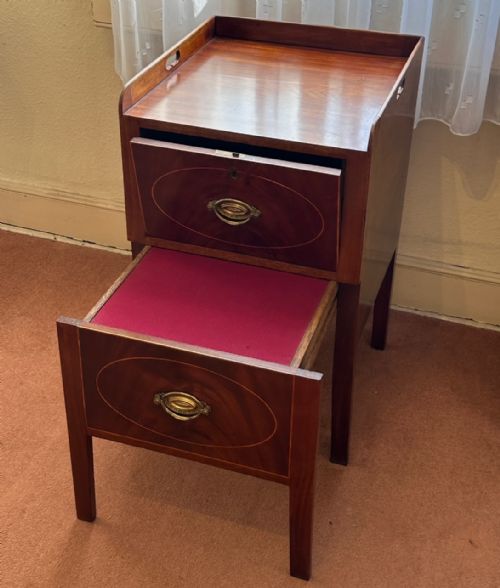
Detailing relied on precision woodworking and hardware integration, with ebony line inlay and brass fittings appearing across Georgian and Regency pieces. Surface finishes developed through repeated application of oil and wax rather than heavy modern sealants.
One eighteenth-century close stool masquerades entirely as a polite bedside chest, keeping domestic secrets safely behind closed doors.
What varies in quality
The distinction between standard examples and superior specimens rests upon timber selection and cabinet work precision. Cabinet makers who matched drawer veneers continuously across a facade achieved a visual harmony absent in lesser builds.
Originality of hardware and secondary timber integrity elevate a piece beyond standard utility. Subtle details like serpentine shaping and fine line inlay separate sophisticated workshops from basic regional production.
The Period Bedside Chests Glossary
- Bowfront
- A convex curved front cabinet facade popular in Georgian design. This contour softens the profile of a small bedside chest.
- Commode
- A piece of furniture incorporating concealed storage, often historically adapted for chamber pots. In this context, it refers to enclosed bedside cabinetry.
- Serpentine
- A horizontally undulating front edge featuring a convex centre flanked by concave curves. This profile requires advanced carpentry skills.
- Tray top
- A raised rim edging the top surface of a bedside table or commode. It prevents items from rolling off the timber surface.
Period Bedside Chests: Frequently Asked Questions
What is a close stool?
A close stool is an eighteenth-century furniture form designed to enclose a chamber pot behind cabinet doors or a fall front. In modern settings, these pieces function as compact bedside cupboards.
Their historical utility has largely transitioned into standard bedside storage while maintaining traditional exterior proportions.
How do I date a bedside chest?
Dating relies on observing timber choices, construction methods, and stylistic cues present in the piece. Georgian items often display figured mahogany and cockbeaded drawer edges.
Later Victorian examples introduce heavier proportions and distinct secondary woods. Comparing hardware fixings and joint construction aids chronological placement.
Are these chests suitable for modern beds?
Period chests offer compact footprints that integrate easily beside contemporary mattress heights. Their drawer configurations provide enclosed storage for bedside essentials.
Buyers should measure surface dimensions and height clearances to ensure compatibility with modern bed frames.
What maintenance do antique timbers require?
Antique mahogany and oak surfaces benefit from regular applications of traditional beeswax to nourish the timber. Avoiding direct sunlight and sustained moisture preserves the polish.
Gentle dusting with a soft cloth prevents surface accumulation without disturbing the historical finish.