

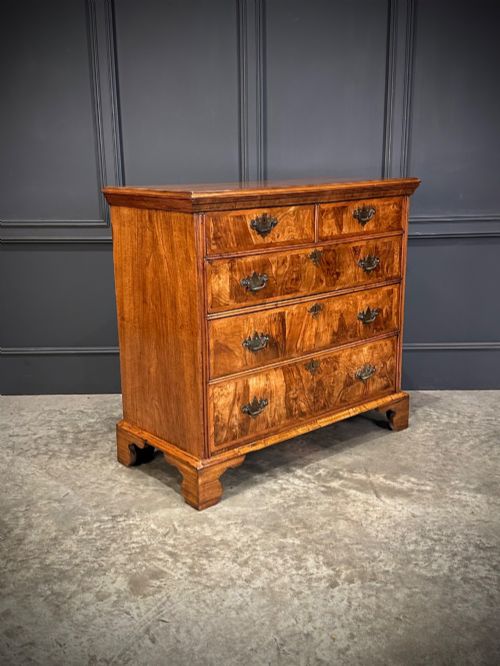
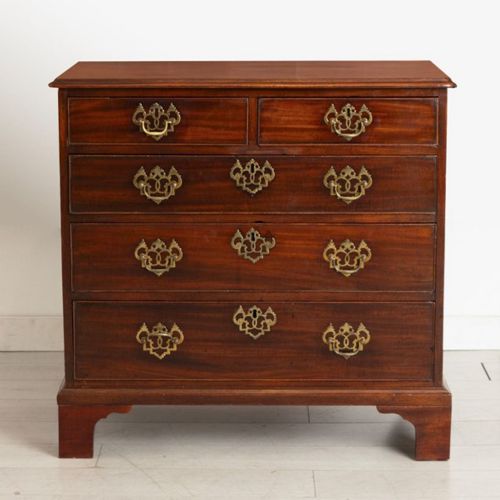


Period Bachelors Chest
A period bachelors chest is a compact wooden drawer unit with a pull-out slide, offering a neat writing surface and discreet storage.
Period Bachelors Chest
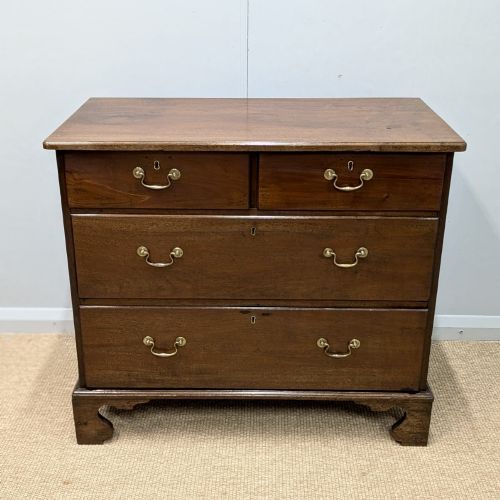
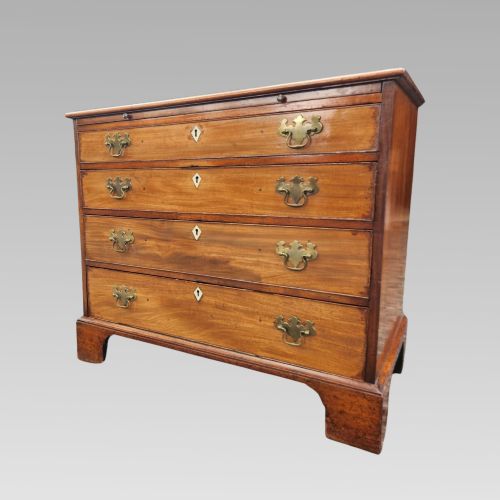
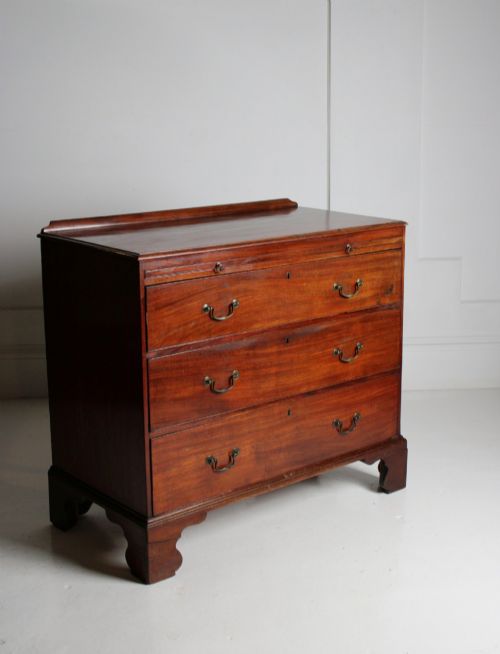
A period bachelors chest is a compact case piece typically fitted with a sliding board above the drawers. These items date primarily from the eighteenth and nineteenth centuries, spanning Georgian reigns from George I to George III.
Most examples found here appear in mahogany, walnut, or oak, occasionally featuring cross-banding or serpentine fronts. Their smaller scale distinguishes them from standard storage chests, alongside the integration of a brushing slide or fitted dressing drawer.
Materials and construction
Cabinet makers constructed these pieces using dense hardwoods like mahogany, walnut, and oak, often reinforced with secondary timbers such as pine. Cross-banding in contrasting grains and decorative veneers added surface pattern to drawer fronts and top panels.
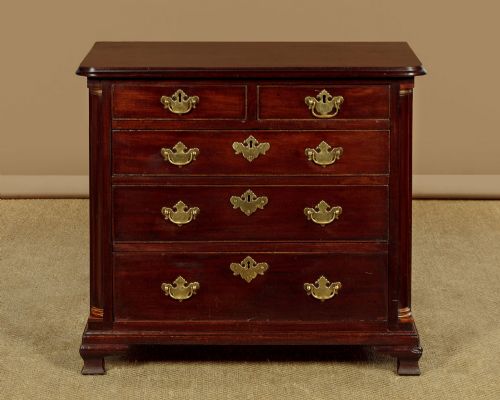
Hardware typically consists of brass drop handles or rococo pulls mounted on bracket feet. Joints utilise traditional cabinetry methods, while internal drawer linings often incorporate oak or pine.
Period Bachelors Chest Retail Price Guide 2026
Typical asking prices for period bachelors chest among the pieces listed under this phrase on Sellingantiques today, from the lower quarter to the upper quarter. They describe what is for sale here now, not the wider market.
Listings feature pieces spanning the eighteenth and nineteenth centuries, constructed in mahogany, walnut, oak, yew wood, and pine.
Evaluating quality and proportion
The finest examples display careful timber selection, such as figured mahogany or rich walnut, matched evenly across the drawer fronts. Superior pieces retain original brass hardware and unmodified bracket feet without extensive timber replacement.
Proportion and scale dictate the visual success of the piece, with smaller dimensions generally commanding greater attention. The smooth operation of the brushing slide and the precision of the dovetail joinery further separate standard items from finer workshops.
The Period Bachelors Chest Glossary
- Brushing slide
- A pull-out wooden board located beneath the top surface of the chest, historically used for writing or grooming. This feature defines the bachelors form.
- Cross-banding
- A decorative border of veneer laid around the perimeter of a drawer front or top, with the wood grain running perpendicular to the surrounding timber.
- Bracket foot
- A structural support foot shaped like an L-bracket, commonly seen on Georgian case furniture. It elevates the body of the chest off the floor.
- Serpentine front
- A furniture front curved with a convex centre flanked by concave wings. This undulating contour requires skilled woodworking.
- Dovetail joint
- A traditional interlocking woodworking joint used to secure drawer corners. Its tight triangular pins provide strong tensile resistance.
Period Bachelors Chest: Frequently Asked Questions
What is a bachelors chest used for?
These chests provided compact bedroom storage for gentlemen while offering a convenient pull-out surface for writing or sorting papers.
The upper drawer often contained fitted compartments for personal items, serving a dual purpose as a dressing chest.
How do I date a Georgian chest?
Dating relies on stylistic shifts in hardware, timber choice, and foot design across the eighteenth century. Walnut predominates in earlier pieces, while mahogany becomes standard by the middle of the Georgian era.
Bracket feet and drawer construction methods also evolve from heavy oak linings to lighter secondary woods over the course of the period.
Are all small chests bachelors chests?
Not every small chest qualifies as a bachelors chest, as the defining feature is the presence of a pull-out brushing slide or fitted dressing drawer.
Standard small chests of drawers lack this specific sliding board beneath the top board, regardless of their compact proportions.
How do I care for antique mahogany and walnut?
Keep wooden surfaces away from direct sunlight and steady heat sources to prevent the timber and veneers from drying out or splitting. Gentle dusting with a dry cloth maintains the polish without damaging the historic finish.
Occasional application of appropriate wax nourishes the wood grain and preserves the surface patina over time.