

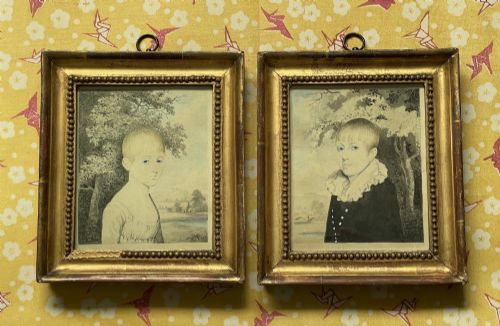
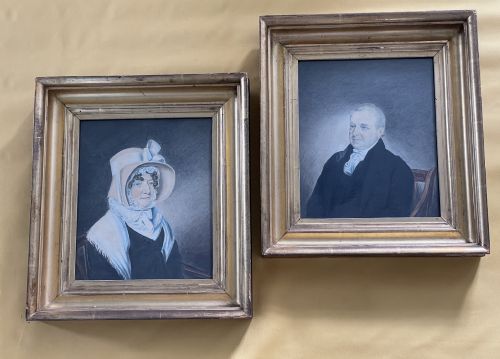


Period Artwork Pairs
Period artwork pairs bring symmetry and narrative balance to a room, offering matched wall displays from centuries past.
Period Artwork Pairs
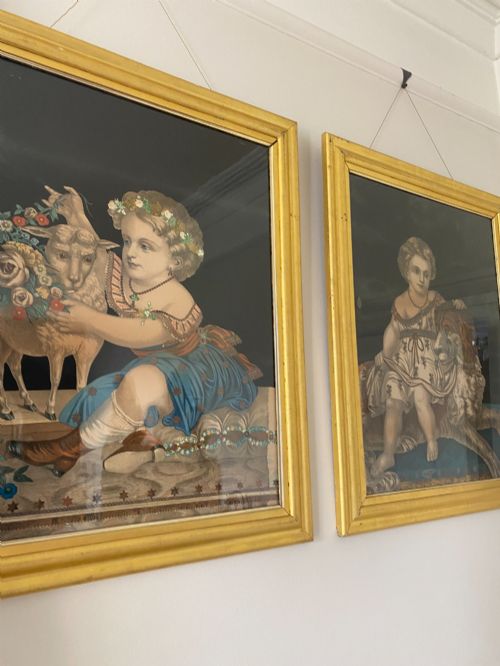
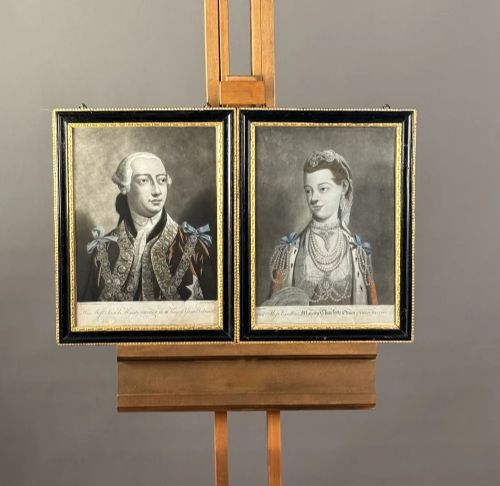
Period artwork pairs encompass matched groupings of paintings, prints, portraits, and decorative panels designed to be displayed together. These duos provide visual equilibrium on a wall, often sharing a common subject, artist, or framing scheme that unites them as a single decorative statement.
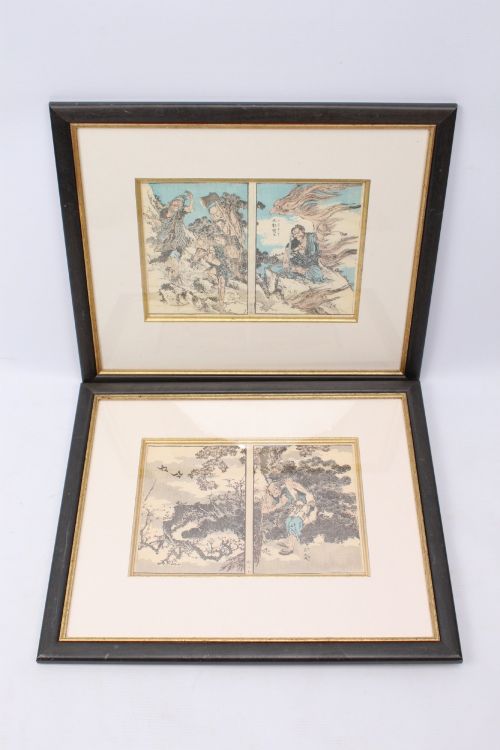
The selections on this page draw from centuries of production, ranging from seventeenth-century engravings and eighteenth-century mezzotints to nineteenth-century watercolours and Japanese woodblock prints. Buyers frequently encounter framed portrait pairs depicting companion subjects, alongside landscapes and narrative scenes.
Origins span British, European, and Japanese traditions, reflecting varied domestic interiors from grand Georgian townhouses to nineteenth-century parlours. Whether showing royal personages, classical ruins, or traditional Japanese scenes, these matched sets maintain their original pairing through careful preservation.
Materials and Techniques
Artists and makers utilised traditional supports including paper, silk, canvas, and enamel plaques, applying oil paint, watercolour, ink, or printing pigments by hand. Engravings and mezzotints emerge from inked metal plates pressed onto paper, whilst Japanese woodblocks employ carved blocks for each colour application.
Frames play a structural and aesthetic role, constructed from wood, giltwood, walnut, and metal embellishments. Glazed fronts, dome-fronted glass, and gold leaf gilding protect the delicate works on paper and silk whilst enhancing the visual weight of the pair.
Period Artwork Pairs Retail Price Guide 2026
Typical asking prices for period artwork pairs among the pieces listed under this phrase on Sellingantiques today, from the lower quarter to the upper quarter. They describe what is for sale here now, not the wider market.
Listings feature works spanning the seventeenth through to the nineteenth century, utilising watercolour, oil on canvas, glass, and paper.
Judging Quality
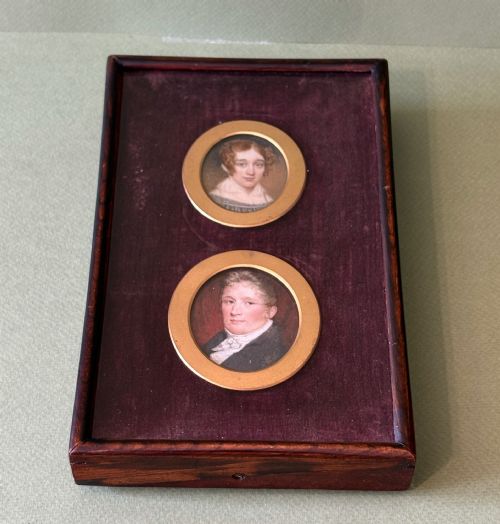
Quality rests upon the skill of the original hand, whether in the delicate brushwork of a miniature portrait, the depth of tone in an eighteenth-century mezzotint, or the precision of lines in Japanese woodblock prints. Works attributed to known schools or named artists display superior draughtsmanship and compositional confidence.
The integrity of the pair as a matched set dictates its standing, alongside the preservation of original materials such as period frames, glass, and backing papers. Well-maintained surfaces retain their original colour saturation without excessive fading or restoration.
Thomas Frye·Richard Purcell·Giovanni Paolo Panini·Thomas Woolnoth·Francois Boucher·H. Singleton
The Period Artwork Pairs Glossary
- Mezzotint
- A printmaking process of the intaglio family where tones are created by roughening the metal plate with a rocker. This technique allows for rich darks and subtle tonal gradations, popular for eighteenth-century portraiture.
- Woodblock print
- An image carved into a block of wood, inked, and pressed onto paper or textiles. Japanese examples often utilise multiple blocks to build complex multicolour compositions.
- Roundel
- A circular panel, painting, or decorative work of art. These often feature specialised mountings or frames suited to compact wall displays.
- Enamel plaque
- A small metal plate fused with powdered glass through firing to create a durable, glossy coloured surface. They preserve fine miniature painting without the degradation associated with paper.
- Giltwood
- Wood carved and coated with gold leaf or metallic powder. This finish provides a bright reflective border that defines and elevates framed artwork.
Period Artwork Pairs: Frequently Asked Questions
How do I hang a pair?
Hang them at eye level with consistent spacing between the frames to maintain visual balance on the wall. Aligning the top or centre points ensures they read as a cohesive unit.
Keep them away from direct sunlight and damp environments to protect paper supports, watercolours, and giltwood frames from degradation over time.
Were these always sold together?
Most works created as pendants or companion pieces were conceived, framed, and sold as a pair from the beginning. Subjects like departure and return or male and female portraits specifically rely on duality.
Over the centuries, some matched pairs remained together through successive ownership, whilst others were reunited later based on matching frames, subjects, and sizes.
How do I identify the period?
Examine the framing materials, backing papers, and the construction techniques of the stretcher or glass. Eighteenth-century frames and early nineteenth-century papers display distinct ageing characteristics.
Stylistic cues within the artwork, such as Georgian costume or Meiji period motifs, provide reliable chronological markers when combined with physical examination.
Can I separate the two pieces?
Separating a matched pair diminishes their historical context and decorative impact, as they are designed to complement one another in subject and composition.
Keeping them together preserves their narrative value and ensures the artistic integrity intended by the original maker or publisher remains intact.