




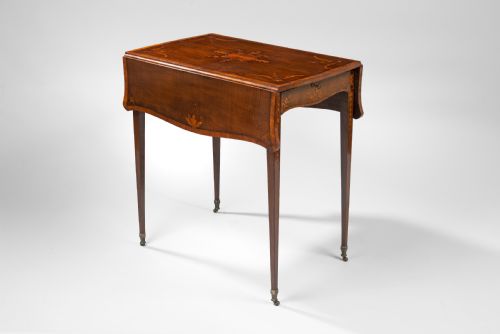
Pembroke Tea Table
A pembroke tea table is a versatile drop-leaf piece with folding side flaps, offering extra surface space when expanded.
Pembroke Tea Table
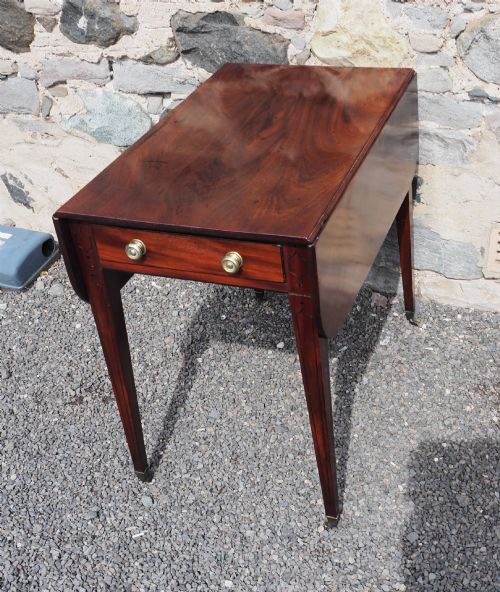
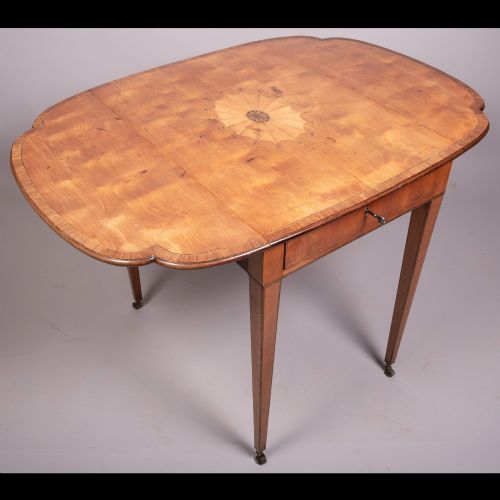
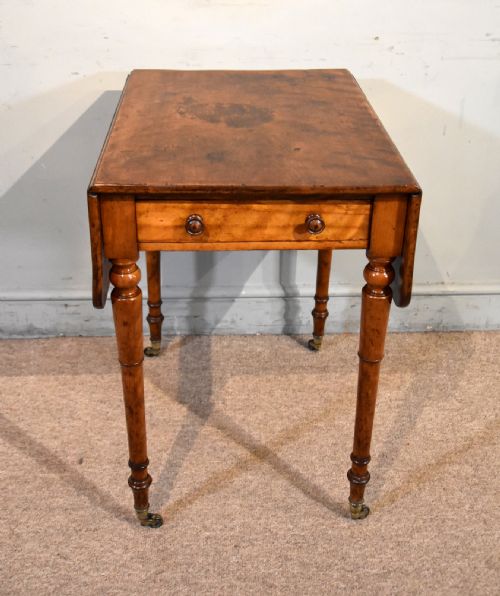
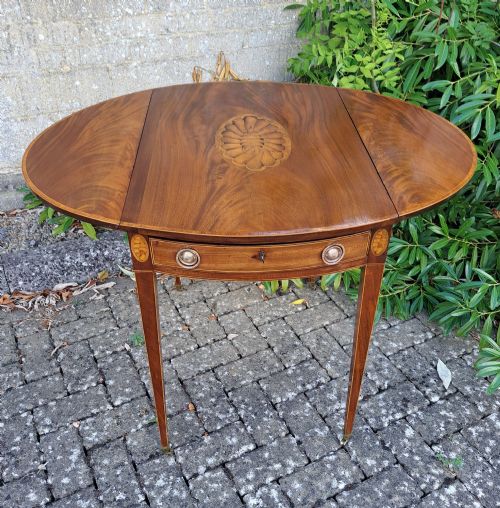
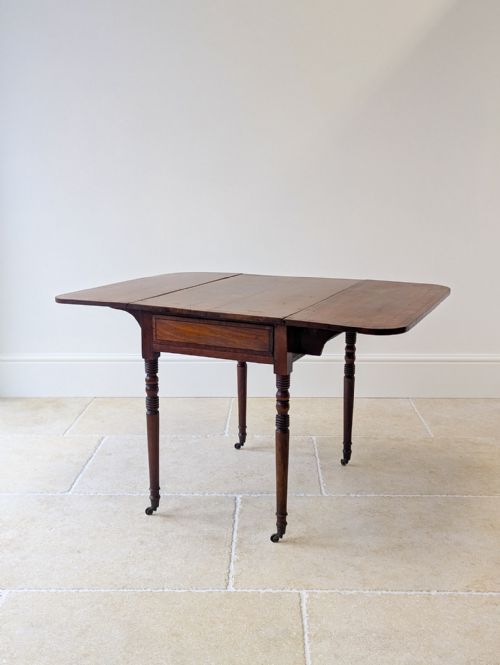
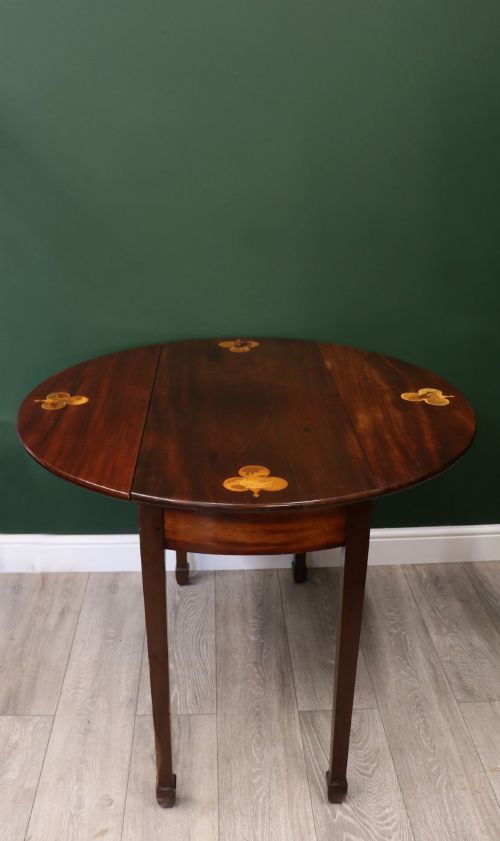
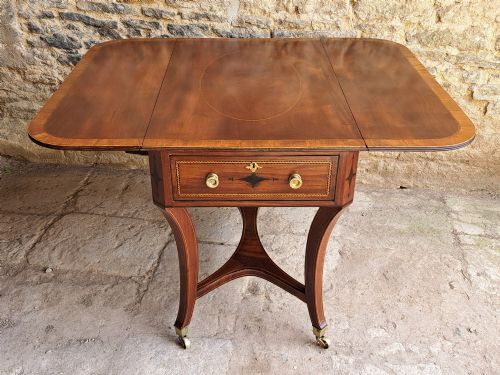
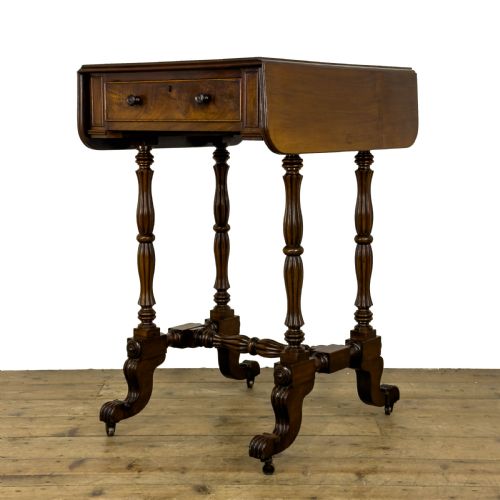
When you search for a pembroke tea table, you encounter drop-leaf drop leaf tables and occasional tables primarily from the Georgian, Regency, and Victorian periods. Most examples follow a rectangular or oval form with hinged leaves supported by folding brackets or swing legs.
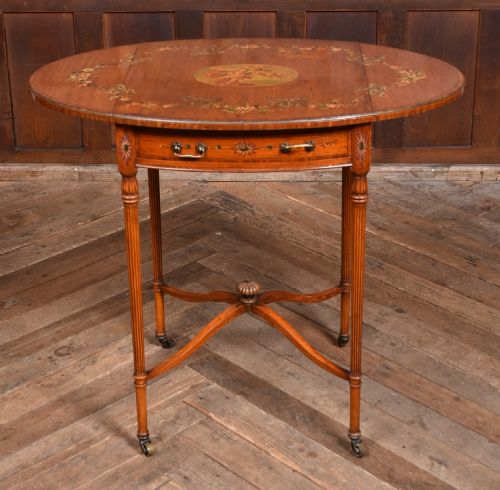
The pieces on this page span the eighteenth and nineteenth centuries, including specific styles like Sheraton, Hepplewhite, and Edwardian Neoclassical. These tables functioned as versatile furniture for tea service or small spaces, easily expanding when needed and folding down compactly against a wall.
How they were made
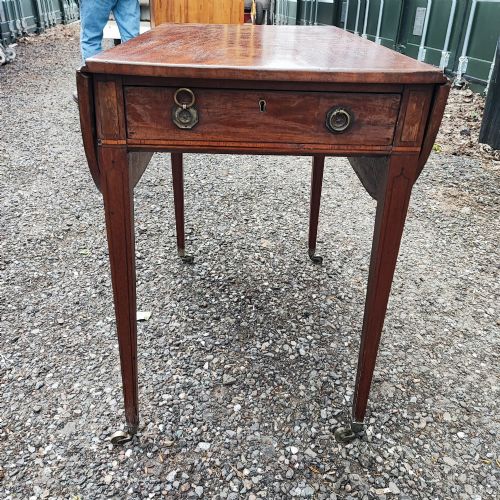
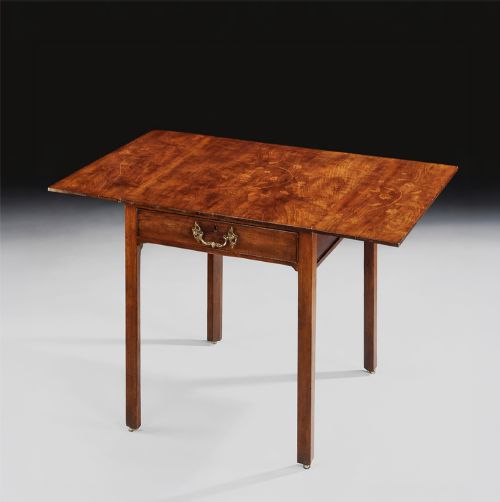
Cabinetmakers utilised timber such as mahogany, satinwood, rosewood, and tulipwood, often selecting figured grains for the top surfaces. Construction frequently involved boxwood inlay, marquetry, and cross-banding to frame the main panels and borders.
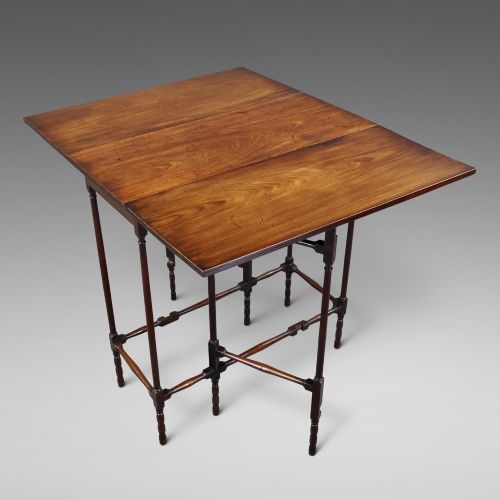
Makers integrated brass hardware, including castors on the feet and pulls for the drawers. The drop leaves relied on sturdy hinged mechanisms, such as swing brackets or spider legs, to support the extended flaps.
Pembroke Tea Table Retail Price Guide 2026
Typical asking prices for pembroke tea table among the pieces listed under this phrase on Sellingantiques today, from the lower quarter to the upper quarter. They describe what is for sale here now, not the wider market.
Listings feature mahogany, satinwood, rosewood, and tulipwood, spanning the Georgian, Regency, Victorian, and Edwardian periods.
What varies in quality
The refinement of the timber selection dictates the visual success of the piece, with richly figured mahogany or intricate satinwood marquetry marking superior examples. Crisp execution of boxwood inlay and delicate cross-banding separate standard utilitarian tables from master cabinetmaker productions.
Proportion and structural grace define the better pieces, particularly in the balance of the drop leaves relative to the central frame and the delicacy of the pedestal or leg supports.
Johnstone and Jeanes
The Pembroke Tea Table Glossary
- Pembroke table
- A small table with two hinged drop leaves on opposing sides. It typically includes one or two drawers.
- Drop-leaf table
- A table with a fixed central section and hinged flaps that fold down. This design allows the footprint to alter according to space requirements.
- Cross-banding
- A border technique where thin strips of veneer are laid around the perimeter of a tabletop. The grain runs perpendicular to the central panel for decorative contrast.
- Marquetry
- The art of applying pieces of veneer to a structure to form decorative patterns and pictures. Makers used various woods to achieve tonal variation.
- Spider leg
- A style of slender, turned table leg offering minimal visual weight. This formation provides stability without bulk on small occasional tables.
Pembroke Tea Table: Frequently Asked Questions
What is a pembroke tea table?
A pembroke tea table is an occasional table featuring two hinged drop leaves that expand the surface area. They typically include small drawers and slender legs designed for easy movement around a room.
Historically, these tables served dual purposes for light meals, tea service, or writing. Their adaptable footprint made them popular in the eighteenth and nineteenth centuries.
How do I identify a Georgian table?
Georgian tables often display solid timber construction in mahogany or satinwood with restrained inlay. Look for period characteristics like hand-cut dovetails in the drawers and understated brass hardware.
Details such as cross-banding and fine boxwood stringing help distinguish pieces from this era. Cabinetmakers during this time prioritised proportion and functional elegance over heavy ornamentation.
Where should I place this table?
These tables fit well beside seating areas or against walls with the leaves dropped. They function effectively as lamp tables, side surfaces, or display points in a living room.
Opening the leaves provides additional workspace when entertaining guests. Their compact closed dimensions suit hallways and smaller rooms.
What woods were commonly used?
Mahogany served as the primary timber for the majority of these tables, often enhanced with figured grain patterns. Cabinetmakers also utilised satinwood, rosewood, and harewood for contrasting borders and inlay.
Inlays frequently featured boxwood and tulipwood to create geometric or floral marquetry designs. These varied materials contributed to the decorative richness of the finished furniture.