

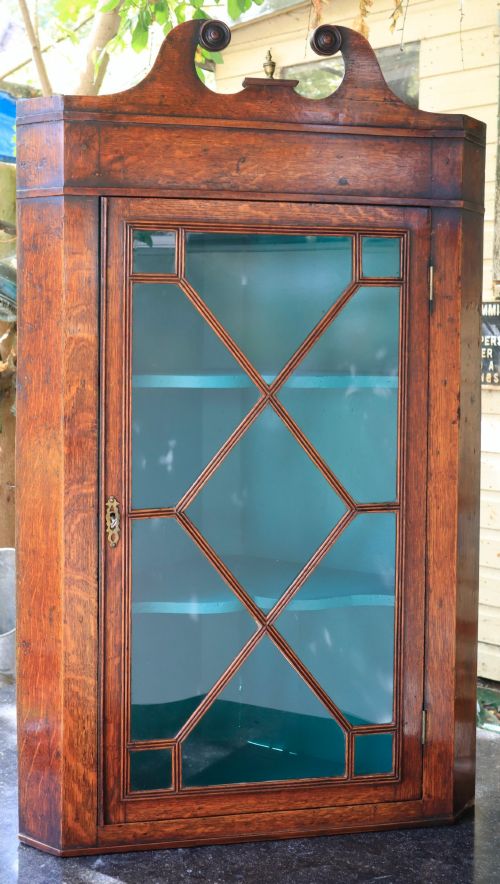


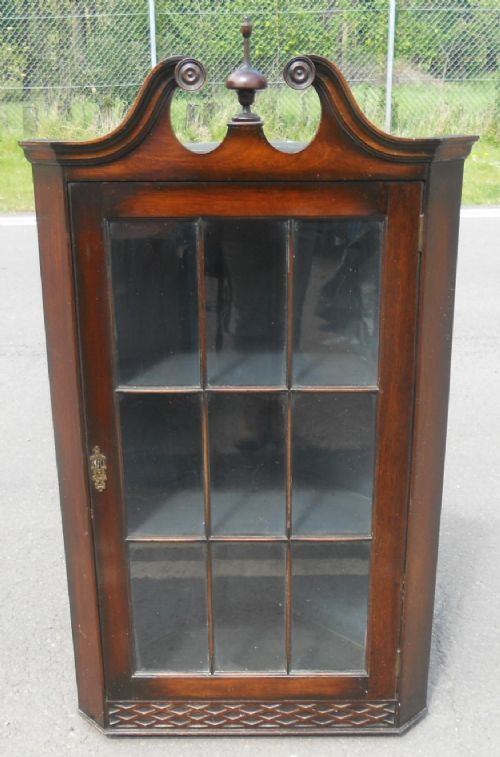


Pediment Wall Cupboard
A pediment wall cupboard brings architectural presence and compact storage to any room, offering clean lines and period character in a hanging design.
Pediment Wall Cupboard
A pediment wall cupboard is an enclosed hanging cabinet designed to fit neatly into room corners or mount directly onto flat walls, making efficient use of interior space. These pieces span from the seventeenth century through the Georgian and Edwardian eras, reflecting changing domestic tastes in British and European interiors.
Most examples encountered on this page date from the Georgian and eighteenth century periods, constructed primarily in mahogany or oak. They frequently feature architectural broken arch pediments and glazed or solid doors intended to display or conceal contents safely off the floor.
Materials and construction
Cabinetmakers built these wall cupboards using solid timbers such as mahogany and oak, often incorporating flame mahogany veneers and delicate boxwood or satinwood inlay for decorative contrast. Structural joinery relied on traditional methods to ensure stability while hanging, utilising brass hinges and escutcheons to secure doors.
Glazing bars divided glass panes into geometric patterns on display versions, while architectural elements like broken arch pediments required precise woodworking skills to achieve the desired classical proportions.
Pediment Wall Cupboard Retail Price Guide 2026
Typical asking prices for pediment wall cupboard among the pieces listed under this phrase on Sellingantiques today, from the lower quarter to the upper quarter. They describe what is for sale here now, not the wider market.
Listings feature mahogany and oak as the predominant primary timbers, alongside decorative boxwood and satinwood inlay.
Distinctions in quality
Quality in these cupboards rests upon the selection of timber figures and the crispness of architectural details such as the pediment and inlay. Superior examples display carefully matched grain patterns, refined mouldings, and original brass hardware that integrate harmoniously with the primary wood.
Simpler vernacular pieces rely on utilitarian oak construction and straightforward joinery, whereas high-status pieces incorporate sophisticated Georgian styling, intricate satinwood stringing, and balanced proportions executed by skilled hands.
The Pediment Wall Cupboard Glossary
- Pediment
- A triangular or broken architectural gable crowning the top of a cabinet. This classical feature draws the eye upward and defines the formal style of the piece.
- Flame mahogany
- A highly figured tropical hardwood veneer displaying distinctive flickering flame patterns. Cabinetmakers utilised this timber on prominent door surfaces for decorative impact.
- Inlay
- Contrasting woods such as boxwood or satinwood fitted into recessed channels within the primary timber. This technique creates geometric borders and delicate decorative motifs.
- Glazing bars
- Slender wooden strips holding individual panes of glass within a cabinet door. They form structural grids that often reflect specific period designs like Gothic or Georgian arches.
- Escutcheon
- A protective metal plate surrounding a keyhole, commonly cast in brass. It prevents the surrounding wood from wearing down through repeated use of the key.
Pediment Wall Cupboard: Frequently Asked Questions
What is the difference between a corner and flat wall cabinet?
Corner cabinets feature angled backs designed to nestle into room corners, maximising unused space in smaller domestic interiors. Flat wall cabinets mount against a single wall surface and typically offer a rectangular profile.
Both types share hanging capabilities and period pediment details, but their footprints dictate how they interact with surrounding furniture.
How do I identify a Georgian pediment cupboard?
Georgian examples usually display architectural proportions influenced by classical design, often featuring mahogany timbers and broken arch pediments. Look for period construction methods such as hand-cut dovetails on internal shelving and secondary softwoods on the backboards.
Later Edwardian revivals often copy these forms but typically use lighter internal framing and machine-cut elements.
Can I use these cupboards for everyday storage?
The sturdy timber construction and internal shelving make these cabinets well-suited for storing tableware, glassware, or everyday household items. Their enclosed design keeps contents free from dust while keeping them accessible.
Care should be taken not to overload shelves, as historical fixings and older timbers have load limits compared to modern shelving.