


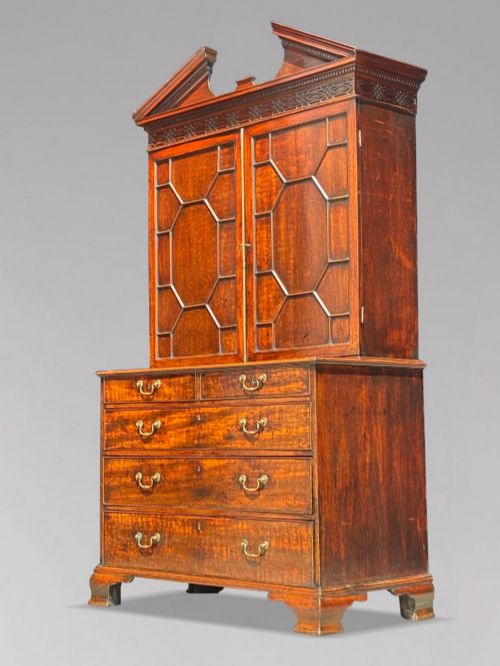
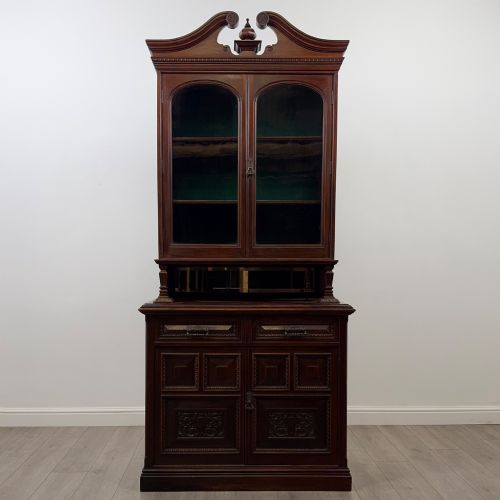
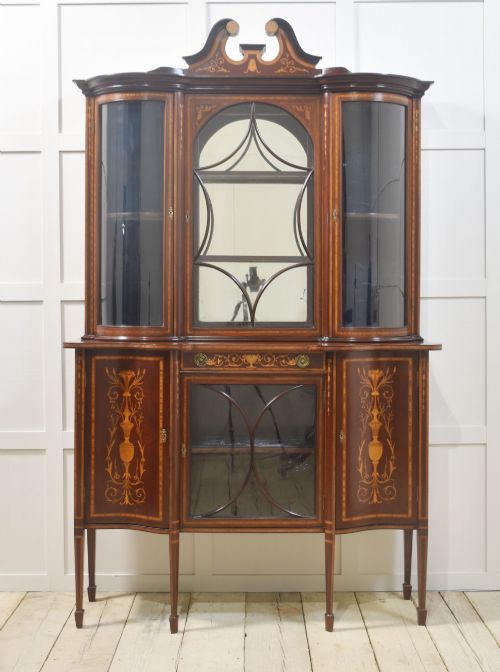
Pediment Bookcase
A pediment bookcase holds volumes behind glazed doors beneath a classically inspired crown, built to anchor a serious library.
Pediment Bookcase
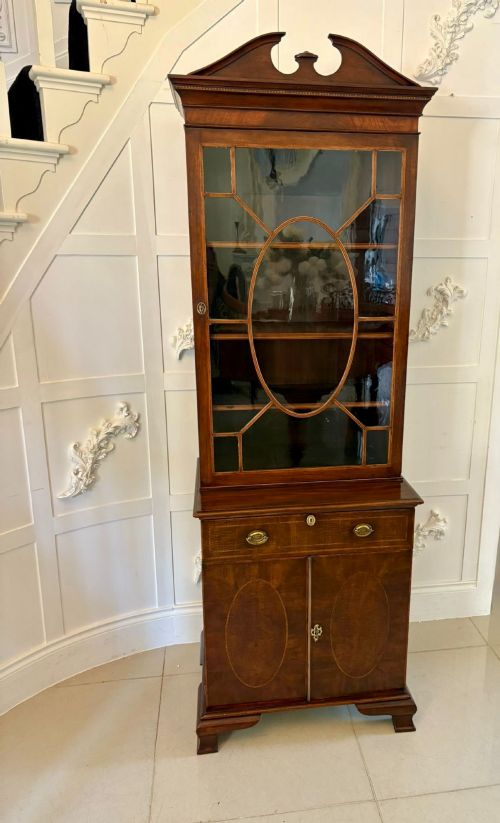
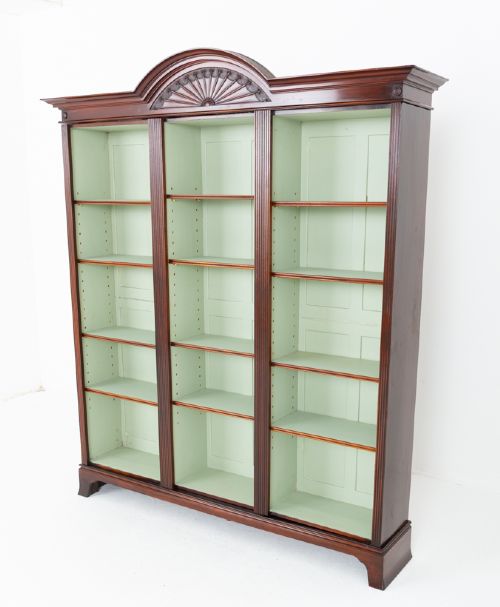
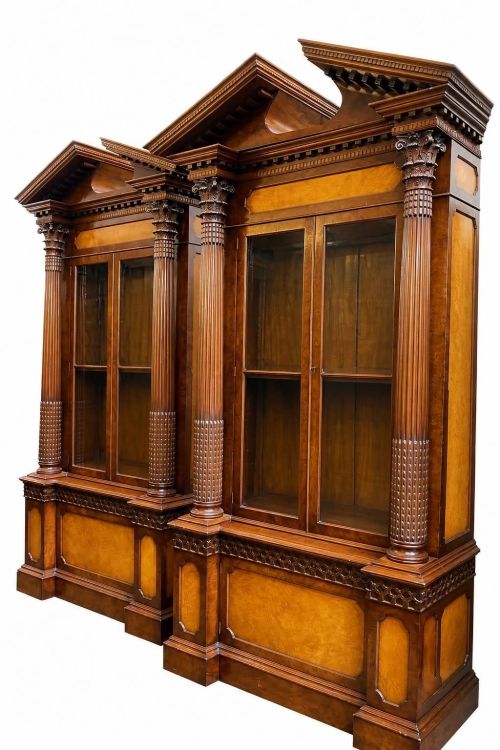
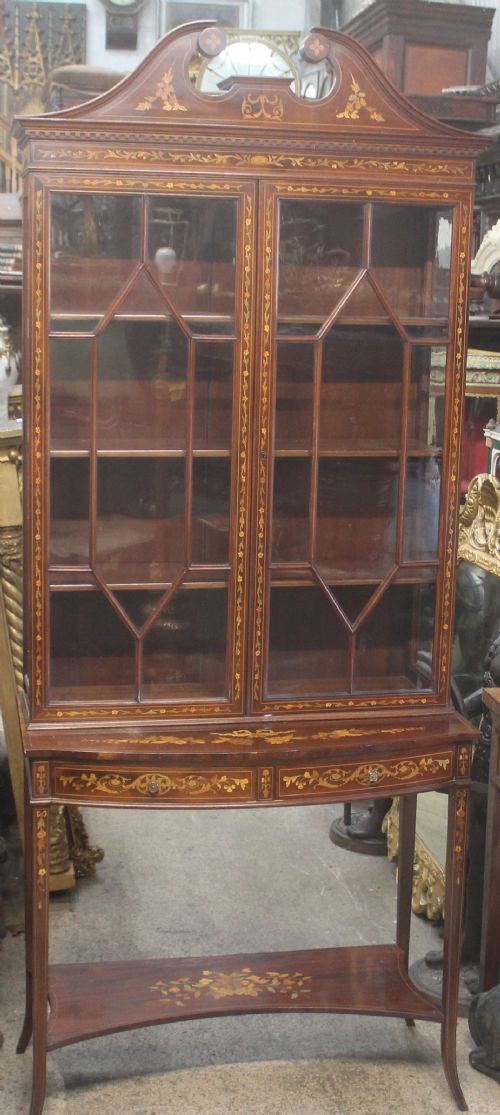
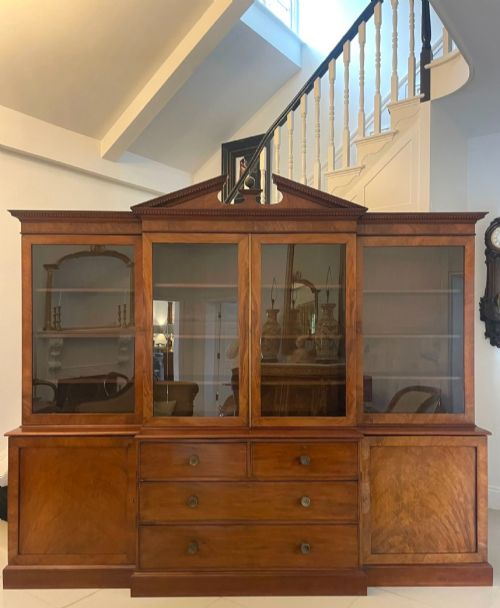
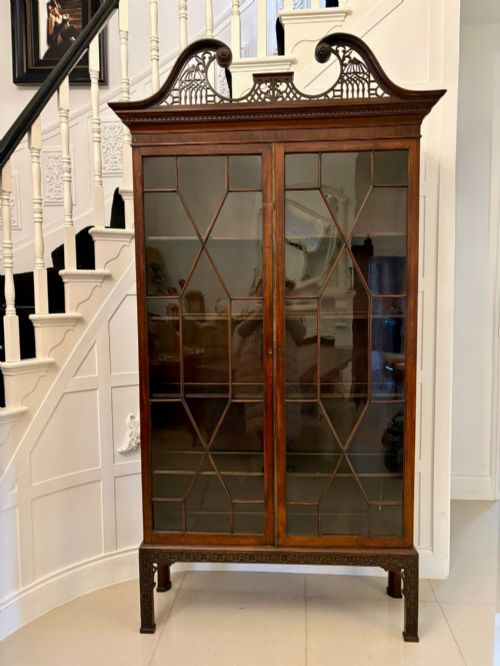
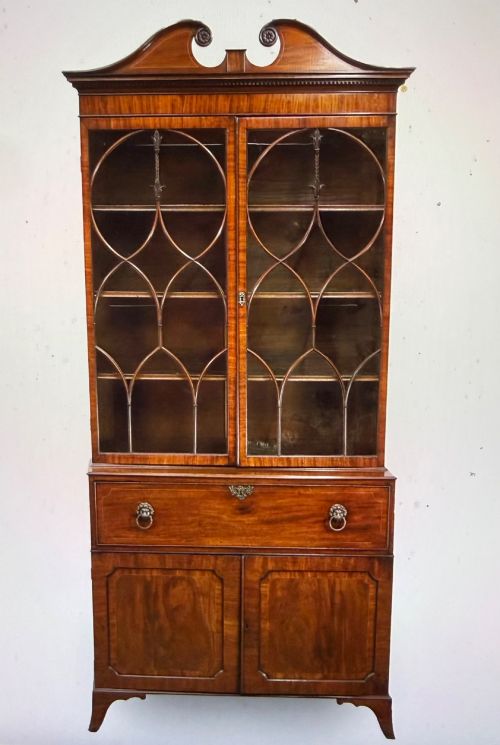
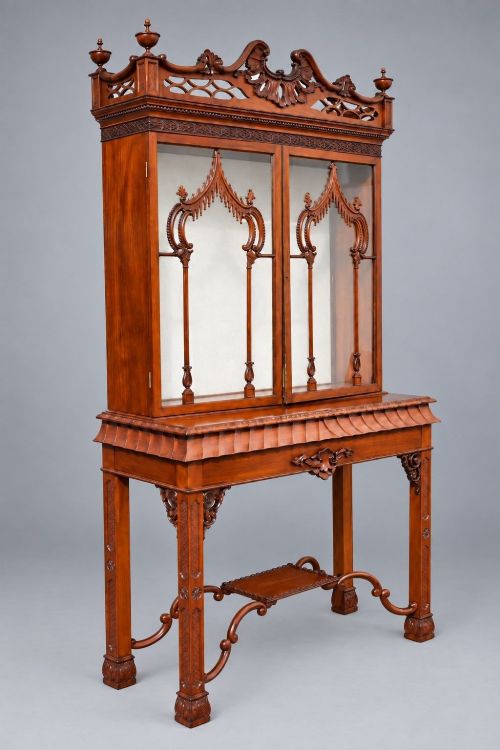
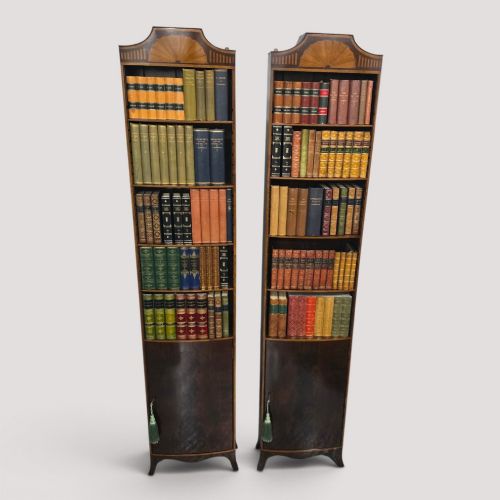
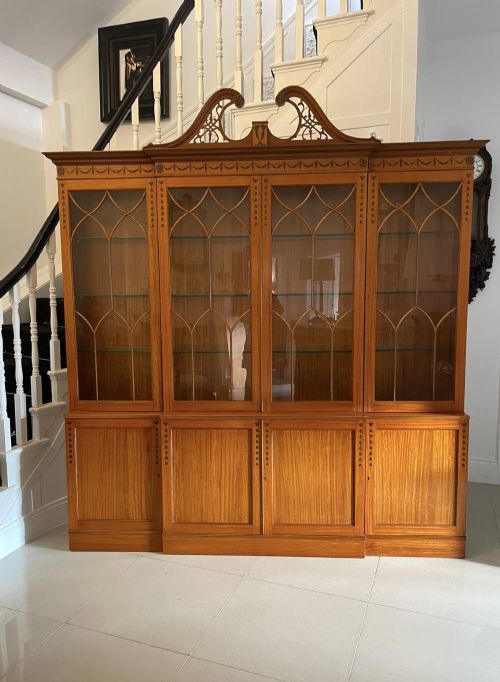
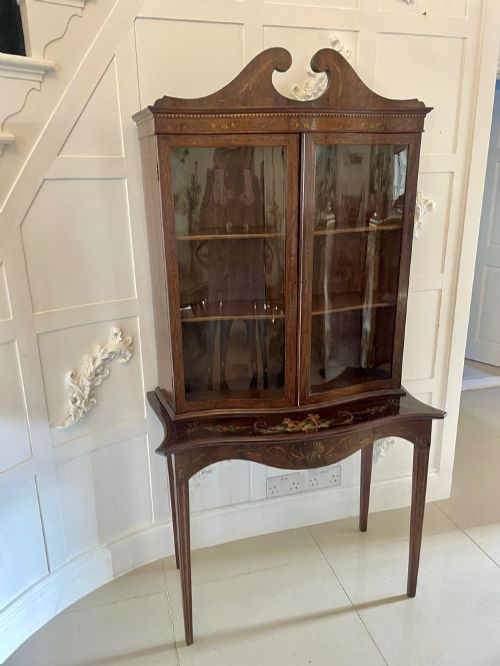
A pediment bookcase brings together the storage of a library with architectural presence, appearing most frequently in forms defined by eighteenth-century Georgian proportion and nineteenth-century Victorian scale. These pieces range from bureau bookcases with fitted writing drawers to grand breakfronts and display cabinets crowned by distinctive swan neck or broken pediments.
Makers across the eighteenth and nineteenth centuries drew on styles from George II and George III periods through to Edwardian revivals, constructing tall housings for books and curiosities. Walnut, mahogany, and oak dominate the surviving examples, often enriched with marquetry inlay or astragal glazing bars dividing the glass panels.
Materials and Construction
Cabinet makers relied heavily on solid mahogany, walnut, and oak for the structural carcasses and shelving, frequently incorporating satinwood and marquetry inlay to decorative surfaces. Glass panels were secured within wooden astragal frames, while brass hardware fitted doors and fall-front desks.
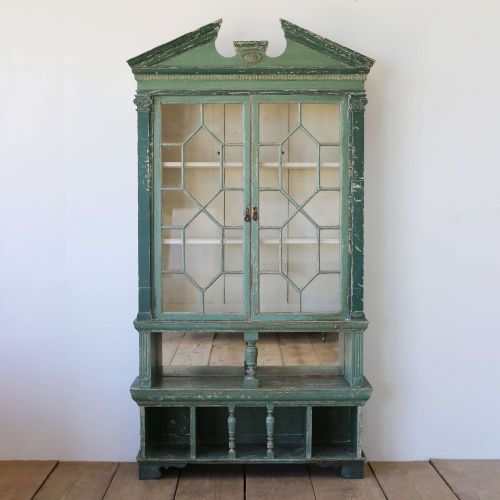
Construction techniques balanced load-bearing strength with refined ornamental detail, joining timber carcases with cabinetwork precision. Architectural pediments, whether triangular or swan neck, required careful joinery to sit securely above the main bookcase body.
Pediment Bookcase Retail Price Guide 2026
Typical asking prices for pediment bookcase among the pieces listed under this phrase on Sellingantiques today, from the lower quarter to the upper quarter. They describe what is for sale here now, not the wider market.
Judging Quality and Execution
Quality rests in the choice of timber figures, the crispness of carved mouldings on the pediment, and the balance of proportions across breakfront or bureau sections. Finer pieces demonstrate meticulous matching of grain on drawer fronts and refined execution of inlay work.
The integration of original glass panes, brass handles, and fitted interior compartments elevates an example. Structural integrity in the heavy cornice and glazed doors distinguishes superior workshop production from simpler utilitarian storage.
Thomas Chippendale
The Pediment Bookcase Glossary
- Pediment
- The triangular or curved architectural ornament crowning the top of a bookcase.
- Astragal
- A moulding profile used to divide glass panes within a glazed cabinet door.
- Breakfront
- A piece of furniture where the central section projects forward from the flanking wings.
- Secretaire
- A cabinet incorporating a pull-down writing drawer fitted with small drawers and pigeonholes.
- Marquetry
- Decorative patterns formed by fitting together thin veneers of various coloured woods.
Pediment Bookcase: Frequently Asked Questions
What is a pediment bookcase?
A pediment bookcase is a tall piece of furniture designed for storing books, featuring glazed or solid doors and topped with an architectural pediment. These cabinets combine functional shelving with classical design elements derived from eighteenth and nineteenth-century furniture styles.
Such pieces often incorporate bureau sections or display space beneath the prominent crown, serving as both storage and a focal point in a room.
How were bureau bookcases used?
Bureau bookcases served dual purposes for writing and reading, combining a sloping desk flap with upper shelving for volumes. The fall-front desk opened to reveal small compartments for letters and stationery.
This arrangement allowed individuals to manage correspondence and consult reference books within a single piece of fitted cabinetry.
How do I date a mahogany bookcase?
Dating mahogany furniture involves examining timber density, construction methods, and stylistic details such as pediment shapes and glazing bar thickness. Eighteenth-century examples often display hand-cut dovetails and rich, aged grain patination.
Victorian and Edwardian iterations frequently show heavier proportions or machine-assisted joinery while retaining stylistic references to earlier Georgian periods.
Where should I place a large breakfront bookcase?
Large breakfront bookcases require stable wall space away from direct sunlight and dramatic temperature fluctuations to protect aged timber and veneer. Their substantial height and width demand a room with adequate proportions to balance the architectural scale.
Positioning them against a primary interior wall allows the crown and pediment details to be viewed without obstruction.