


Pedestal Silver Ice Bucket
These pedestal silver ice bucket selections bring grand dining tables and cocktail hours together, offering stately proportions to hold your champagne and wine.
Pedestal Silver Ice Bucket
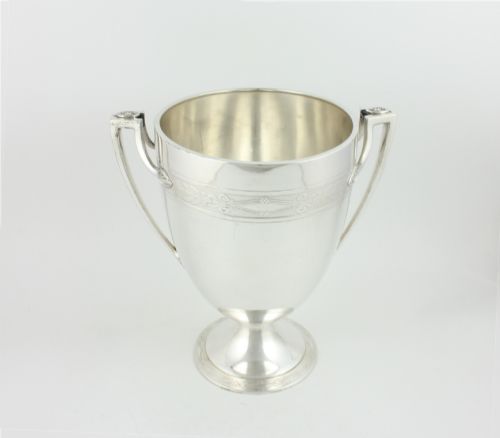
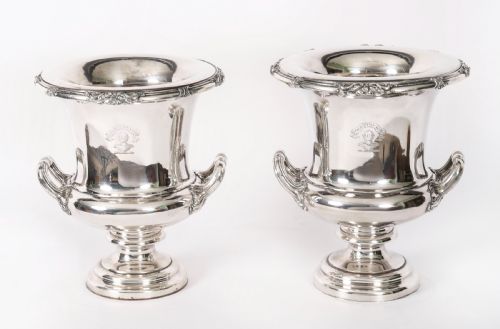
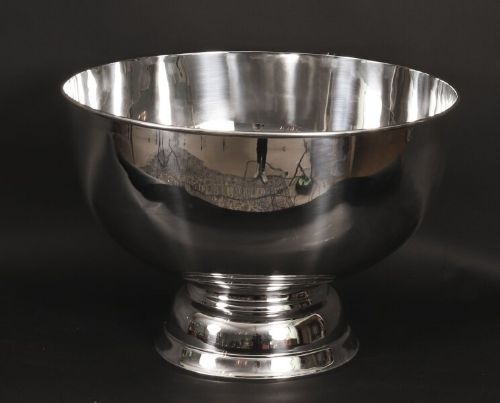
When you search for a pedestal silver ice bucket, you encounter grand cooling vessels designed to elevate wine and champagne above the dining table surface. The pieces on this page span the eighteenth, nineteenth, and twentieth centuries, taking the form of wine coolers, presentation bowls, and lidded pails.
You are most likely to meet silver plate and Old Sheffield Plate examples from the Victorian and Edwardian eras, alongside striking Art Deco designs. Formats range from classical Italian neoclassical shapes featuring cherubs to austere chrome and pewter vessels from Parisian restaurants.
The pedestal base distinguishes these coolers from standard table-resting buckets, lifting the body on a short stem or foot. This architectural elevation reflects the formal dining customs of the Georgian and Regency periods right through to mid-century modern entertaining.
How they were made
Makers utilised heavy silver plating over copper or base metals, alongside solid sterling silver and Old Sheffield Plate where a thin sheet of silver is fused to a copper core. Craftspeople also shaped copper, pewter, chrome, and occasional wooden elements to build these substantial cooling vessels.
Techniques relied on careful soldering, spinning, and hand-chasing to apply decorative motifs like rococo revival scrolls or clean art deco geometric lines. Manufacturers such as Christofle and Mappin and Webb employed skilled artisans to form the heavy pedestal mounts and secure handles.
What varies in quality
Quality rests in the weight of the metal and the crispness of the chased or cast ornamentation around the rim and pedestal foot. Thick silver plate and substantial Old Sheffield construction show superior durability compared to lighter, purely decorative items.
The integrity of the pedestal joint and the balance of the vessel determine its structural success. Superior examples maintain a heavy, stable footing that securely supports a full vessel of ice and wine without tipping.
Christofle·Mappin and Webb·Barker Ellis
The Pedestal Silver Ice Bucket Glossary
- Old Sheffield Plate
- A fused bilayer metal created by melting a sheet of sterling silver onto a copper ingot before rolling them together into plates. This technique was widely utilised before modern electroplating became standard.
- Silver Plate
- A thin layer of pure silver applied to a base metal substrate, commonly copper, brass, or nickel silver. It allowed makers to produce impressive dining wares at a lower material cost.
- Pedestal
- A raised foot or supporting column beneath the main body of the vessel. It elevates the cooling bucket above the table surface for dramatic effect.
- Regency
- A British design style spanning the early nineteenth century characterised by classical revival motifs and clean architectural lines. Pieces from this era often feature bold handles and robust pedestal bases.
Pedestal Silver Ice Bucket: Frequently Asked Questions
Can I use these for daily entertaining?
These cooling vessels were built for service and perform admirably when holding ice and bottles at modern gatherings. Their robust construction handles regular use without trouble.
Protect interior linings from prolonged contact with acidic ingredients like citrus wedges. Wipe the interior dry after each gathering to preserve the metal finish.
How do I date a pedestal ice bucket?
Examine the weight, construction seams, and any stamped maker marks or registry numbers on the base. Georgian and Regency pieces often display hand-beaten characteristics and fused copper edges typical of Old Sheffield Plate.
Twentieth-century items by makers like Mappin and Webb or Christofle typically feature distinct commercial hallmarks and stamped inventory numbers. Art Deco examples show characteristic geometric profiling and chrome or heavier silver plate finishes.
What is the difference between a wine cooler and a champagne bucket?
Wine coolers traditionally feature heavier, more insulated walls designed to maintain temperature throughout a long formal dinner. They frequently incorporate fixed ring handles and grand pedestal bases.
Champagne buckets often have deeper bowls and simpler handling to accommodate taller bottles and frequent ice replenishment. Both forms share overlapping roles in vintage tablescape arrangements.