





Italian Silver Barware
Italian silver barware brings mid-century craft to the drinks trolley, offering stylish cocktail shakers, ice buckets, and trays for entertaining.
Italian Silver Barware
Italian silver barware encompasses serving pieces designed for mixing and presenting drinks, primarily cocktail shakers, ice buckets, trays, and wine coolers. These items date from the 1940s, 1950s, and 1960s, reflecting the design shifts of those decades.
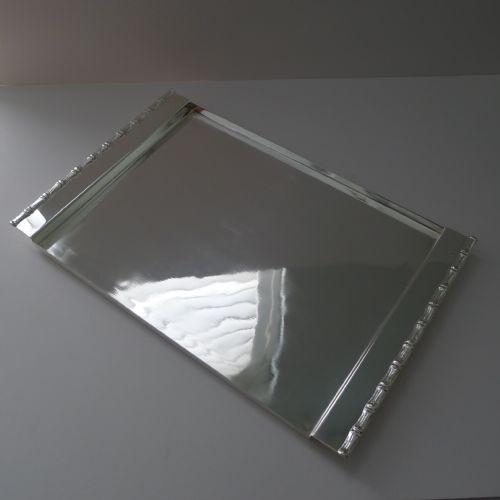
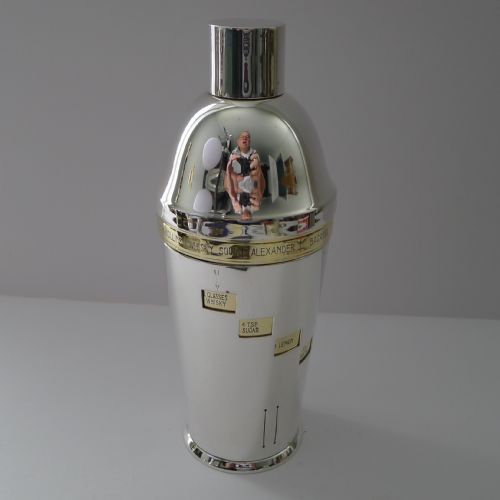
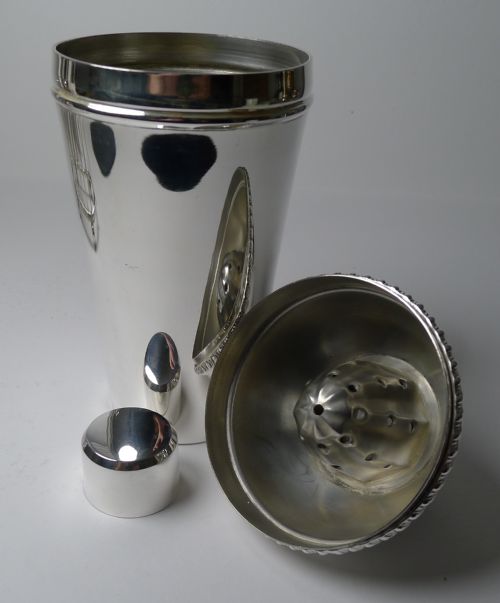
The objects combine practical function with decorative flair, often taking distinctive forms such as bullet shakers, lidded pails, and trays fitted with bamboo handles. Such pieces reflect the mid-century social habits of entertaining at home.
Makers and designers working in Rome and across Italy produced these items in solid silver, silver plate, and silverplate, frequently incorporating brass and gilt metal details. The aesthetic spans Art Deco, Italian Neoclassical, and Mid-Century Modern styles.
How It Was Made
Production relied on shaping metal alloys, solid silver, and silver plate into functional vessels and trays. Artisans utilised techniques suited to forming smooth bodies for cocktail shakers, wine coolers, and jugs.
Details such as bamboo handles, integral lemon squeezers, and decorative motifs like cherubs and dolphins were cast or applied separately. Metal plating provided a bright finish over base metals like brass and gilt metal.
Materials recorded across the inventory include silver plate, solid silver, brass, gilt metal, and silverplate.
What Varies in Quality
Quality differences stem from the underlying materials, ranging from solid silver to silver plate and base metals like brass and gilt metal. The choice of material alters the weight and substance of pieces such as ice buckets and trays.
The distinction of the maker or designer influences the standing of individual items. Pieces attributed to known designers or firms like Lino Sabattini, Christofle, IMA, or Angelletti carry specific design provenance.
Design complexity and form execution separate standard production items from more elaborate creations, such as bullet cocktail shakers with recipe mechanisms or pieces featuring sculptural handles.
Lino Sabattini·Christofle·Angelletti·Macabo
The Italian Silver Barware Glossary
- Silver plate
- A base metal coated with a thin layer of silver. This technique offered the appearance of solid silver at a lower production cost.
- Gilt metal
- Metal coated with a thin layer of gold. It provides decorative contrast on barware handles and mounts.
- Art Deco
- A design style characterised by sleek lines and streamlined forms. It influenced Italian barware production through the 1940s.
- Mid-Century Modern
- An architectural, interior, and product design development spanning roughly the middle decades of the twentieth century. It prioritised clean lines and functional modernity in Italian silver objects.
- Solid silver
- Metal composed primarily of pure silver, often marked with a standard such as 800. It forms the body of higher-end cocktail shakers.
Italian Silver Barware: Frequently Asked Questions
What items are considered Italian silver barware?
The category includes cocktail shakers, ice buckets, wine coolers, trays, and cocktail jugs designed for mixing and serving drinks. These items date from the 1940s through the 1960s.
They appear in various materials including silver plate, solid silver, brass, and gilt metal, reflecting mid-century design styles.
How do I identify a recipe cocktail shaker?
Recipe cocktail shakers feature rotating outer bands or printed text on the body that display ingredient proportions for various mixed drinks. These date typically to the 1940s Art Deco period.
They combine the standard shaking vessel with a functional mixing guide for the host.
What is the difference between silver plate and solid silver?
Solid silver objects consist entirely of silver metal throughout their structure, often marked with a standard like 800. Silver plate items use a base metal underneath with a bonded surface layer of silver.
Solid silver examples carry greater weight and intrinsic material value compared to plated alternatives.
Which design styles are common for these pieces?
The available pieces show influences from Art Deco, Italian Neoclassical, and Mid-Century Modern styles. Early pieces from the 1940s often display Art Deco streamlining.
Later items from the 1950s and 1960s lean towards Italian Modernism with clean silhouettes and materials like bamboo handles.