


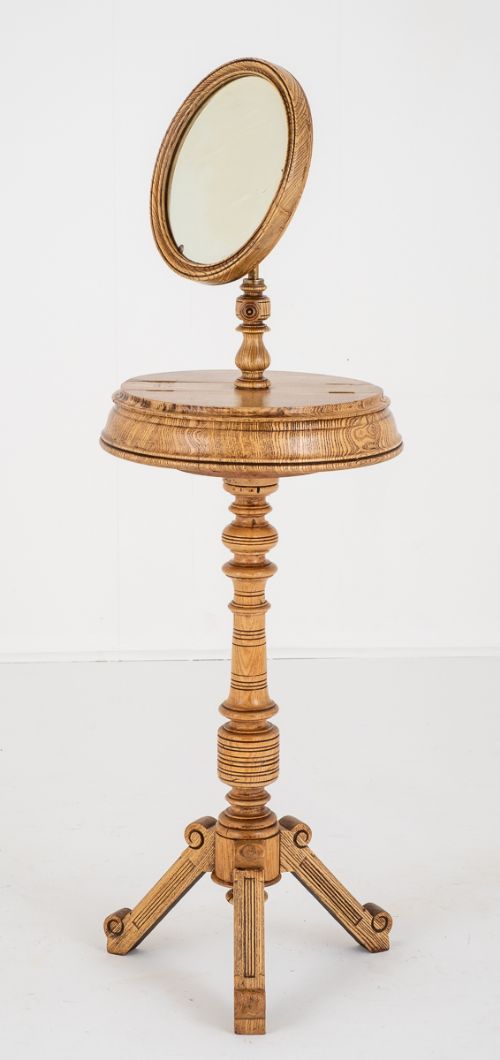

Pedestal Shaving Mirror Stand
A pedestal shaving mirror stand offers practical morning utility, bringing adjustable reflection and refined timber or chrome work to the dressing room.
Pedestal Shaving Mirror Stand
The pedestal shaving mirror stand is a specialised piece of domestic furniture designed for grooming, featuring an upright support and an adjustable glass plate. When you search for a pedestal shaving mirror stand, you encounter forms that span the Victorian and Edwardian eras, stretching into the nineteen thirties.
Originating largely from the nineteenth and early twentieth centuries, these stands reflect the daily routines of past households. They bridge the gap between portable tabletop mirrors and full-length dressing glasses.
Materials and construction
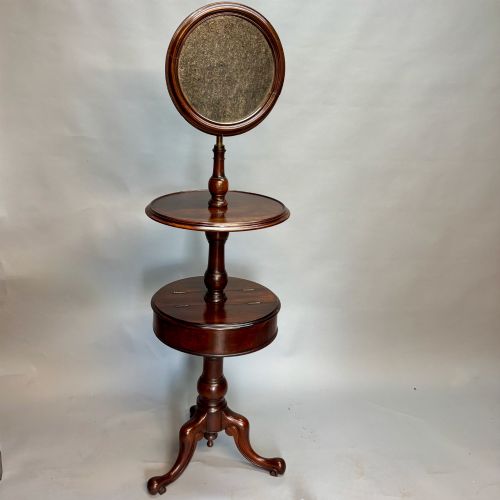
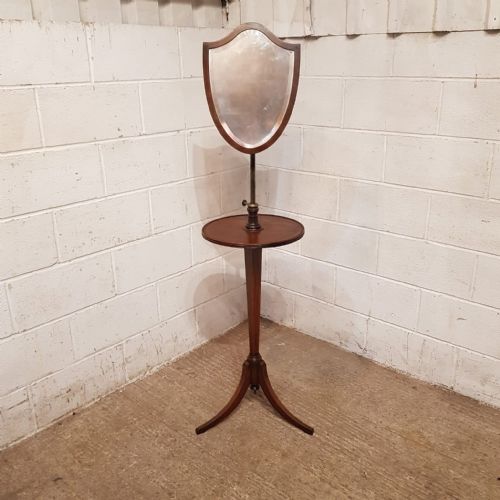
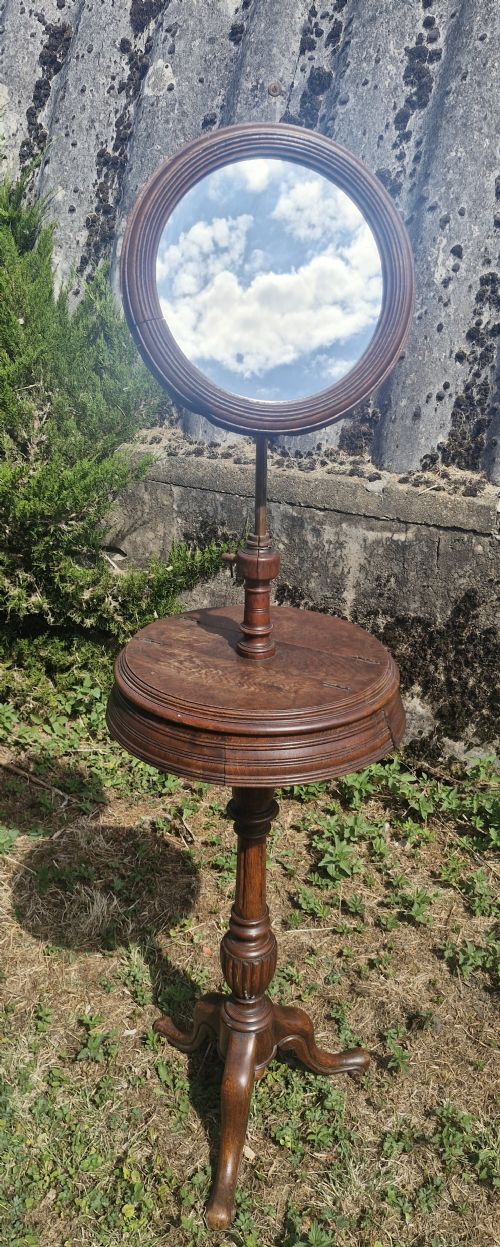
Cabinet makers utilised dense hardwoods such as mahogany, walnut, and oak to build the structural columns and tripod bases of these stands. These timbers provided the necessary weight and balance to support tilting mirror frames without tipping.
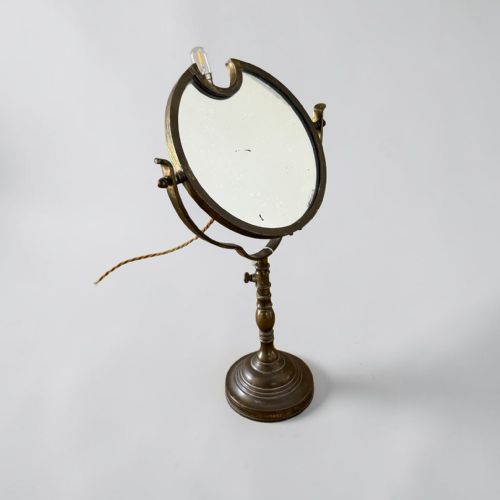
Adjustable mechanisms often relied on brass fittings, allowing the mirror glass to tilt and pivot smoothly on its axis. Later twentieth-century examples introduced chrome plating to the metal components, reflecting changing industrial techniques.
Surfaces were frequently polished to a warm sheen, while some examples featured painted wood finishes or fabric detailing. Joinery methods employed traditional techniques suited to turning timber and mounting moving hardware securely.
Listings on this page span from the mid-nineteenth century through the Edwardian era and into nineteen thirty, featuring mahogany, walnut, oak, and chrome.
Assessing quality and build
Quality in a pedestal shaving mirror stand is primarily determined by the selection of timber and the precision of the turning on the column or tripod legs. Finer examples display carefully chosen wood grain and solid structural joints that remain rigid over decades of use.
The sophistication of the adjustable mechanism distinguishes standard utilitarian pieces from more accomplished workshops. Smooth movement in the brass pivots and secure locking screws indicate superior original manufacture.
James Shoolbred
The Pedestal Shaving Mirror Stand Glossary
- Telescopic
- Describing a vertical shaft that extends in height to adjust the position of the mirror glass. This mechanism allows the user to alter the elevation according to preference.
- Tripod base
- A three-legged support structure commonly found beneath the central column of these stands. It provides stable footing on uneven floorboards.
- Adjustable mirror
- A glass plate mounted on pivots that tilts forward or backward to alter the angle of reflection. This feature is central to the function of a grooming stand.
- Gentleman's shaving stand
- A period descriptor for a dressing piece equipped specifically for morning hygiene routines. These often include ledges for soap, cups, or razors.
- Victorian
- The period spanning the reign of Queen Victoria, which accounts for the majority of the wooden stands seen here. Pieces from this era frequently showcase mahogany and walnut construction.
Pedestal Shaving Mirror Stand: Frequently Asked Questions
What is a pedestal shaving mirror stand?
A pedestal shaving mirror stand is a standalone grooming accessory featuring an adjustable glass plate mounted on a vertical column and base. It was designed to assist with daily personal care before the widespread use of fitted bathroom mirrors.
These pieces typically date from the Victorian and Edwardian periods, utilising timbers such as mahogany and oak. Their compact footprints allowed them to sit comfortably in bedrooms or dressing rooms.
How do you adjust the mirror?
Most stands utilise brass pivots or thumb screws on either side of the mirror frame to permit tilting. Some nineteenth-century examples incorporate telescopic columns that raise or lower the entire glass assembly.
When handling these mechanisms, it is advisable to support the glass frame with one hand while loosening the fittings with the other. This prevents undue strain on the wooden joints supporting the pivot arms.
Where were these stands used?
These mirrors were placed in bedrooms, dressing rooms, or dedicated wash spaces within period homes. They provided a movable source of close reflection where natural light from a window was most favourable.
Because they were portable, owners could reposition them throughout the room depending on the time of day. Their small footprint made them suitable for spaces without built-in vanity furniture.
How do I identify a Victorian stand?
Victorian stands are generally characterised by the use of solid mahogany, walnut, or oak, often featuring turned wooden columns and tripod bases. The joinery employs traditional methods appropriate to the nineteenth century.
Details such as hand-cut brass fixings and deep timber patination further point to a Victorian origin. Later Edwardian or nineteen thirties examples introduce lighter woods, painted finishes, or chrome components.