

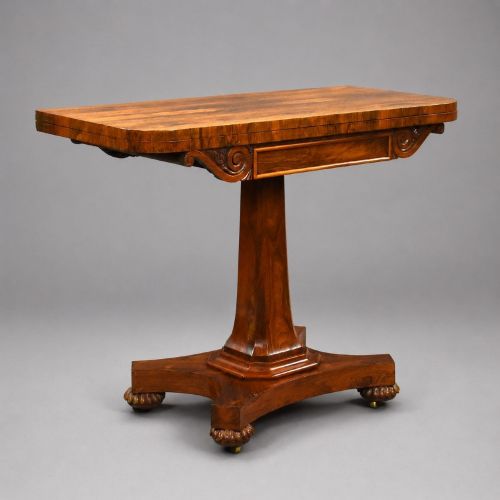
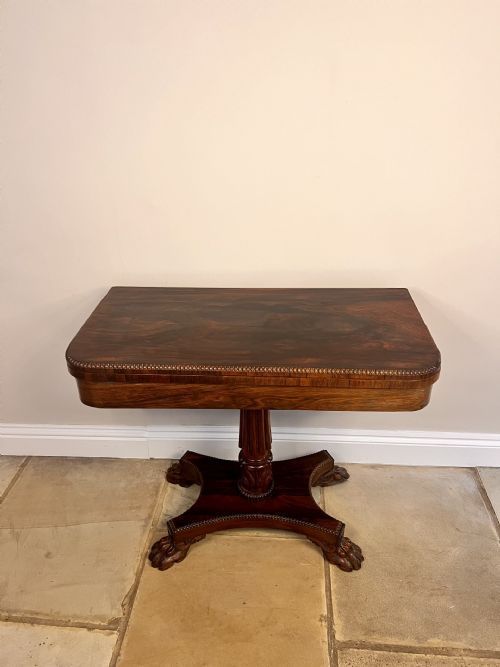


Pedestal Foldover Table
A pedestal foldover table brings clever mechanical ingenuity to a room, offering a compact surface that expands to reveal a baize-lined playing area or dining space.
Pedestal Foldover Table
A pedestal foldover table represents a practical form of antique furniture designed for dual purposes such as card playing, gaming, or serving tea. When you search for a pedestal foldover table, you encounter pieces that sit on a central pillar supported by a platform base or feet rather than four traditional corner legs.
The versions you are most likely to meet on this page hail primarily from the Regency and Victorian eras, alongside Georgian and William IV examples. These pieces typically take the form of card tables, tea tables, or games tables constructed in rich timbers.
Workshop origins range from standard cabinet makers to finer pieces attributed to makers such as George Bullock or influenced by firms like Gillows. They bridge the gap between ornamental furniture and functional everyday use in drawing rooms and parlours.
Materials and Construction
Cabinet makers relied heavily on dense tropical hardwoods, constructing primary carcases in mahogany and rosewood, with occasional use of walnut, burr walnut, satinwood, and goncalo alves. These timbers were frequently polished to a high sheen to display rich figure and grain.
Decorative embellishments involved precise brass inlay, brass mounts, and contrasting stringing in boxwood, supported by cast or carved wooden pedestals featuring motifs such as dolphins or acanthus leaves.
The listings show a strong preference for rosewood and mahogany across Regency and Victorian periods, alongside decorative brass inlay.
Standards of Execution
Quality rests heavily on the selection of timber veneers, where highly figured rosewood, burr walnut, and figured mahogany distinguish finer workshop output from plain utility pieces. The crispness of carved pedestal details and the precision of brass inlay further separate standard production from master craftsmanship.
Mechanical execution defines the better examples, ensuring the turnover or foldover mechanism operates smoothly without sagging when extended. The stability of the central pillar and the soundness of the platform base dictate the structural integrity of the piece.
George Bullock·Gillows
The Pedestal Foldover Table Glossary
- Foldover top
- A hinged tabletop that doubles in surface area when swung or flipped open. This design conceals a hidden well or creates a stable surface for cards and tea.
- Pedestal base
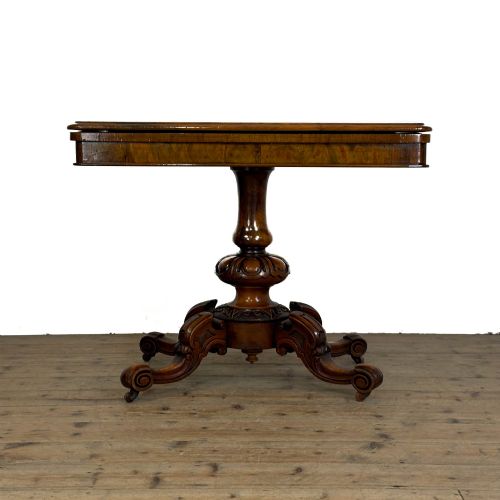
- A central column supporting the table body, typically rising from a platform base with carved paw or scroll feet. It replaces traditional four-legged designs to allow more legroom for seated guests.
- Card table
- A specialised table featuring a baize- or velvet-lined interior surface designed for evening gaming. Many include small corner wells for counters or coins.
- Tea table
- A table designed for the formal serving of tea, often featuring a polished wooden top that remained closed when not in use. They share the same folding mechanism as games tables.
- Goncalo Alves
- A dense, exotic timber displaying striking contrasting dark brown and light yellowish-brown figuring. It was occasionally selected by high-end cabinet makers for Regency tables.
Pedestal Foldover Table: Frequently Asked Questions
How do I use a pedestal foldover table today?
These tables function well as console tables against a wall when closed, offering a slim profile for hallways or drawing rooms. Opening the top creates an immediate surface for playing cards, board games, or serving drinks.
They also adapt easily as occasional desks or display spaces for lamps and decorative objects. The folding mechanism allows you to alter the footprint of the furniture depending on your spatial needs.
How do I tell Regency tables from Victorian ones?
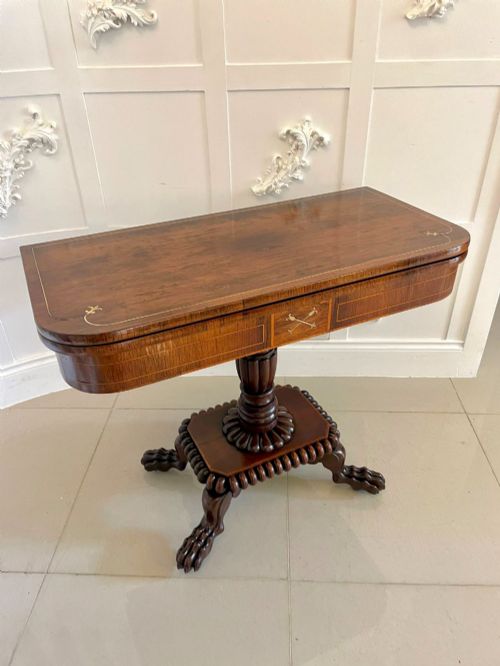
Regency examples, produced in the early nineteenth century, frequently feature bold rosewood veneers, precise brass inlay, and classical architectural proportions. You will often see platform bases with carved paw feet and restrained, elegant lines.
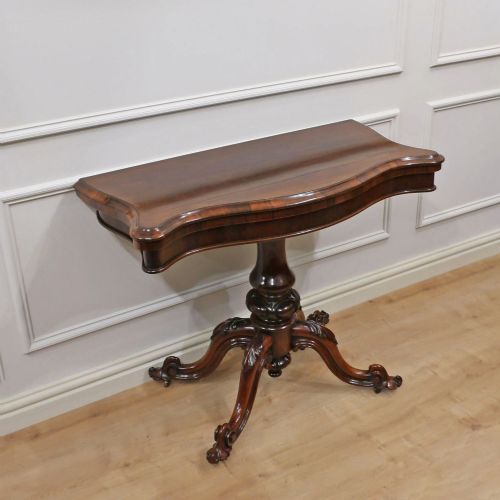
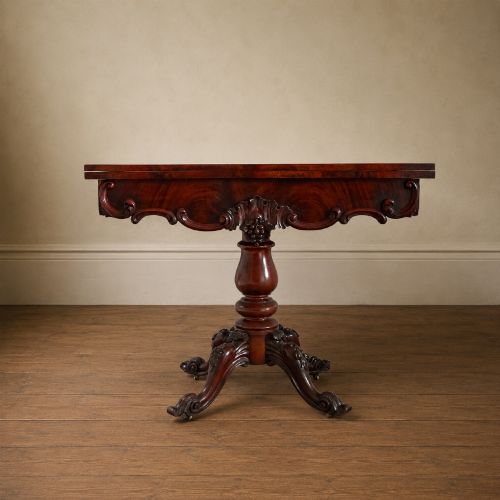
Victorian pieces, emerging after eighteen thirty, often embrace richer walnut, serpentine fronts, and heavier carving influenced by revival styles. Their pedestals tend to be more robust, reflecting the changing tastes of later nineteenth-century interior design.
What woods were commonly used?
Mahogany and rosewood dominate the surviving examples, prized by cabinet makers for their durability and deep colour. Mahogany offers a steady, warm reddish-brown tone, while rosewood provides dramatic dark grain patterns.
Walnut, burr walnut, and satinwood appear with greater frequency in later nineteenth-century pieces. These timbers were selected to showcase intricate natural grain figures in prominent display surfaces.
How should I care for the polished wood surface?
Keep the timber away from direct sunlight and strong heat sources to prevent the wood from drying out or the polish from fading. Regular dusting with a soft, dry cloth helps maintain the finish without building up residue.
Apply a traditional beeswax polish sparingly when the wood appears dry, buffing it gently to preserve the natural sheen. Avoid placing damp items directly onto the polished surface to protect the historic finish.