




Pedestal Bistro Table
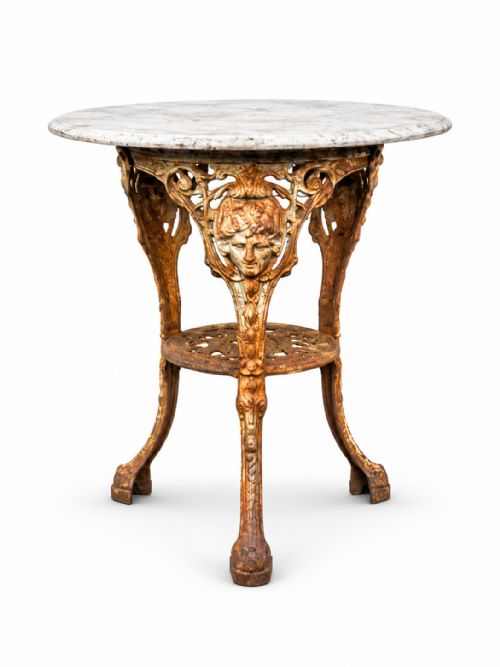
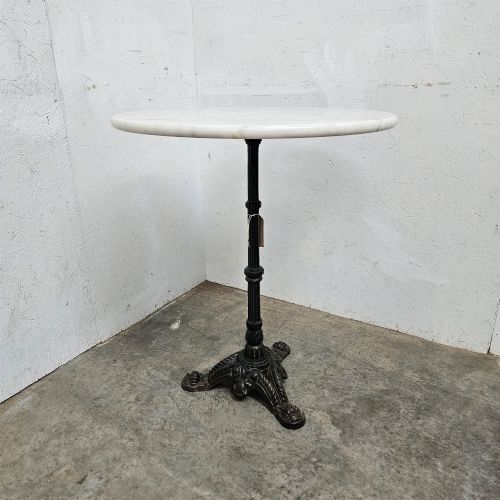
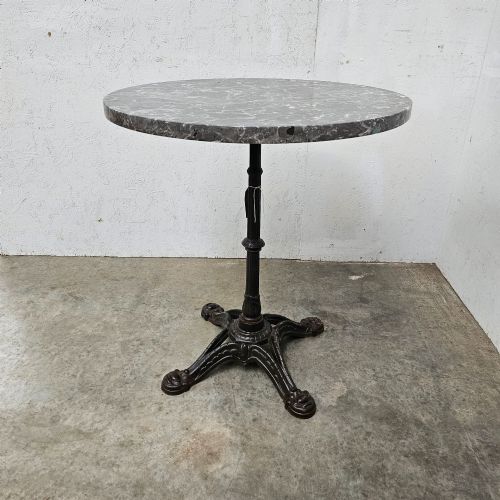
These pedestal bistro table pieces are practical small round surfaces resting on central supports, prized for their compact footprint and classic cafe utility.
Pedestal Bistro Table
A pedestal bistro table brings a distinct café character to an interior or garden space, typically combining a heavy central column with a rounded surface. Buyers searching for a pedestal bistro table will encounter various forms ranging from compact cafe tables and garden tables to centre tables, table bases, and side tables. These pieces span from the early nineteenth century through to the 1920s, reflecting diverse origins including French and Swedish workshops.
The most common versions met on this page are French cafe tables and garden tables featuring stone or marble tops paired with metal supports. Many examples blend utilitarian metalwork with decorative stone surfaces, while others present painted wooden construction. Period variations stretch from the ornate details of nineteenth century styles to the clean geometry of Art Deco design.
Object designations vary across the listings, encompassing dedicated bistro tables, conservatory tables, and standalone table bases designed to receive tops. Whether intended for indoor dining or outdoor garden use, each piece relies on a central pedestal format to maximise legroom around a compact top.
Materials and Construction
Construction relies heavily on robust metal and stone combinations, with cast iron and brass forming the sturdy bases and columns that anchor each piece. These metal elements provide the essential weight and stability needed for a single pedestal design.
Tops are predominantly fashioned from natural stone, featuring white marble, grey marble, green marble, polished granite, and general stone surfaces. Alongside these stone variants, selected examples utilise carved wood and painted finishes for the upper surface and base.
Pedestal Bistro Table Retail Price Guide 2026
Typical asking prices for pedestal bistro table among the pieces listed under this phrase on Sellingantiques today, from the lower quarter to the upper quarter. They describe what is for sale here now, not the wider market.
Listings feature pieces spanning from the early 19th century through to 1920, incorporating cast iron, marble, brass, and granite.
Assessing Quality and Execution
Quality separates along the finesse of the metal casting and the character of the stone top. Finer examples display crisper detail in the ironwork and superior figuring within the marble or granite, whereas simpler versions rely on utilitarian casting and plain surfaces.
The integrity of the joinery between the central pedestal and the top determines stability and longevity. Superior execution ensures a solid union that resists wobbling, maintaining structural balance across the entire table.
The Pedestal Bistro Table Glossary
- Pedestal
- A single central support or column that holds up the table top, replacing traditional corner legs to allow greater freedom of seating.
- Cast Iron
- A strong, heavy iron alloy poured into moulds to create intricate bases and legs for tables, providing essential ballast.
- Marble
- A metamorphic rock valued for its smooth surface and natural veining, frequently utilised for table tops in cafe and bistro settings.
- Centre Table
- A freestanding table designed to be viewed from all sides and placed in the middle of a room rather than against a wall.
- Art Deco
- A design style emerging in the early twentieth century characterised by sleek geometric shapes and streamlined modern forms.
Pedestal Bistro Table: Frequently Asked Questions
Where should I place a pedestal bistro table?
These tables suit compact dining areas, kitchens, conservatories, and sheltered garden patios where space is at a premium. Their central pedestal design allows chairs to tuck neatly underneath without interference from corner legs.
They also function effectively as standalone display surfaces in hallways or living rooms when paired with decorative objects.
How do I care for marble and stone tops?
Stone and marble surfaces require gentle cleaning with mild soap and warm water, avoiding harsh acidic cleaners that can etch the polish. Using coasters and placemats helps protect the natural material from moisture and staining over time.
Regular wiping maintains the natural lustre of the stone without damaging the historic finish.
Can these tables be used outdoors?
Many examples are originally designed as garden, patio, or conservatory tables utilising weather-resistant cast iron and stone. However, extreme winter frost can affect certain stone types and vulnerable iron finishes.
Storing sensitive pieces indoors during harsh weather helps preserve the original materials and painted surfaces.
How do I identify a French bistro table?
French examples typically combine a cast iron base with a rounded marble or stone top, reflecting traditional cafe culture. Details often incorporate subtle industrial characteristics alongside decorative nineteenth century styling.
Regional variations also include Swedish painted wooden pedestals and stone garden tables from the same period.