






Pearl Inlay Trinket Box
A pearl inlay trinket box brings together polished shell and rich timber to hold small treasures on a dressing table.
Pearl Inlay Trinket Box
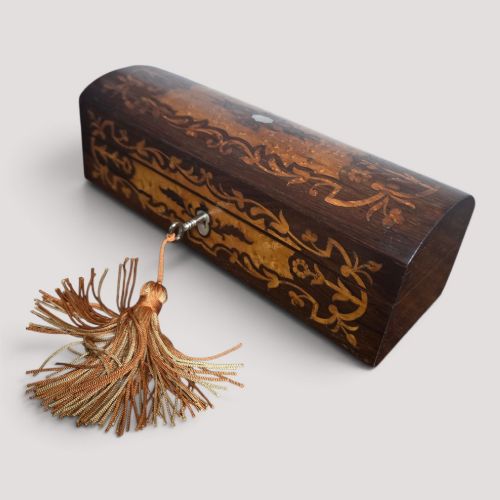
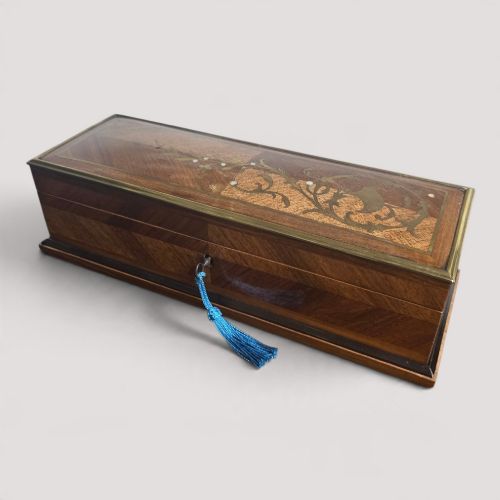
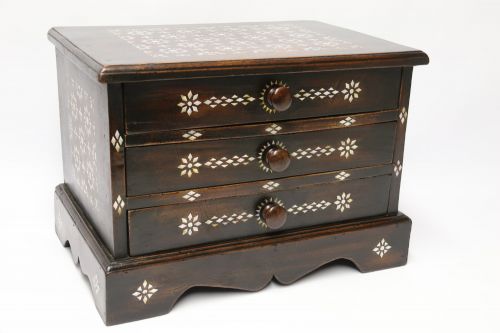
A pearl inlay trinket box appears in various forms on this page, including small keepsake cases, glove boxes, and jewellery chests. These pieces span the Regency, Victorian, and Edwardian periods, alongside Chinese Export and Ottoman examples.
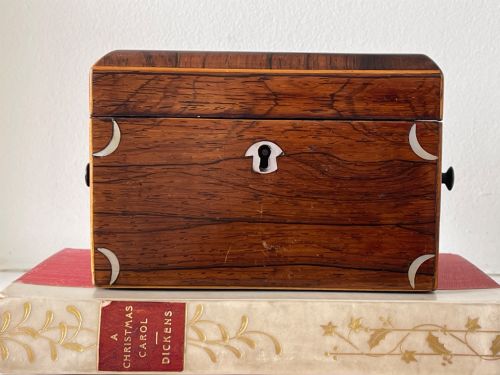
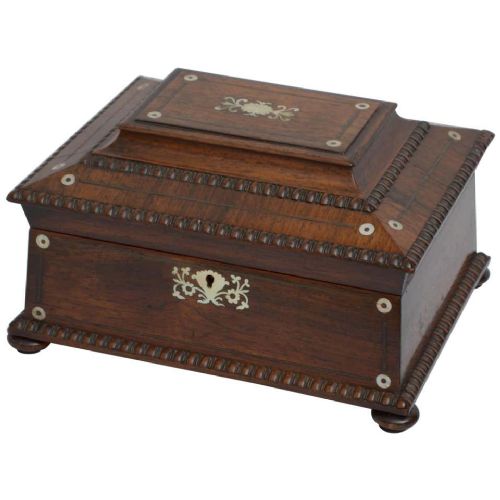
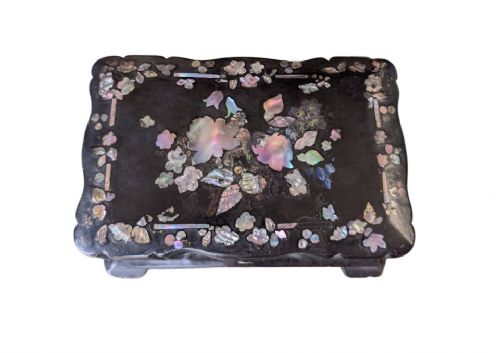
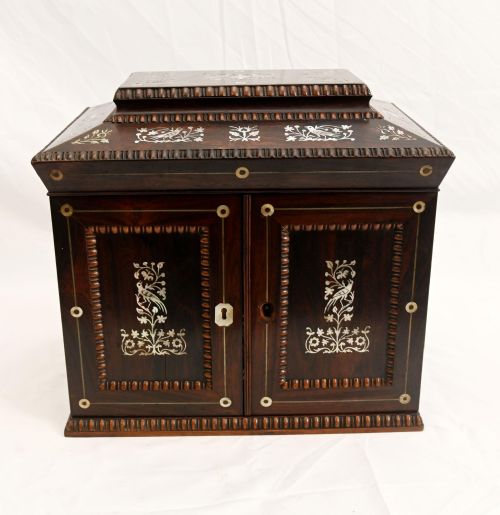
The most common version met here is the Victorian rosewood box, frequently decorated with mother-of-pearl floral or geometric motifs. Alongside these timber boxes, papier-mâché tea caddies and cabinets demonstrate the same decorative shellwork.
Buyers also encounter specialised forms such as workboxes, stationery cases, and miniature chests of drawers. Each version serves to contain personal valuables while displaying the contrasting lustre of shell against dark wood.
Materials and construction
Craftsmen built these containers from dense timbers including rosewood, walnut, coromandel, and mahogany, often pairing them with papier-mâché or lacquer. Mother-of-pearl, derived from shell, was shaped into delicate pieces and set flush into the wooden surfaces.
Makers enhanced the exterior designs using brass stringing, bone details, and fine inlays to frame the central pearl decoration. Silk linings, fitted interiors, and small mirrors frequently completed the construction of the larger dressing and jewellery boxes.
Pearl Inlay Trinket Box Retail Price Guide 2026
Typical asking prices for pearl inlay trinket box among the pieces listed under this phrase on Sellingantiques today, from the lower quarter to the upper quarter. They describe what is for sale here now, not the wider market.
Listings feature timbers such as rosewood, walnut, coromandel, mahogany, and hardwood alongside mother-of-pearl, bone, and brass stringing.
Assessing craftsmanship
Quality rests upon the precision of the inlay work and the selection of the timber grain. Pieces featuring tightly fitted pearl panels and intricate brass stringing demonstrate superior workshop standards.
The presence of original fitted interiors, working locks, and intact silk or velvet linings distinguishes the finer examples. Well-preserved boxes maintain structural integrity across the joints and hinges while retaining the natural iridescence of the shell.
The Pearl Inlay Trinket Box Glossary
- Mother-of-Pearl
- An iridescent inner layer of shell used to create decorative inlays on boxes and furniture. It reflects light with shifting tones of silver, pink, and green.
- Rosewood
- A heavy, dark timber with distinct grain patterns frequently utilised during the Regency and Victorian eras. It provides a rich contrast to pale shell inlays.
- Papier-mâché
- A composite material made from paper pulp mixed with glue and oil, then pressed and dried. It forms smooth, dark surfaces suited to lacquer and pearl decoration.
- Tea Caddy
- A container originally designed to store dry tea leaves securely. Many surviving examples feature elaborate inlays and divided interior compartments.
Pearl Inlay Trinket Box: Frequently Asked Questions
What fits inside a pearl inlay trinket box?
These boxes suit rings, small brooches, letters, and keepsakes. Many include fitted compartments or velvet trays for organisation.
Larger variations accommodate gloves, stationery, or sewing tools while maintaining a decorative presence on a surface.
How do I care for antique rosewood and pearl?
Keep the wood conditioned with appropriate wax and avoid exposure to direct sunlight or sudden humidity changes. Gentle dusting maintains the surface without harming the fragile shell.
Harsh cleaning agents should remain entirely away from both the timber and the inlaid sections.
How can I tell a Victorian box from a Regency one?
Regency boxes often exhibit sharper geometric lines and lighter brass stringing. Victorian pieces frequently favour rosewood or walnut paired with abundant floral mother-of-pearl motifs.
Construction details and interior fittings help confirm the period of manufacture.
Were these boxes made in England or abroad?
English workshops produced many rosewood and walnut examples during the nineteenth century. Other pieces originate from Chinese Export workshops, Ottoman regions, or France.
Each region employed distinct timber choices and decorative motifs alongside the characteristic pearl work.