
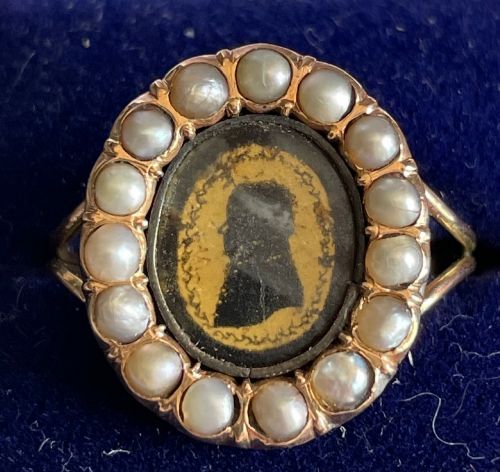
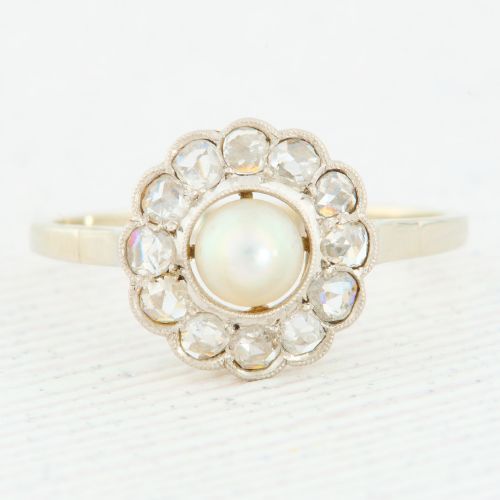
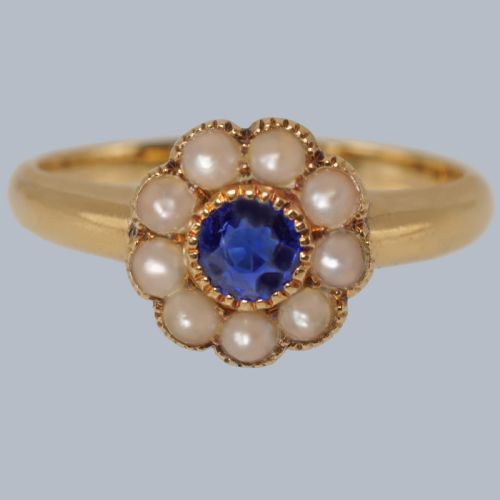


Pearl Halo Ring
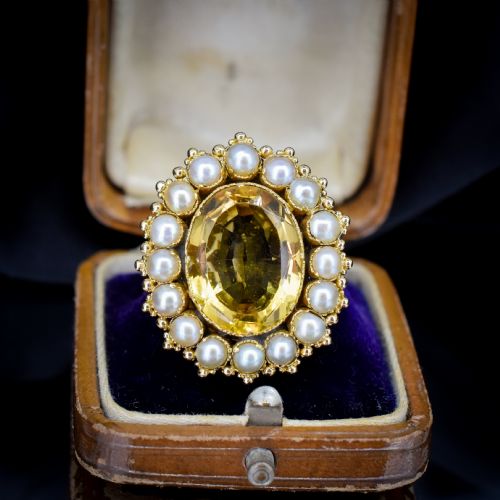
A pearl halo ring brings together a central gem encircled by pearls, spanning periods from Georgian times to the mid-century.
Pearl Halo Ring
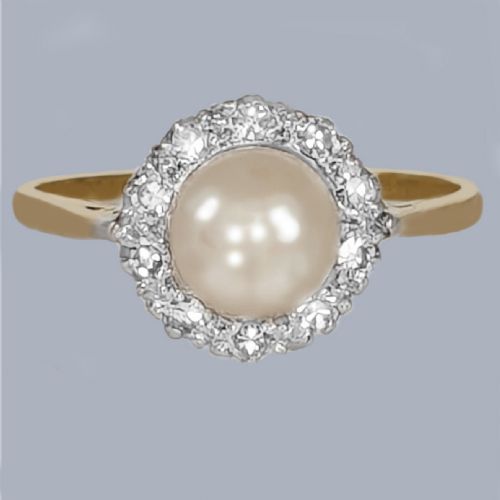
A pearl halo ring centres on a luminous pearl or surrounds another gemstone with a border of pearls, creating a distinct cluster silhouette. These pieces appear frequently across the Victorian, Edwardian, and Georgian eras, alongside later mid-century iterations.
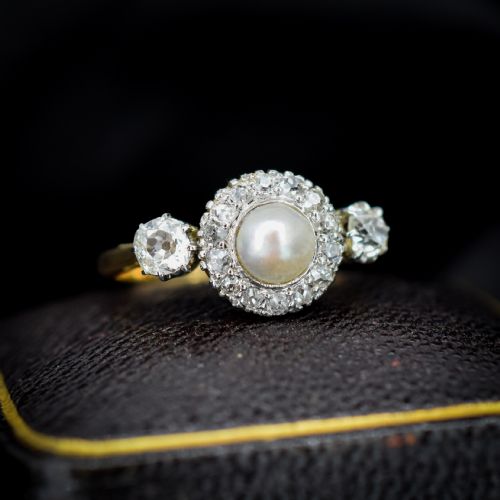
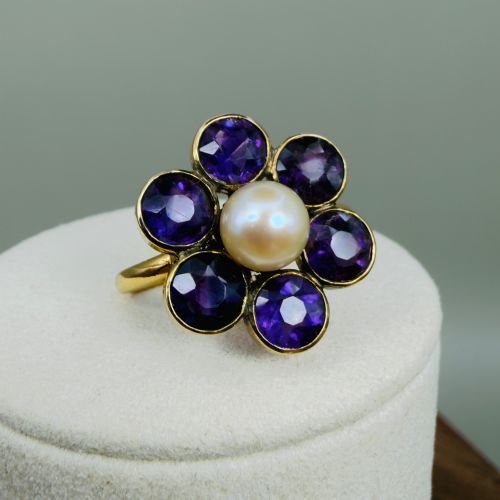
The most common formats on this page combine pearls with diamonds, amethyst, or citrine in cluster arrangements. Buyers encounter various gold purities from nine carat up to eighteen carat, plus platinum settings.
Earlier examples from the Georgian period often incorporate seed pearls alongside hairwork, garnets, or rose cut diamonds. Later Edwardian interpretations frequently pair natural pearls with old cut diamonds in yellow gold and platinum.
Materials and construction
Goldsmiths constructed these rings using yellow gold, rose gold, white gold, and platinum to secure the central stones and the surrounding pearl borders. Seed pearls and larger pearls are set alongside diamonds, amethysts, rubies, sapphires, and citrines.
Period techniques involve hand-beating gold and shaping platinum mounts to hold delicate seed pearls and larger gems securely. Early pieces utilise closed-back foils or natural settings typical of Georgian and Victorian workshops.
Listings feature pearls combined with diamonds, amethysts, citrines, and emeralds across Edwardian, Victorian, Georgian, and Art Deco periods.
Assessing quality and finish
Quality rests on the uniformity and lustre of the pearls, the integrity of the surrounding precious metal settings, and the matching of secondary stones like old cut diamonds or amethysts. Finer examples display meticulous claw or bezel work that protects each pearl in the halo without obscuring its surface.
The Pearl Halo Ring Glossary
- Halo cluster
- A central stone encircled by a ring of smaller gems, most often pearls or diamonds. This design maximises visual presence on the finger.
- Seed pearl
- A very small, naturally formed pearl, frequently drilled and threaded or set collectively in historic mourning and decorative jewellery. These tiny spheres create delicate borders in Georgian and Victorian pieces.
- Old cut diamond
- A diamond shape characterised by a high crown, small table, and hand-faceted pavilion facets typical of jewellery predating modern brilliant cuts. These stones exhibit a softer, warmer scintillation under candlelight.
- Rose cut diamond
- A flat-based diamond with a domed top covered in triangular facets, common in Georgian and earlier eras. This cut yields a translucent, gentle lustre rather than sharp brilliance.
Pearl Halo Ring: Frequently Asked Questions
How do I care for antique pearls?
Pearls are organic gems sensitive to acids, cosmetics, and sustained moisture. Wipe them gently with a soft cloth after wearing and store them separately from harder gemstones.
Avoid immersing antique settings in liquid jewellery cleaners, as harsh chemicals can degrade the organic nacre or weaken historical adhesive and thread.
Are these pearls natural or cultured?
The inventory spans multiple centuries, meaning early pieces from the Georgian and Victorian eras feature natural saltwater or freshwater pearls. Edwardian and later pieces occasionally incorporate cultured pearls alongside traditional gems.
Checking specific listings or laboratory certificates helps confirm the origin of the pearls in any given halo ring.
What gold purities are used?
Makers utilised various gold standards depending on the period, including nine carat, fifteen carat, and eighteen carat yellow, rose, and white gold. Platinum also appears frequently in Edwardian mountings.
Hallmarks and metal tests indicate the specific composition, reflecting the manufacturing standards of Birmingham or continental workshops.
How do I distinguish Edwardian from Victorian styles?
Victorian pieces often favour deeper hued gems like amethysts, garnets, and sapphires paired with warm rose or yellow gold. The designs tend to feel heavier and more robust.
Edwardian rings frequently introduce platinum alongside yellow gold, creating lighter, airier filigree frames that showcase natural pearls and old cut diamonds with lace-like precision.