




Pearl Crossover Ring
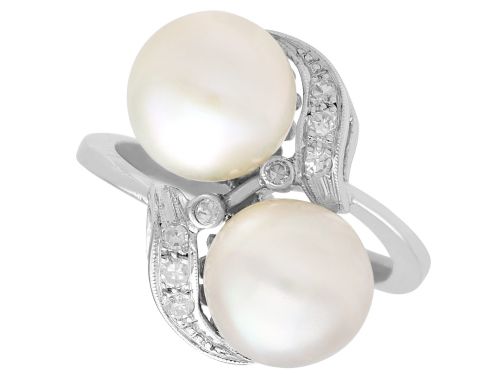
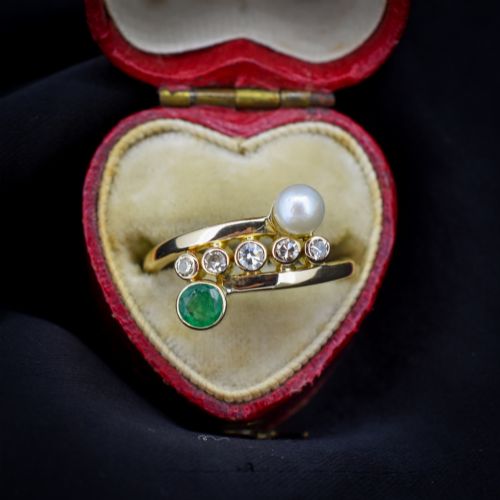
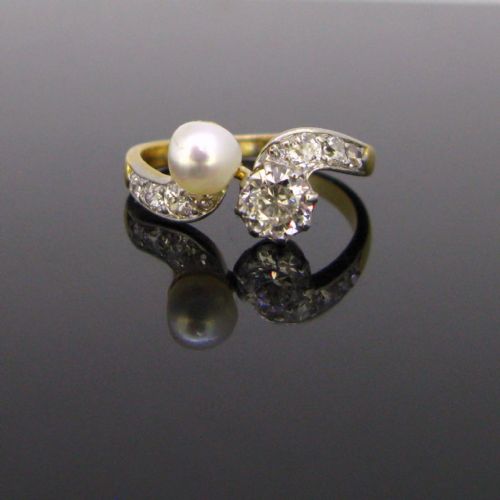
A pearl crossover ring balances two opposing gems in a single fluid gesture, offering a timeless pairing of pearl and diamond.
Pearl Crossover Ring
A pearl crossover ring brings together two prominent gems, typically a pearl and a diamond, as their bands sweep to meet in the centre. This configuration is frequently recognised under alternate designations such as a toi et moi or twist ring.
The selections available span multiple eras, with Edwardian and Art Nouveau examples appearing alongside mid-century pieces. Buyers encounter both natural pearls and cultured pearls set alongside old cut diamonds in yellow gold, white gold, and platinum.
Materials and construction
Jewellers shaped these rings using precious metals including 18ct yellow gold, 18ct white gold, and platinum, often pairing contrasting metals to highlight the stones. Settings incorporate old cut diamonds alongside natural or cultured pearls.
Construction techniques from the Edwardian and Art Nouveau periods rely on delicate claw or bezel work to secure the curved shanks. The interplay of platinum and yellow gold provides structural strength while framing the organic lustre of the pearl.
Listings feature items spanning the Edwardian, Art Nouveau, and mid-century periods, utilising platinum, yellow gold, and white gold.
Judging quality in a pearl crossover ring
Quality rests upon the matching of the pearls and diamonds, where uniform lustre and balanced proportions elevate the design. The integrity of the crossover shank and the precision of the gemstone settings reveal the maker's hand.
The distinction between natural pearls and cultured pearls influences the character of each piece. Finer examples display meticulous attention to metalwork details, such as delicate gallery work or harmonious colour contrast between the chosen gold and platinum.
The Pearl Crossover Ring Glossary
- Crossover ring
- A ring design where the shank sweeps around to meet or cross over the finger, often featuring two principal stones. This style is also known as a toi et moi or twist ring.
- Toi et moi
- French for you and me, describing a ring with two complementary stones set side by side or crossing paths. This configuration symbolises a union of two individuals.
- Old cut diamond
- A diamond cut by hand before modern machinery, characterised by a smaller table, higher crown, and open culet. These stones exhibit a softer, warmer candlelit sparkle.
- Natural pearl
- A pearl formed organically within an oyster without human intervention. These are prized for their rarity and deep, layered orient.
- Cultured pearl
- A pearl formed with human assistance by placing a nucleus into the mollusc. They offer consistent shapes and dependable lustre.
- Platinum
- A dense, durable white metal used extensively in Edwardian jewellery for delicate settings. Its strength allows for secure, fine wirework.
Pearl Crossover Ring: Frequently Asked Questions
How do I wear a pearl ring safely?
Pearls are softer than diamonds and require gentle care during daily wear. Avoid exposing them to harsh chemicals, cosmetics, or ultrasonic cleaners.
Store the ring separately in a soft pouch to prevent the harder diamond or metal edges from scratching the pearl surface.
How do I tell an Edwardian ring apart?
Edwardian jewellery frequently utilises platinum combined with yellow gold, creating light, lace-like mounts. The use of old cut diamonds alongside natural pearls is typical of this era.
Stylistic elements often lean towards delicate floral motifs and sweeping asymmetrical curves reminiscent of the Art Nouveau movement.
What is the difference between natural and cultured pearls?
Natural pearls form entirely by chance within wild molluscs, making them scarce and historically significant. Cultured pearls are grown with human intervention by introducing a bead nucleus into the oyster.
Both varieties appear in antique and vintage rings, contributing different degrees of rarity to the finished piece.