


Pear Cut Gemstone Jewellery
Pear cut gemstone jewellery spans decades of craftsmanship, bringing together teardrop stones and precious metals to form rings, pendants and earrings.
Pear Cut Gemstone Jewellery
Pear cut gemstone jewellery comprises rings, necklaces, earrings and pendants shaped around the distinctive teardrop silhouette of the stone. When searching for pear cut gemstone jewellery, buyers encounter items ranging from Victorian and Edwardian examples to Art Deco and mid-century designs.
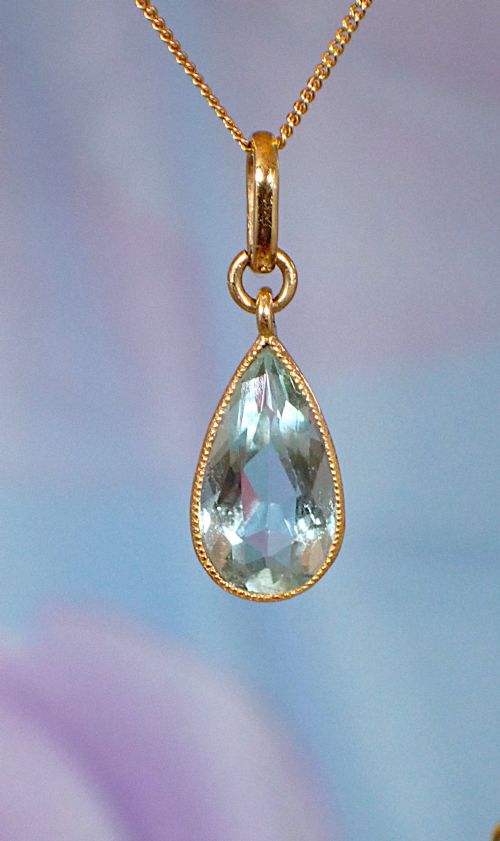
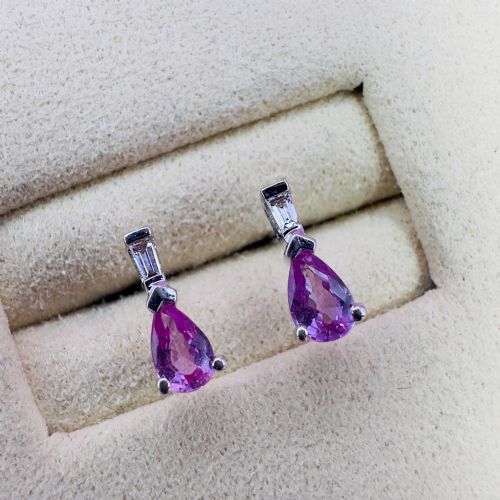
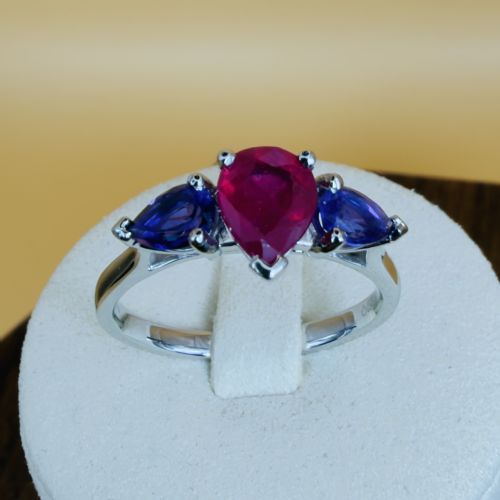
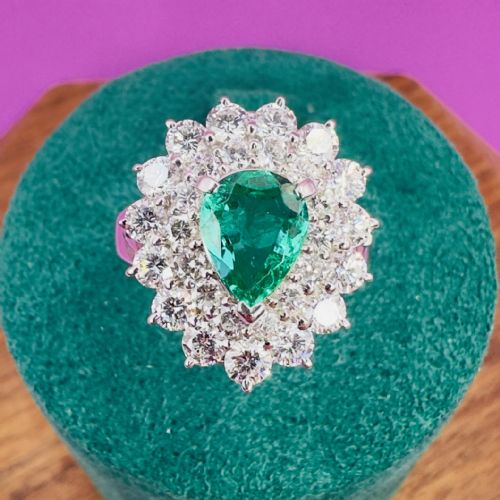
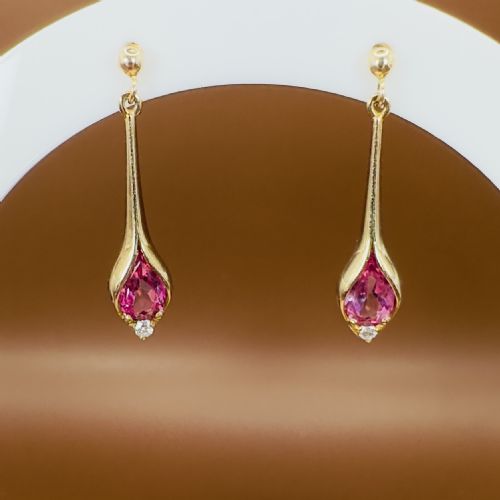
The selection includes drop earrings and cluster rings set with aquamarine, amethyst, garnet, emerald, ruby and sapphire. Many pieces pair these coloured stones with diamonds, mounted in yellow gold, white gold, platinum or silver.
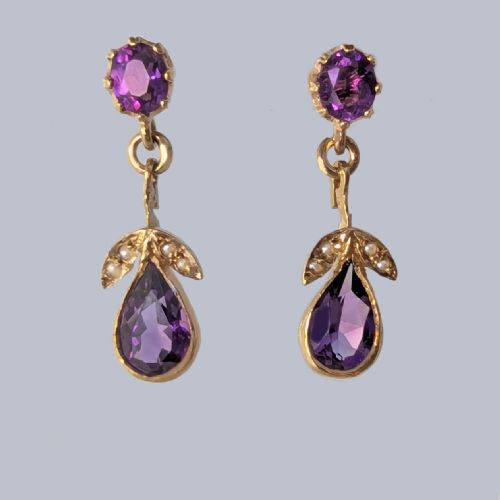
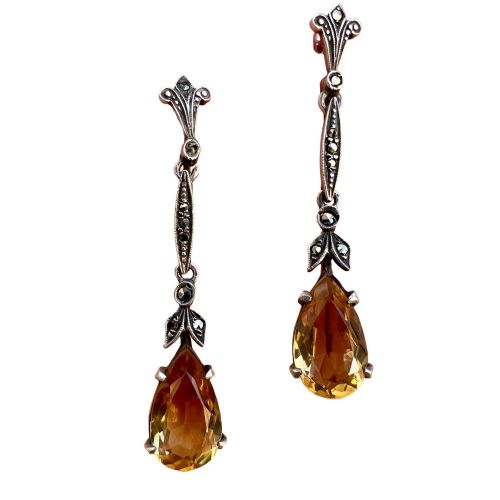
Earrings and pendants dominate the selection, often featuring seed pearls or marcasite alongside the central pear cut gem. The eras represented stretch from the late nineteenth century through to the later decades of the twentieth century.
How they were made
Makers set pear cut gemstones into precious metals including platinum, 18ct white gold and various grades of yellow gold such as 9ct and 15ct. Stones receive faceted cuts to maximise light return, whilst supporting gems like diamonds or seed pearls are integrated into cluster and fringe arrangements.
Construction techniques involve detailed prong and bezel settings to secure the asymmetric teardrop form of the principal stone. Drop earrings incorporate articulated joints for movement, and necklaces utilise fine gold chains to suspend central pendants.
Periods represented range from Victorian and Edwardian eras through Art Deco and the mid-twentieth century.
What varies in quality
Quality differences lie in the saturation and clarity of the central gemstone, alongside the precision of the pear cut facets. Higher quality examples display balanced symmetry in the teardrop shape and secure, clean metalwork in the setting.
The integration of supporting diamonds and the choice of heavier mounting metals like platinum or higher karat gold separate finer pieces from standard production. Preservation of original components, such as screw-backs or clasps, also influences the character of each item.
The Pear Cut Gemstone Jewellery Glossary
- Pear cut
- A modified brilliant-cut stone shaped like a teardrop, combining a rounded end with a tapering point.
- Drop earrings
- Earrings that hang below the earlobe, often incorporating articulated sections that move as the wearer turns.
- Cluster ring
- A ring design featuring a central gemstone surrounded by a border of smaller stones, typically diamonds.
- Seed pearl
- A very small natural or cultured pearl, frequently used in Victorian and Edwardian jewellery for delicate decorative borders.
- Marcasite
- Small faceted polished iron pyrite stones set into silver or metal to create a sparkling, dark metallic border.
Pear Cut Gemstone Jewellery: Frequently Asked Questions
What is a pear cut gemstone?
A pear cut gemstone is a mixed-cut stone featuring a rounded end on one side and a tapering point on the other. This hybrid shape combines elements of the marquise and round brilliant cuts.
The teardrop silhouette makes the stone popular for dangling earrings, pendants and central ring settings where elongation flatters the hand or neck.
How do I care for antique gemstone jewellery?
Care depends on the specific stones and metals used in the piece, as softer gems like pearls require gentle handling. Avoid harsh chemical cleaners and ultrasonic baths, particularly for items with glued elements or delicate seed pearls.
Store pieces individually in soft pouches to prevent scratching between metal settings and faceted gems.
What metals are common in these pieces?
Yellow gold in various karats, including 9ct and 15ct, appears frequently across Victorian, Edwardian and mid-century items. White metals such as platinum and 18ct white gold gain prominence in Art Deco and later twentieth-century designs.
Metal choice often reflects the prevailing fashion of the era in which the jewellery was made.