

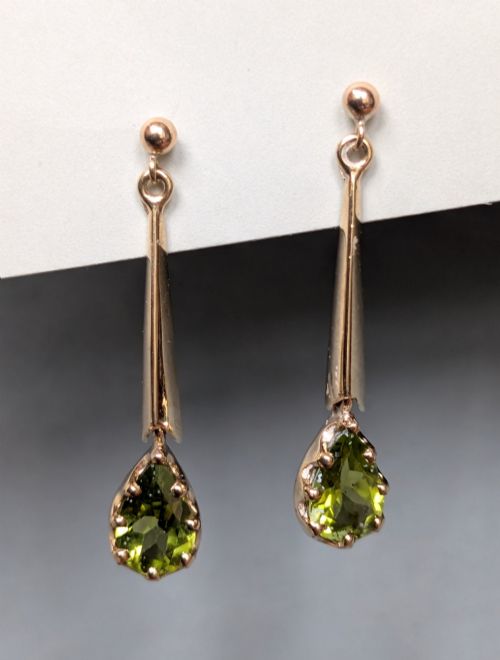
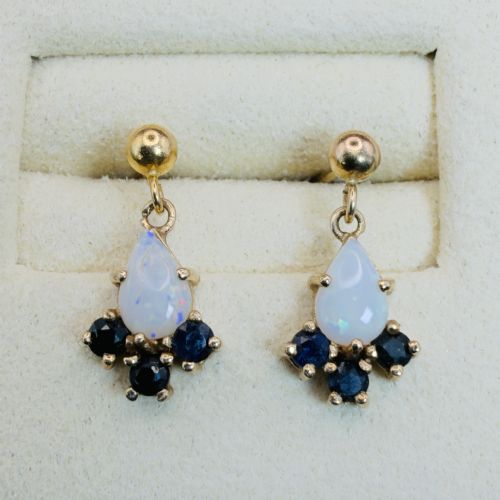
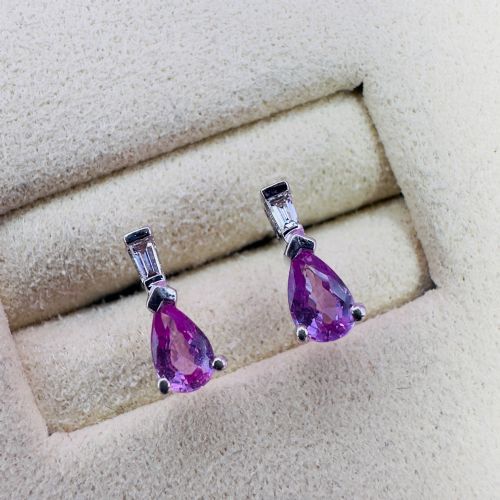
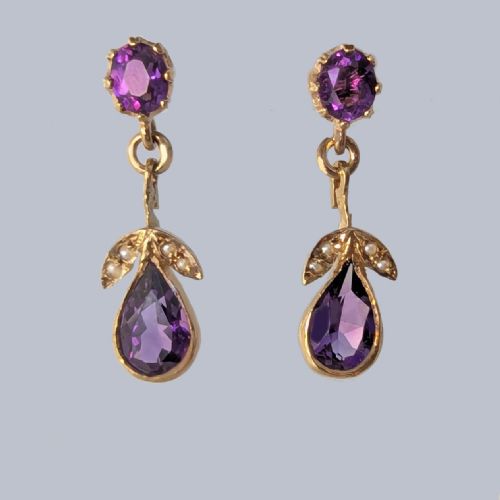
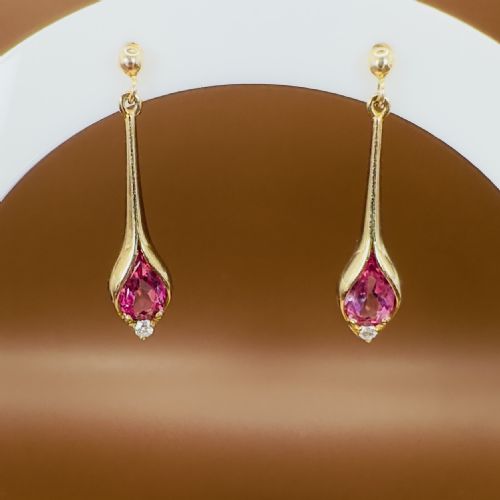


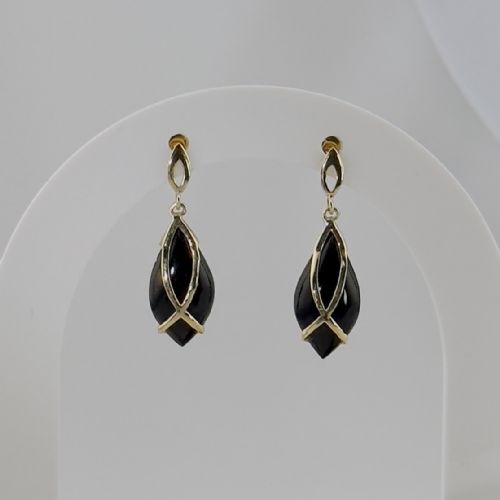

Pear Cut Earrings
Pear cut earrings capture light with a tapering teardrop silhouette that spans Victorian, Edwardian, and mid-century designs.
Pear Cut Earrings
When searching for pear cut earrings, buyers encounter a distinct teardrop shape utilised across multiple eras, including Victorian, Edwardian, Art Deco, and mid-century periods. These jewels take the form of drop earrings, dangling styles, and cluster studs that highlight the tapering profile of the central gemstone.
The versions most frequently met on this page combine 9ct gold or 18ct white gold with stones such as amethyst, aquamarine, garnet, and diamond. Many pieces incorporate drop configurations that allow the pear-shaped stone to move freely, creating continuous motion when worn.
Historical examples bridge various aesthetic movements, ranging from ornate Victorian cluster work to sleek Art Deco geometric mounts and 1950s modernist interpretations. This variety ensures that every pair reflects the distinct goldsmithing traditions of its decade of origin.
Materials and construction
Goldsmiths set pear cut gemstones into mountings fashioned from 9ct yellow gold, 9ct white gold, 14ct gold, 18ct white gold, 18ct yellow gold, and platinum. Precious metals were shaped into delicate claws, bezels, and cluster settings designed to secure the pointed end of the teardrop stone.
Lapidaries faceted coloured stones and diamonds into the characteristic pear shape, balancing symmetry with depth to maximise brilliance. In earlier pieces, diamond accents such as old cuts, rose cuts, and Swiss cuts were hand-set alongside pearls and gemstones using traditional bench techniques.
Pear Cut Earrings Retail Price Guide 2026
Typical asking prices for pear cut earrings among the pieces listed under this phrase on Sellingantiques today, from the lower quarter to the upper quarter. They describe what is for sale here now, not the wider market.
Listings feature yellow gold, white gold, and platinum paired with aquamarine, amethyst, garnet, and diamond across Victorian and mid-century periods.
Factors of quality
The distinction between tiers rests upon the precision of the gemstone cutting and the symmetry of the pear shape. A balanced apex and well-aligned facets ensure light reflects evenly across the surface of the stone without dead spots.
Metalwork execution defines the calibre of the mounting, visible in the fineness of the claw work, the security of the settings, and the integration of secondary stones like diamonds or pearls. Superior examples display harmonious proportions between the drop element and the primary gem.
The Pear Cut Earrings Glossary
- Pear cut
- A mixed gemstone cut combining a rounded end with a tapering point, resembling a teardrop. This silhouette is utilised extensively in drop and cluster earrings.
- Drop earrings
- Earrings designed to hang below the earlobe, often featuring a suspended gemstone or decorative element that moves with the wearer.
- Old cut
- An early form of diamond cutting featuring a high crown, small table, and deep pavilion. These stones were shaped by hand before modern symmetrical standards were established.
- Marcasite
- Small faceted pyrite stones set closely together to resemble sparkling steel. They are frequently utilised in vintage and Art Deco pieces for textural contrast.
Pear Cut Earrings: Frequently Asked Questions
How do I wear pear cut earrings?
Pear cut earrings suit everyday wear and evening occasions alike, depending on the scale of the drop. Dangling and cluster configurations pair well with updo hairstyles that allow the teardrop silhouette to move freely.
Selecting a pair that complements existing jewellery finishes, such as yellow gold or white gold, helps maintain a cohesive look when styling antique and vintage pieces.
What periods do these earrings come from?
The selection includes pieces originating from the Victorian era, the Edwardian period, the Art Deco years, and mid-century decades up to the late twentieth century. Each era brings distinct metal choices and gemstone combinations.
Earlier Victorian and Edwardian examples often feature rose-cut or old-cut diamonds paired with natural pearls, while later twentieth-century items showcase bold aquamarines, amethysts, and garnets.
How are the gemstones secured?
Gemstones in these earrings are held in place using metal claws, bezels, or flush settings tailored to the curved and pointed edges of the pear shape. Master jewellers ensured each stone was tightly fixed within the gold or platinum mount.
In cluster designs, secondary stones such as diamonds or smaller pearls surround the central pear cut to provide additional structural support and visual framing.
Are these earrings comfortable for daily wear?
Most designs utilise standard post and stud fittings or secure screw-back mechanisms that distribute weight evenly across the earlobe. Drop designs are engineered to balance length with lightweight metals like 9ct and 18ct gold.
Checking the specific fastening type in each listing ensures the chosen pair matches individual preferences for daily comfort and security.