


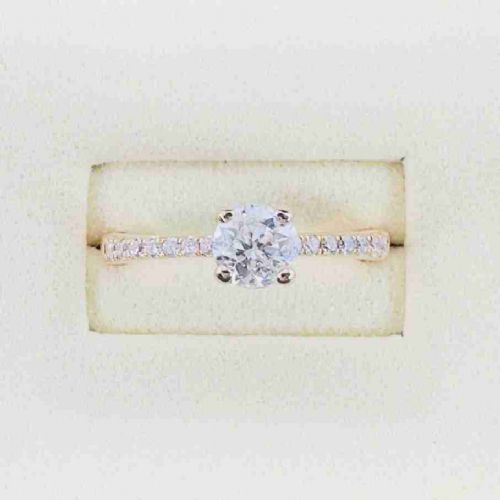


Pave Diamond Gold Ring
A pave diamond gold ring sets small stones closely together in a shimmering surface of precious metal.
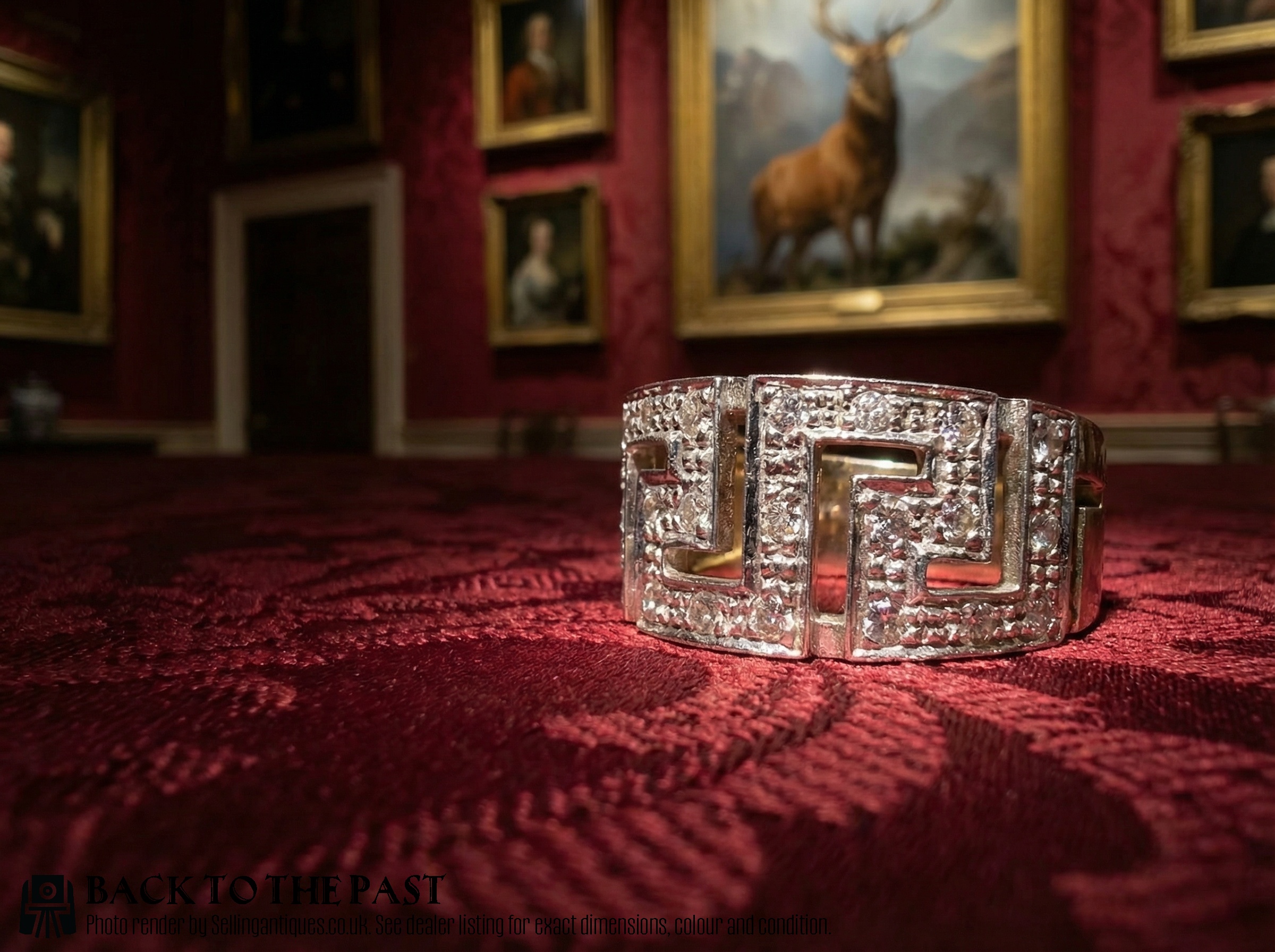
Pave Diamond Gold Ring
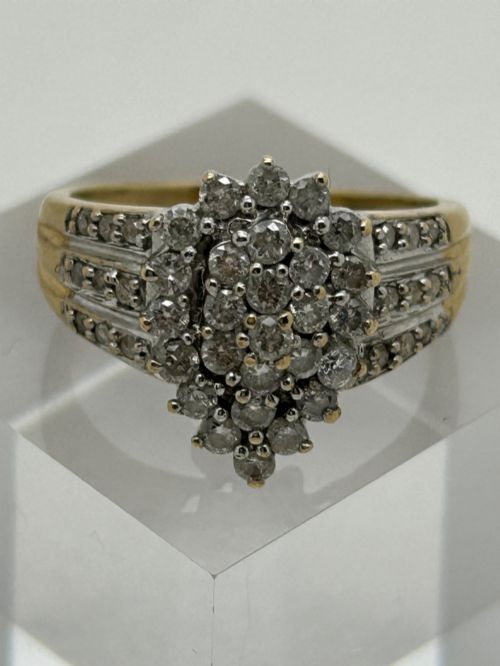
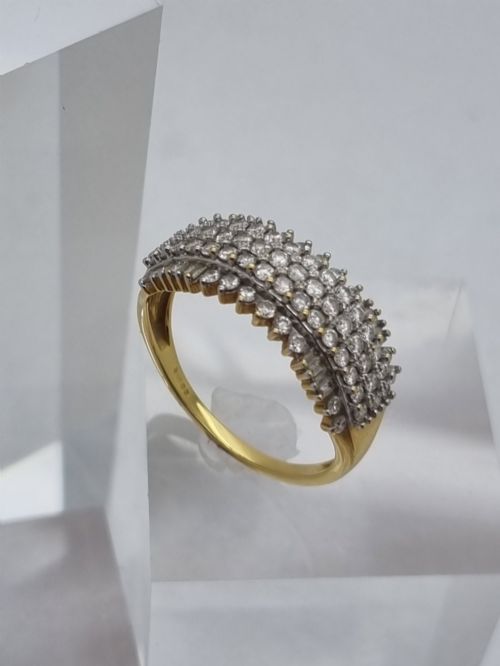
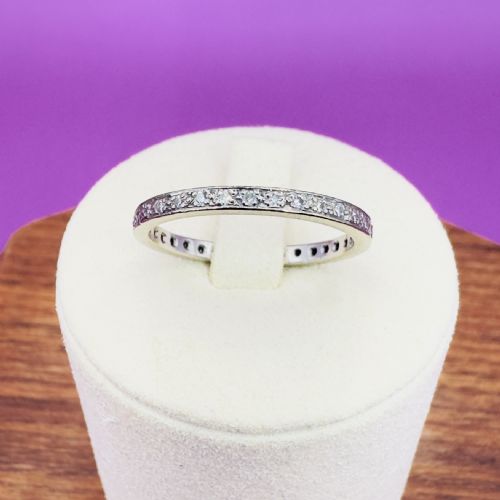
A pave diamond gold ring brings together stones and metal across several distinct eras, spanning Victorian, Edwardian, Art Deco, and mid-century periods. Buyers searching for a pave diamond gold ring encounter various forms, including cluster rings, cocktail rings, and full eternity bands.
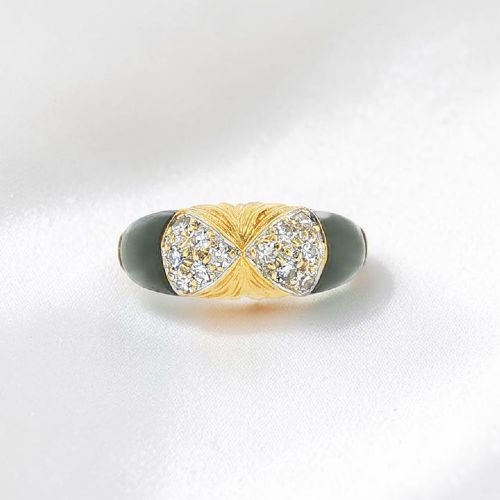
The Edwardian examples frequently combine yellow gold and platinum to support old cut diamonds, whilst later mid-century and 1960s pieces often utilise white or yellow gold. Many items integrate alternative gemstones such as sapphires, emeralds, rubies, or onyx alongside the diamonds.
Dress rings and geometric vintage designs dominate the selection, showing distinct influences from Art Deco and Retro styles. The layout of the stones creates a continuous textured surface across the finger.
How they were made
Goldsmiths set small diamonds into holes drilled directly into the gold or platinum surface, raising tiny beads of metal to hold each stone in place. This technique creates a continuous field of gems with minimal visible metal between them.
Makers combined 18ct yellow gold, 18ct white gold, and platinum, frequently pairing a platinum top layer with a yellow gold shank in Edwardian and Art Deco pieces. Hand-cut stones such as old mine cuts, rose cuts, and brilliant cuts were shaped to fit close geometric or cluster arrangements.
Listings feature pieces from the Edwardian period, 1930s, 1940s, 1950s, 1960s, and later than 1960 in platinum, yellow gold, and white gold.
What varies in quality
The precision of the stone setting determines the visual continuity of the surface, where evenly spaced beads hold each diamond securely without crowding. Finer examples display meticulous hand-work that aligns the facets of small stones to maximise reflected light.
The balance between the gold or platinum mount and the stones dictates the structural integrity of the piece over decades of wear. Superior items maintain robust metal settings that protect the girdle of each diamond while concealing the framework beneath.
Kutchinsky
The Pave Diamond Gold Ring Glossary
- Pave
- A setting style where numerous small stones are set closely together with tiny beads of metal, creating a surface resembling a paved road.
- Old cut
- A diamond cut executed by hand before modern machinery, typically characterised by a smaller table, higher crown, and open culet.
- Cluster ring
- A ring featuring a central stone surrounded by a border of smaller gems, often arranged in a floral or geometric pattern.
- Platinum
- A dense, durable white precious metal frequently used in Edwardian and Art Deco settings to hold delicate diamond work securely.
Pave Diamond Gold Ring: Frequently Asked Questions
How do I care for a pave ring?
Clean your jewellery gently using warm soapy water and a soft brush to remove debris trapped beneath the close-set stones.
Avoid wearing the ring during heavy manual tasks to prevent loosening the tiny metal beads holding the diamonds.
What is an Edwardian pave ring?
Edwardian rings from the early twentieth century often combine platinum and yellow gold with intricate pierced work.
These pieces typically feature old cut diamonds set closely together in delicate floral or garland motifs.
Can these rings be resized?
Many gold and platinum rings allow for resizing by a skilled jeweller depending on the band construction.
Full eternity bands with continuous stones around the entire circumference generally cannot be altered without disrupting the design.
How do I identify Art Deco styles?
Art Deco pieces display strong geometric lines, symmetry, and contrasting materials such as sapphires and diamonds.
French tank designs and rectangular cluster layouts are common hallmarks of this period's bold aesthetic.