


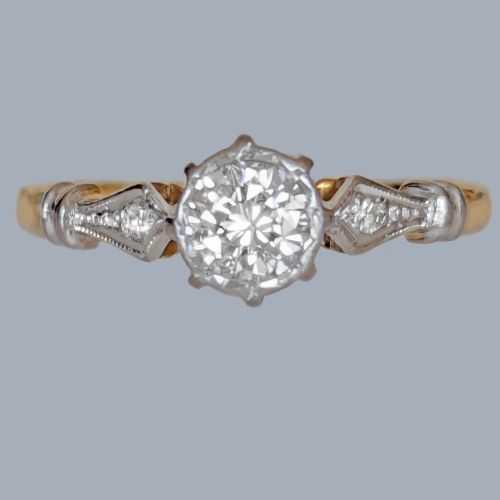


Geometric Diamond Band
A geometric diamond band offers crisp architectural lines and sparkling stones, combining classic twentieth-century design with enduring elegance.
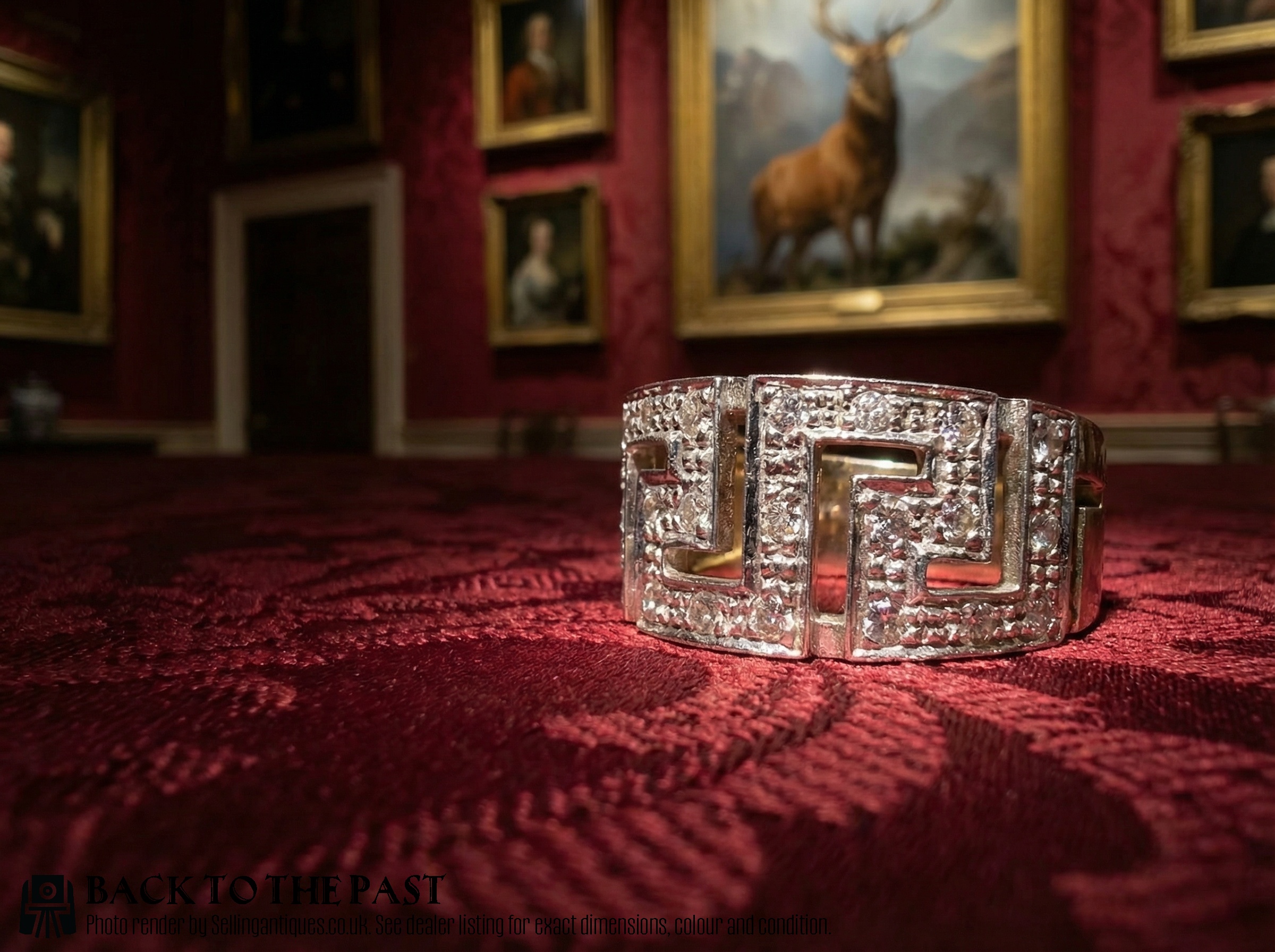
Geometric Diamond Band
A geometric diamond band is a ring or bracelet defined by sharp linear patterns, symmetry, and structured stone settings. Buyers seeking a geometric diamond band usually encounter pieces originating from the 1920s through the 1960s, spanning Art Deco, Mid-Century, and French origins.
Makers utilised various metals including platinum, white gold, 18ct yellow gold, 14ct gold, and 9ct gold to construct these structured bands. The pieces reflect distinct twentieth-century design movements, moving from early twentieth-century symmetrical motifs to later mid-century interpretations.
How they were made
Craftsmen built these pieces using platinum and various grades of gold, frequently pairing white metals with yellow gold bands for contrast. Platinum provided the strong, ductile setting required for secure flush and star settings, allowing intricate geometric layouts.
Goldsmiths set old cut diamonds, tinted yellow diamonds, and solitaire stones into precise channels, bezels, and platinum-topped mounts. Additional gemstones such as sapphires, emeralds, rubies, and pearls were integrated into the geometric frameworks using traditional hand-working techniques.
Some past pieces cleverly hid tiny star-set diamonds inside swirling geometric gold bands, giving a secret flash of light to the wearer.
What varies in quality
The standard of a geometric diamond band depends on the precision of its metalwork and the uniformity of the stone settings. Superior examples display crisp architectural angles, tightly aligned channel settings, and well-matched diamonds that maintain visual balance across the band.
Metal selection and weight also dictate the grade of the piece, with platinum-faced gold or solid platinum mounts representing robust construction. The inclusion of secondary gemstones, such as calibrated sapphires or emeralds, further separates standard production rings from finer cocktail jewellery.
The Geometric Diamond Band Glossary
- Art Deco
- A design style characterised by sleek geometric shapes, stylised motifs, and strong lines popular in the 1920s and 1930s. It heavily influences the structure of many vintage diamond bands.
- Old cut
- A vintage diamond cutting style featuring a smaller table, higher crown, and larger culet than modern brilliant cuts. These stones exhibit a distinctive soft scintillation under candlelight.
- Platinum
- A dense, durable white metal prized for its strength in fine jewellery settings. It allows jewellers to create ultra-thin, secure claws and geometric channels.
- Trilogy ring
- A ring set with three stones, typically symbolising the past, present, and future. In geometric designs, these stones are often flanked by linear shoulders.
- Cocktail ring
- A large, striking ring worn to evening social events, frequently encrusted with diamonds and coloured gemstones. They often feature bold, wide geometric bands.
Geometric Diamond Band: Frequently Asked Questions
What periods do these bands come from?
The pieces span the early to mid-twentieth century, with a strong representation of Art Deco designs from the 1920s and 1930s. Other examples emerge from the 1940s, 1950s, and 1960s Mid-Century periods.
Designs shifted over these decades from sharp, platinum-set architectural motifs to softer yellow gold and white gold combinations. This evolution provides clear chronological markers for collectors.
How do I style a geometric band?
A geometric diamond band works well worn alone as a statement piece or paired alongside a simple wedding band. The linear designs complement both modern minimalist wardrobes and vintage attire.
Bracelets and rings from this category add structured sparkle to daily wear or evening outfits alike. Their symmetrical patterns integrate easily with other twentieth-century jewellery.
What metals were used?
Jewellers utilised platinum, white gold, 18ct yellow gold, 14ct gold, and 9ct gold across these pieces. Platinum was frequently chosen for the top settings to securely hold diamonds in sharp geometric arrangements.
Combination pieces pairing white gold or platinum with 18ct yellow gold bands are also common. This mixed-metal approach enhances the visual contrast of the geometric patterns.
Are coloured stones common?
Coloured gemstones frequently accompany the diamonds in these geometric arrangements. Sapphires, emeralds, rubies, and pearls appear regularly within the historical inventory.
These coloured stones are typically calibrated to fit exact channel settings or surround central diamond clusters. They provide vibrant contrast to the stark white of platinum and diamonds.