

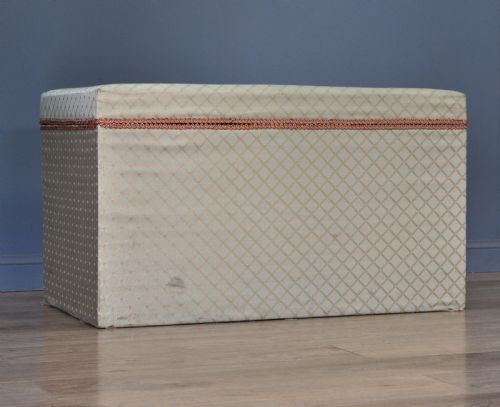


Patterned Storage Chest
These patterned storage chest pieces combine practical utility with period decoration, offering robust containment for blankets, toys, and textiles while anchoring a room with historic character.
Patterned Storage Chest
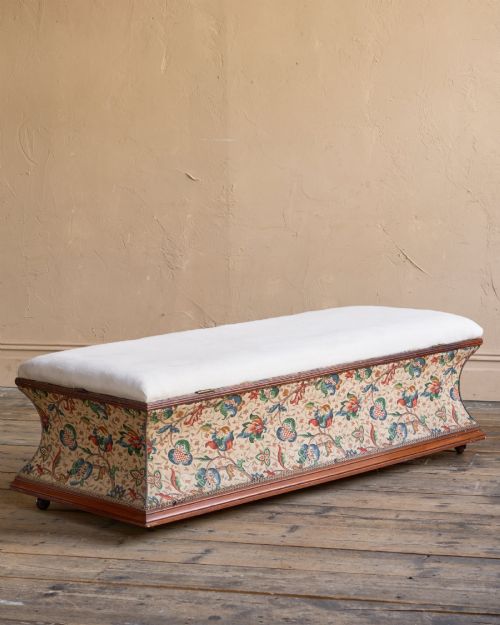
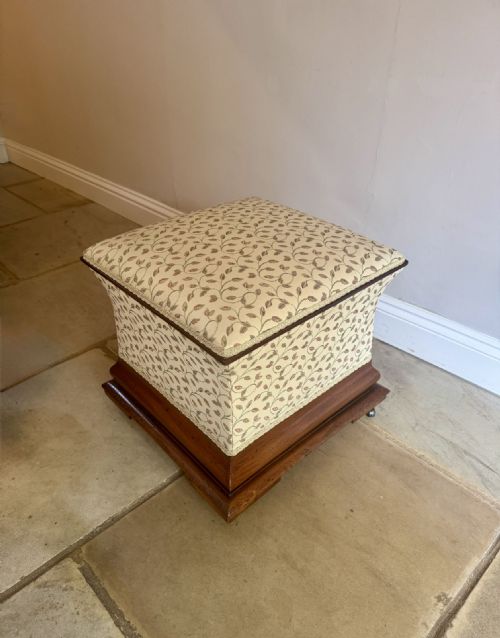
A patterned storage chest encompasses a varied selection of domestic containers, including ottomans, footstools, trunks, and blanket boxes. These items are designed for holding household goods while displaying decorative surface treatments.
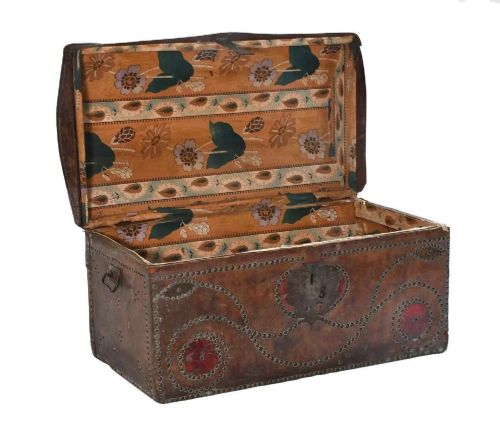
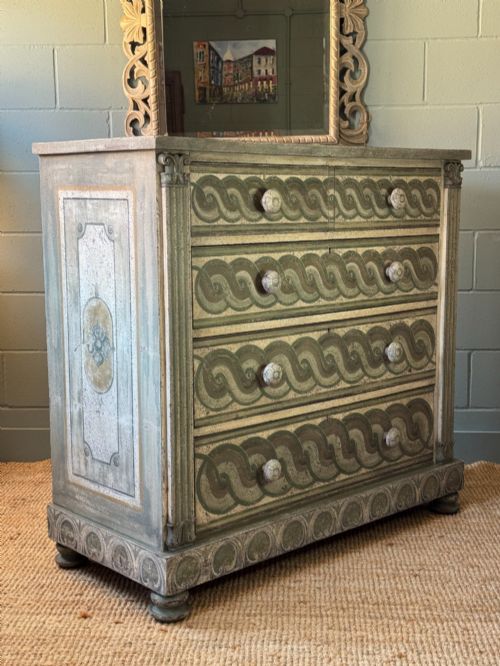
The pieces on this page span several centuries, featuring examples from the 18th century, the Regency and Victorian eras, up to the early 20th century. Forms range from upholstered pine trunks and painted wooden chests to studded leather and brass-mounted caskets.
Buyers will most frequently encounter Victorian ottomans and pine storage trunks alongside 18th-century painted or leather-clad chests. These items reflect traditional methods of keeping textiles and belongings secure within domestic spaces.
Materials and Construction
Construction relies heavily on traditional timber frames utilising woods such as mahogany, pine, and general timber. These foundational structures provide the durability necessary for functional storage and seating.
Surface enhancement utilises diverse materials including brass mounts, iron hardware, tin, fabric upholstery, and painted wood treatments. Skilled makers applied leather with studs, silver inlay on bronze, and protective brass and glass casings to elevate the functional objects.
Patterned Storage Chest Retail Price Guide 2026
Typical asking prices for patterned storage chest among the pieces listed under this phrase on Sellingantiques today, from the lower quarter to the upper quarter. They describe what is for sale here now, not the wider market.
Judging the Standard
Quality rests upon the integrity of the primary materials and the sophistication of the decorative surface work. Superior examples demonstrate refined proportions in timber framing alongside carefully executed upholstery, painted finishes, or metal inlay.
The distinction between standard utility items and finer pieces lies in the execution of specific details, such as precision studwork on leather, the quality of brass hardware, and the preservation of original painted or upholstered surfaces.
The Patterned Storage Chest Glossary
- Ottoman
- A low, upholstered seat or footstool often featuring a hinged lid that opens to reveal internal storage space. These pieces function as both furniture and receptacles for household textiles.
- Kist
- A traditional regional term for a heavy wooden storage chest or trunk used for keeping blankets, linens, and personal possessions. They typically feature sturdy timber construction and simple rectangular proportions.
- Casket
- A small, highly decorative box or chest intended for the safekeeping of valuables, documents, or specialised items. They frequently incorporate fine materials such as brass, tin, or inlaid metals.
- Betal Box
- A specialised container divided internally for holding ingredients associated with betal nut chewing. These objects are often cast in bronze with intricate metalwork decoration.
- Dome Top
- A curved lid construction on a chest or trunk that allows rainwater to shed easily and provides additional interior clearance. This profile appears frequently on travel trunks and tin caskets.
Patterned Storage Chest: Frequently Asked Questions
What were storage chests used for?
These pieces served as durable containers for household textiles, blankets, clothing, and personal valuables before built-in closets became common. They kept contents protected from dust and dampness while doubling as casual seating or tables in domestic rooms.
Heavier trunks and caskets also accommodated transport for travel, utilising robust iron or brass hardware to secure belongings on journeys. Their dual nature as furniture and storage made them central items in historical homes.
How do I date a Victorian ottoman?
Dating relies on examining the timber frame underneath the upholstery, the textile type, and the fastening methods used on the hinges and feet. Victorian examples often combine pine or mahogany framing with dense padding and traditional textile coverings.
Comparing the decorative style, such as turned wooden legs or specific upholstery tufting, helps narrow the production window. Consulting the specific era markers in the title provides a reliable baseline for the piece's age.
How do I care for antique painted wood?
Maintenance requires keeping painted wooden surfaces away from direct sunlight and maintaining stable indoor humidity to prevent the timber from warping. Dusting gently with a dry, soft cloth preserves the historic pigment without abrading the finish.
Avoid using harsh chemical polishes or modern cleaning sprays on historic paint or aged timber. Gentle handling ensures the original decorative treatment remains stable over time.
Where should I place a trunk?
These chests fit well at the foot of a bed, beneath windows, or as a living room centre table that provides hidden storage. Their flat tops allow them to function as display surfaces for books or decorative objects while keeping clutter out of sight.
Ensuring adequate clearance around the hinged lid allows the chest to open fully without damaging surrounding walls or furniture. Positioning them away from radiators protects the historical wood and upholstery from drying out.