
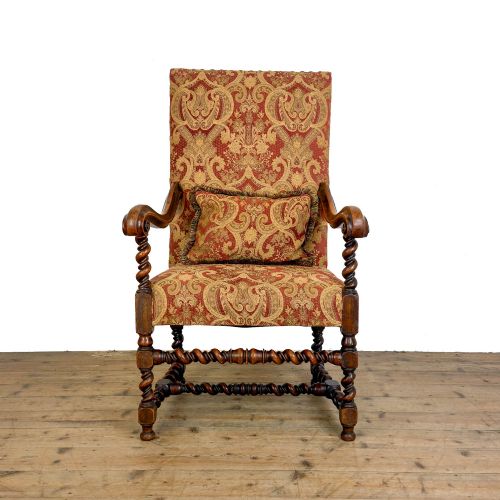
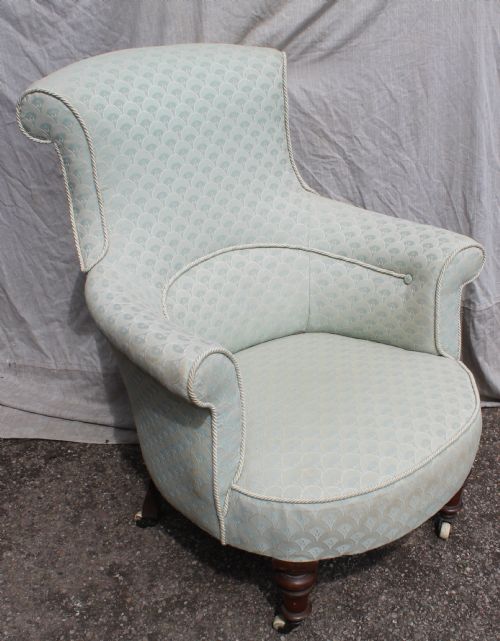


Pattern Fabric Armchair
A pattern fabric armchair brings layered textile interest into a room, offering both practical seating and strong decorative presence through upholstery.
Pattern Fabric Armchair
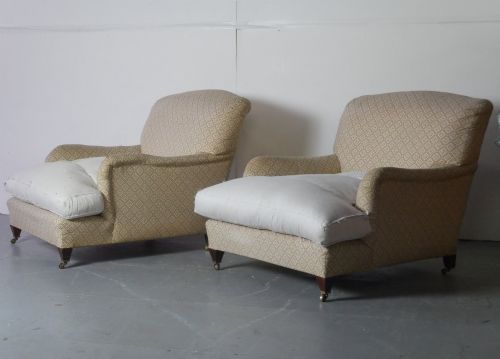
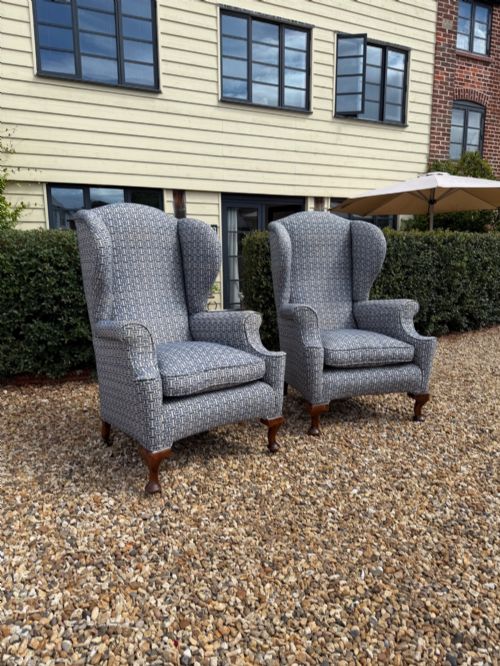
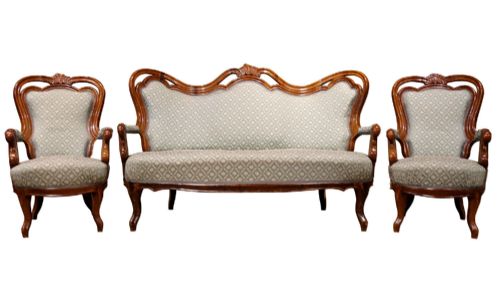
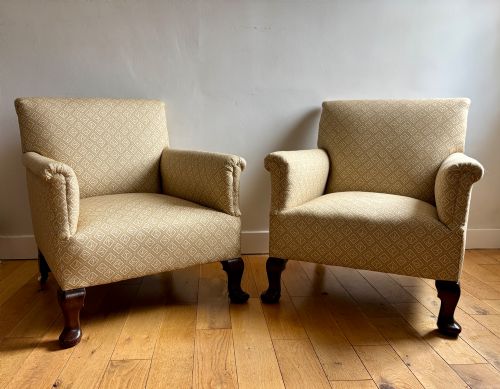
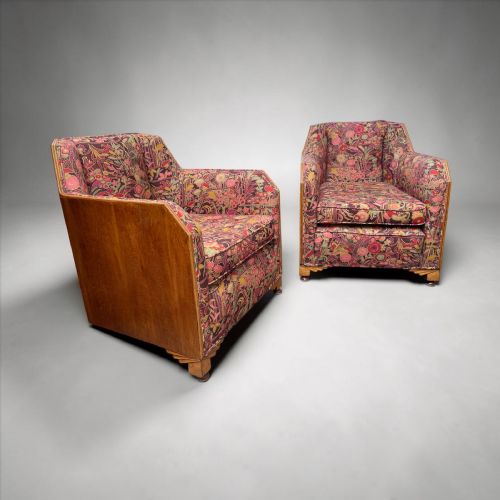
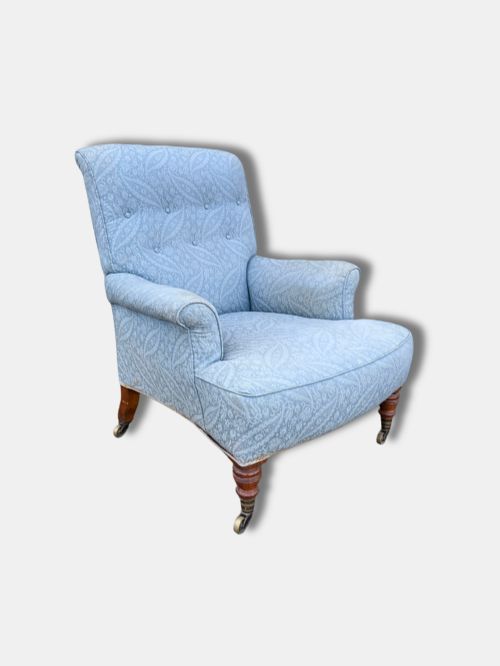
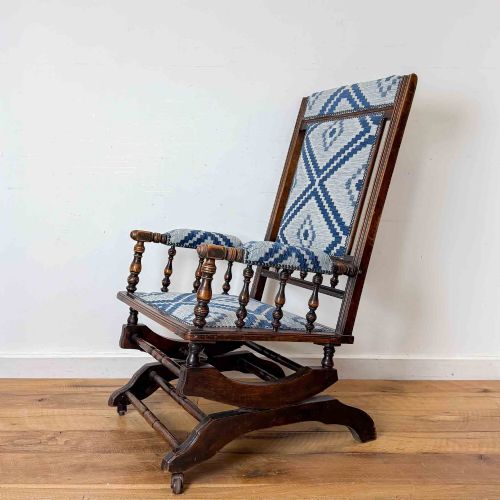
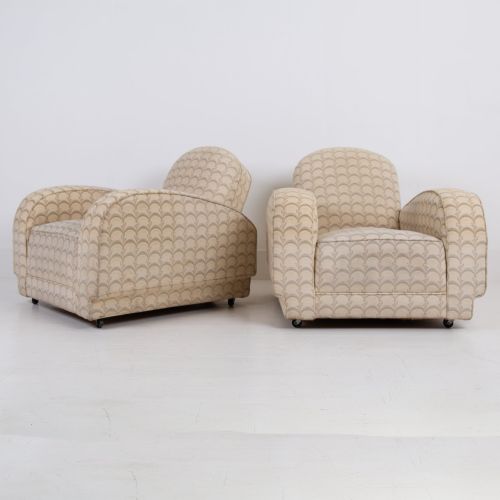
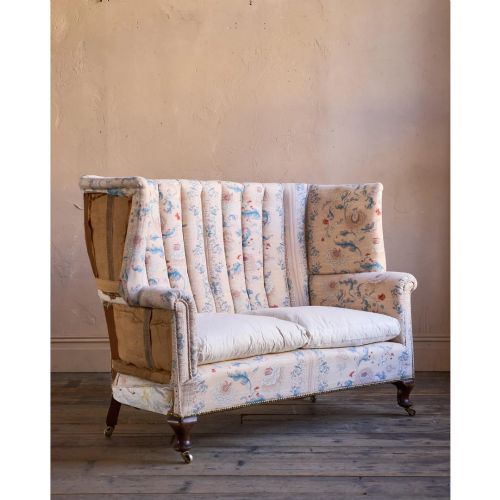
A pattern fabric armchair unites structural woodwork with patterned textile upholstery, ranging from compact occasional seating to generous club chairs. When exploring this selection, buyers frequently encounter Victorian, Edwardian, and Art Deco examples featuring distinctive coverings.
The category encompasses diverse seating forms including wingbacks, library chairs, club easy chairs, and salon suites. Makers utilise various woods such as mahogany, walnut, and oak to build the frames beneath the patterned cloth.
What varies in quality
The integrity of the underlying hardwood frame and the retention of original maker's stamps or paper labels largely determine a piece's standing. Finer examples retain their original castors, springs, and uncompromised structural joinery.
The execution of the upholstery work, from precise pattern matching across cushions to the quality of the textile itself, separates standard commercial output from workshop masterworks.
The selection includes pieces spanning the Georgian era, the nineteenth century, Victorian and Edwardian periods, through to 1930s Art Deco.
Howard and Sons·Whytock and Reid·Gillows·James Shoolbred
The Pattern Fabric Armchair Glossary
- Wingback
- An armchair featuring protective side panels designed to shield the occupant from draughts. These upholstered wings extend from the armrests up to the back of the seat.
- Button-back
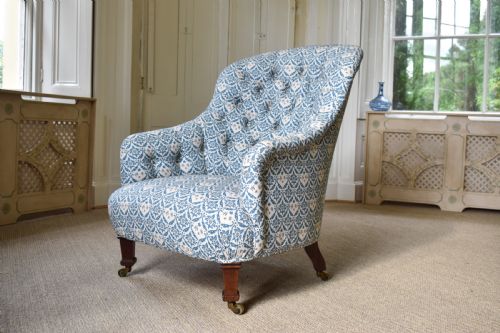
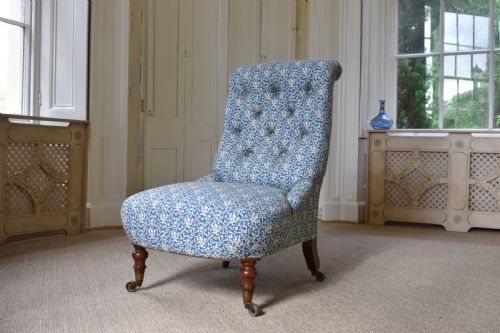
- An upholstery technique where deep buttons are pulled tight through the padding to form a patterned grid of diamond shapes. This method secures the internal stuffing while adding textural depth.
- Club armchair
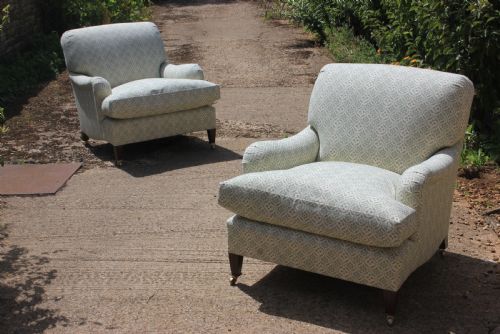
- A deep, generously proportioned low seat designed for maximum lounging comfort. Originating in French and English clubs, these pieces typically feature heavy padding and robust construction.
- Curule X-frame
- A classical cross-legged chair design derived from ancient Roman magistrate seats. The intersecting curved members form an X shape when viewed from the side.
Pattern Fabric Armchair: Frequently Asked Questions
How do I identify a Howard and Sons armchair?
Authentic pieces often carry paper labels, stamped woodwork, or distinctive numbered castors hidden beneath the upholstery. Look for robust framing paired with high-quality traditional stuffing and superior upholstery techniques.
Many examples also feature specific model names or stamped leg markings that correspond to the firm's nineteenth-century production records.
Are these armchairs suitable for daily use?
Most antique and vintage upholstered chairs were built with sturdy hardwood frames and durable internal springing designed for regular sitting. Assessing the firmness of the seat and the stability of the joints ensures everyday reliability.
For older pieces, ensuring the internal webbing remains strong will protect the structural integrity during regular use in a modern living space.
What is the difference between Victorian and Edwardian armchairs?
Victorian seating often leans towards heavier proportions, dark mahogany or walnut frames, and button-backed upholstery designed for formal interiors. Edwardian versions typically lighten in scale, introducing brighter fabrics and refined inlaid woodwork.
While Victorian designs prioritize substantial comfort and carved ornamentation, Edwardian pieces favour tailored elegance and adaptability for smaller drawing rooms.
How should I care for pattern fabric upholstery?
Regular gentle vacuuming using a low-suction attachment removes surface dust before it settles into the woven fibres of cotton or decorative textiles. Professional dry cleaning is recommended for deeper maintenance to protect delicate antique fabric structures.
Positioning the chair away from direct sunlight will also prevent the patterned colours from fading prematurely over time.