
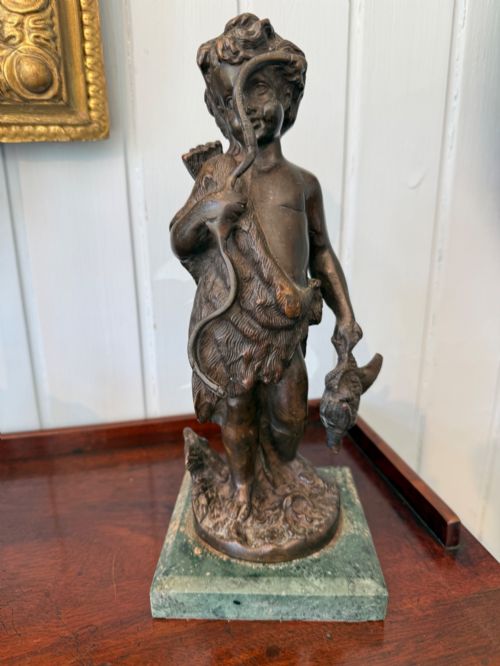
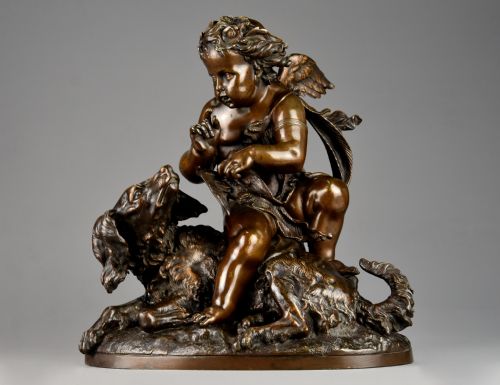


Patinated Bronze Cupid
These patinated bronze cupid figures are classic sculptural works sought after for their refined nineteenth-century French and neoclassical character.
Patinated Bronze Cupid
When you search for patinated bronze cupid, you encounter nineteenth-century decorative sculptures, bookends, and figurative works depicting winged putti and Eros. The pieces on this page span the Victorian era and French classical traditions, frequently pairing cast metal figures with marble or wood bases.
You are most likely to meet sculptures from the eighteen-eighties, eighteen-nineties, and around nineteen hundred, alongside specific depictions involving animals or companion figures. The forms range from small desk pieces to substantial decorative sculptures bearing signatures of period makers.
How they were made
These works utilise bronze and patinated bronze, often combined with gilt bronze, brass, marble, and inlaid wood bases to create textured, multi-material sculptural objects. Makers applied chemical patination techniques to the cast metal surfaces to achieve deep tonal variation and aged finishes.
The casting process captured intricate anatomical details of the figures, wings, and associated elements like bows, spaniels, or architectural bases. Signed pieces demonstrate the skilled hand-finishing and chasing typical of nineteenth-century French classical foundry production.
Listings feature materials including bronze, patinated bronze, marble, gilt bronze, brass, and wood across the nineteenth-century period.
What varies in quality
Signatures from established nineteenth-century sculptors elevate certain figures above unsigned workshop production. The integration of materials, such as inlaid wood bases paired with seated putti, also marks the distinction between simpler single-figure castings and more ambitious compositions.
Aug. Moreau·Ferrand·K&O
The Patinated Bronze Cupid Glossary
- Patinated bronze
- Bronze that has been treated with chemical solutions to produce a specific surface colour or aged finish. This process enhances the definition of the sculptural contours.
- Putto
- A plump, often winged child figure originating in classical art and frequently depicted in nineteenth-century sculpture. In these works, they represent Cupid or Eros.
- Neoclassical
- An artistic style drawing inspiration from the classical art and culture of ancient Greece and Rome. It dominates the nineteenth-century French classical pieces found here.
- Gilt bronze
- Bronze coated with a thin layer of gold or gold-coloured alloy for decorative effect. It appears alongside darker patinated surfaces on several listed pieces.
- Spelter
- A zinc-based alloy used as a less costly alternative to bronze for decorative figures. Sold records indicate historical examples cast in bronzed spelter.
Patinated Bronze Cupid: Frequently Asked Questions
What is a patinated bronze cupid?
A patinated bronze cupid is a nineteenth-century sculptural object depicting the winged god of love, finished with an aged or treated chemical surface. These pieces take the form of freestanding decorative figures, bookends, or multi-figure groups.
They reflect the Victorian and nineteenth-century French classical tastes for mythological subjects. Many incorporate secondary materials like marble or inlaid wood.
How were these sculptures used?
These figures served as decorative works of art displayed on mantelpieces, desks, and side tables in nineteenth-century homes. Heavier matched pairs also functioned practically as bookends.
Their presence added a classical and romantic element to interior decorative schemes. Smaller pieces were designed for close inspection on surface furniture.
How do I date these bronzes?
Dating relies on stylistic markers associated with the nineteenth century, including Victorian and French classical idioms. The presence of specific base materials like inlaid wood or marble often points to periods between eighteen-sixty and nineteen hundred.
Signatures from makers such as Aug. Moreau or Ferrand help anchor pieces to specific late nineteenth-century production dates. The clothing, accessories, and casting methods further assist in narrowing the timeframe.
What styles are common?
The dominant styles are neoclassical, nineteenth-century French, and Victorian. These encompass both formal classical interpretations of Eros and more charming, narrative depictions of putti.
Compositions range from single figures with bows to elaborate scenes involving animals and mother-and-child groupings. The aesthetic prioritises classical proportion combined with decorative nineteenth-century domestic appeal.