
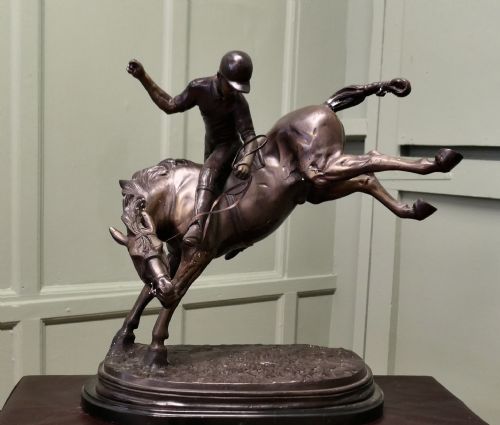
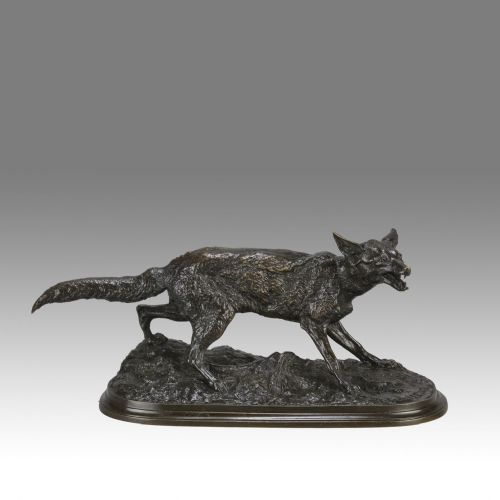
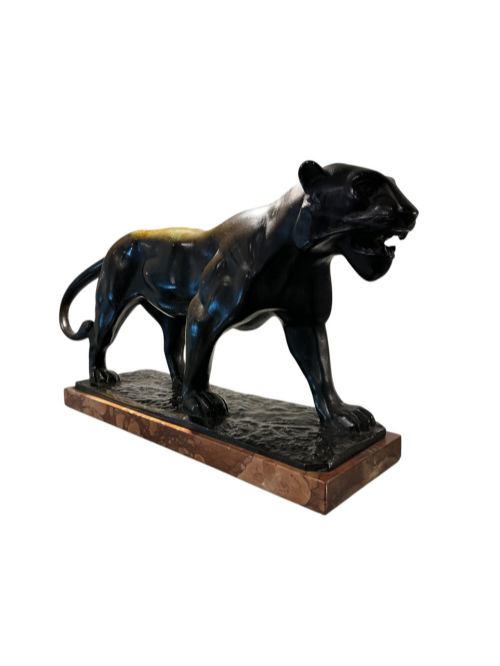
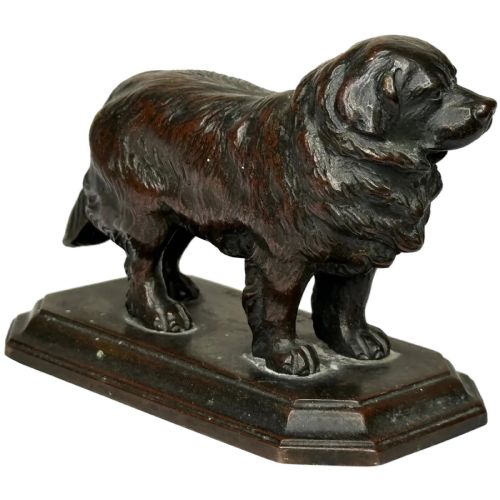
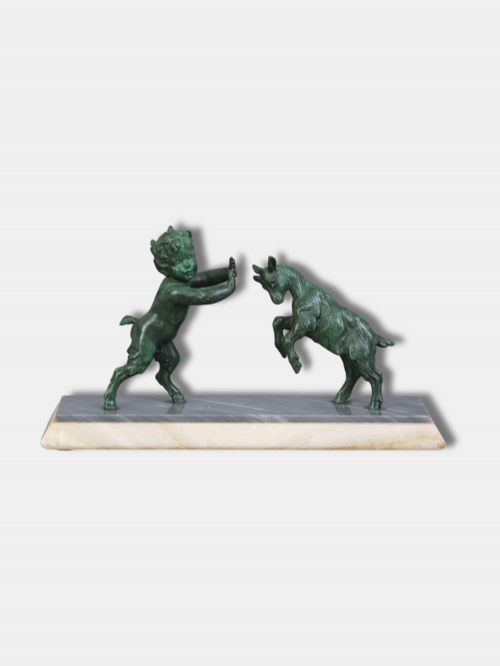
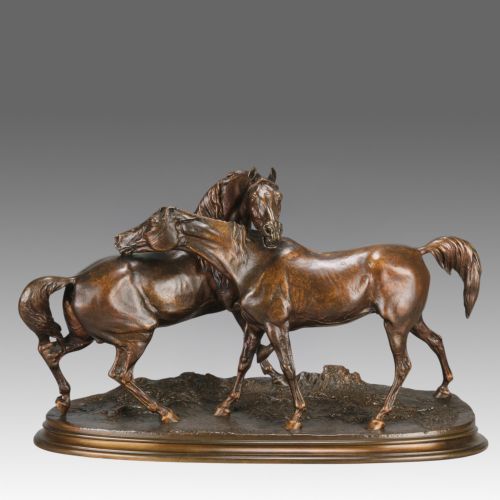
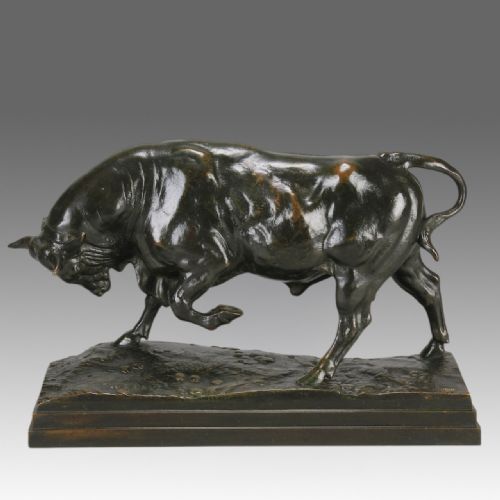
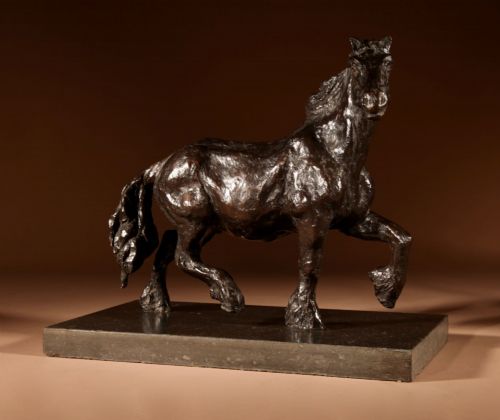
Patinated Bronze Animalier Sculpture
A patinated bronze animalier sculpture captures the tension and power of the natural world in enduring metal.
Patinated Bronze Animalier Sculpture
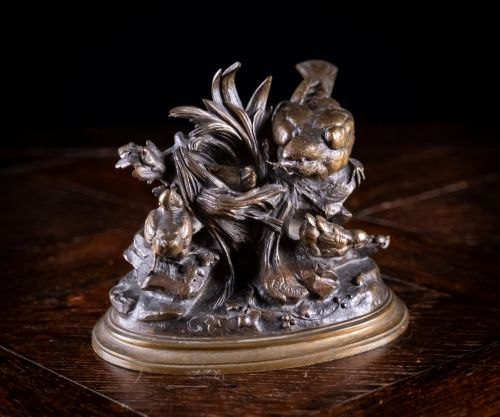
A patinated bronze animalier sculpture depicts animals in realistic, dramatic, or naturalistic poses, often mounted on stone bases. Collectors pursuing a patinated bronze animalier sculpture will find numerous examples originating from nineteenth-century and early twentieth-century French schools, alongside British, Italian, and Japanese works.
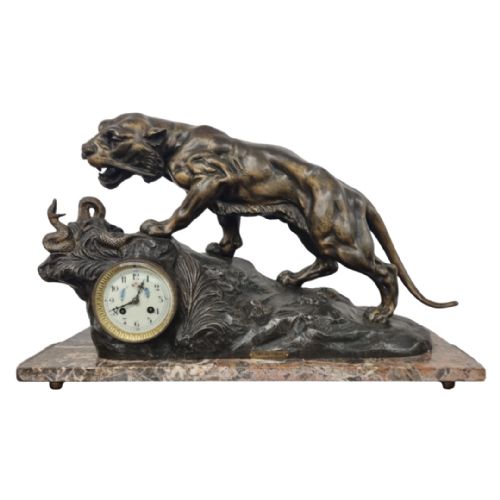
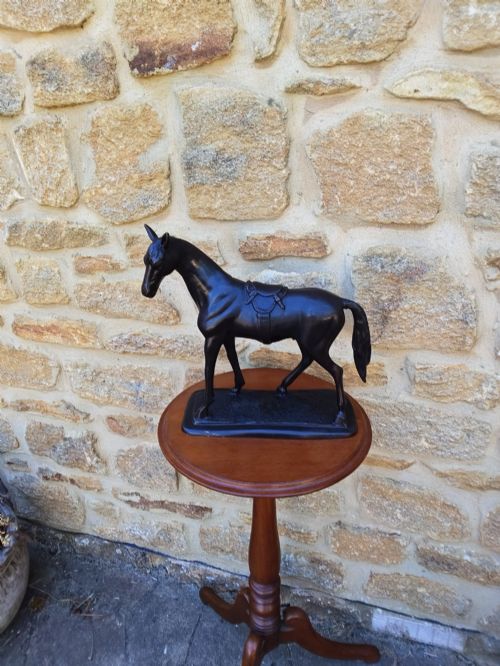
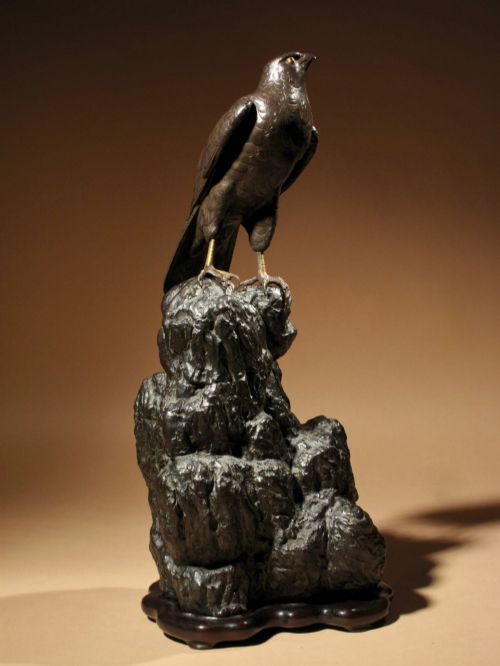
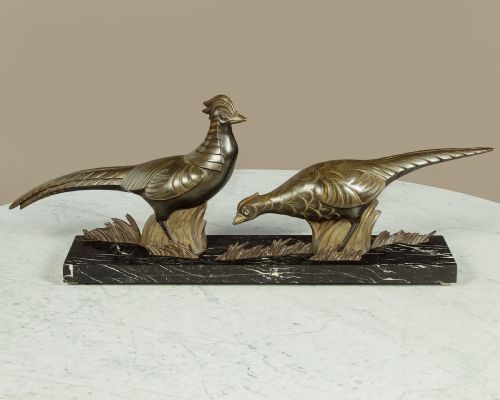
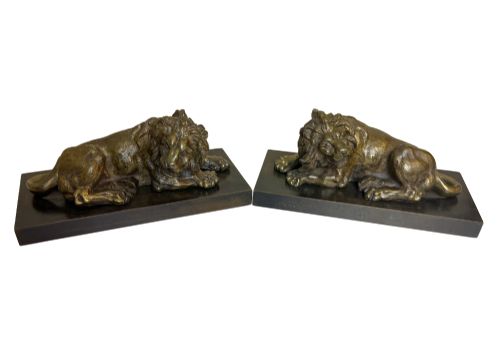
The subjects range from domestic dogs and farm horses to big cats, birds of prey, and fighting wildlife. Works span mantel clocks, sculptural groups, and individual figures set upon marble, onyx, or wood plinths.
How They Were Made
These pieces are cast primarily in bronze utilising traditional methods, finished with dark patination, enamel details, or warm surface tones. Many figures are anchored to bases formed from polished marble, striated onyx, or carved wood.
Makers applied chemical patinas to the cast metal surface to achieve varied tonal effects, ranging from deep black-browns to lighter metallic sheens that highlight muscular definition and fur texture.
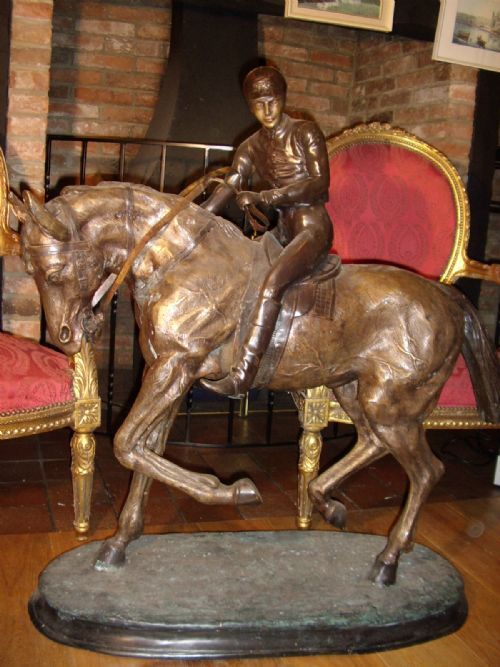
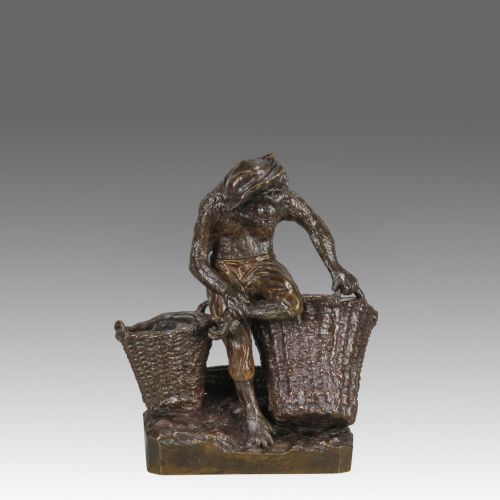
Monkeys holding baskets and frogs sitting quietly share space with charging bulls and racehorses.
What Varies in Quality
The fidelity of the casting and the crispness of the chase work define the upper tier of these sculptures. Finer pieces retain sharp details in feather texture, facial expression, and anatomical musculature without softening from worn moulds.
The integration between the bronze subject and its mounting base also separates examples. Superior works feature heavy, well-fitted marble or onyx plinths that complement the scale and weight of the metal figure above.
P J Mêne·Christophe Fratin·Antoine Louis Barye·Jules Moigniez·Isadore Bonheur·Alfred Dubucand·Paul Édouard Delabrièrre
The Patinated Bronze Animalier Sculpture Glossary
- Animalier
- A nineteenth-century artistic movement dedicated to the realistic representation of animals. Practitioners focused heavily on anatomical accuracy and dynamic movement.
- Patination
- The chemical or thermal treatment applied to the surface of bronze to alter its colour. This process creates protective layers and specific aesthetic tones.
- Cire Perdue
- The lost-wax casting technique used to create detailed metal sculptures from an original model. It allows for complex undercuts and fine surface textures.
- Plinth
- A heavy base of marble, onyx, or wood supporting the bronze sculpture. It provides physical stability and visual weight to the composition.
Patinated Bronze Animalier Sculpture: Frequently Asked Questions
How do I clean a bronze sculpture?
Dust the surface gently with a soft, dry brush to remove settled particles without disturbing the patina. Avoid using chemical cleaners, polishes, or water, as these can strip the original chemical finish from the metal.
Apply a very thin coat of microcrystalline wax if the metal requires protection against humidity. Buff the wax gently with a clean cloth to maintain a stable finish.
What periods are most common?
The majority of these sculptures date from the nineteenth century through the early decades of the twentieth century. French workshops dominated production during this era, producing works that capture both realistic and Art Deco styles.
Pieces from the mid-nineteenth century often display romantic or dramatic naturalism. Later twentieth-century examples frequently adopt streamlined Art Deco aesthetics.
How are different animal species represented?
Sculptors depicted everything from farmyard livestock and hunting dogs to exotic big cats and birds. Domestic animals like horses and dogs appear in both working and resting poses.
Wild animals are typically shown in dynamic action, such as stags running, eagles perched on rocks, or lions prowling. Japanese works in the selection also introduce elephants and tigers.
What bases do these sculptures use?
Many bronzes are secured directly to bases made of marble, onyx, or dark wood. These plinths provide necessary weight and balance for figures engaged in active or cantilevered poses.
Some pieces stand independently on cast bronze integral bases, while others require the contrasting texture of polished stone to complete their composition.