


Pastoral Watercolour Scene
A pastoral watercolour scene captures rural British life and countryside vistas using traditional paper, pigment, and frame.
Pastoral Watercolour Scene
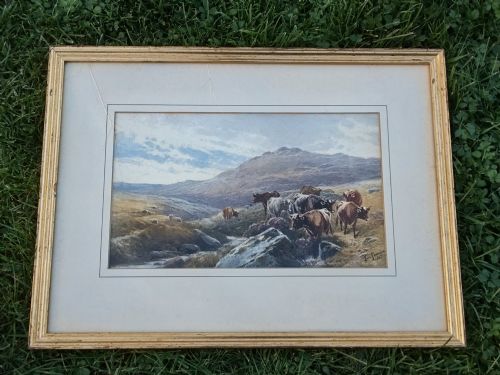
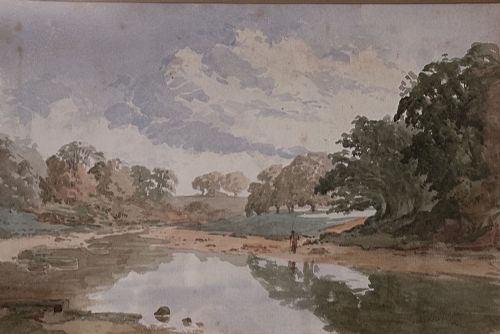
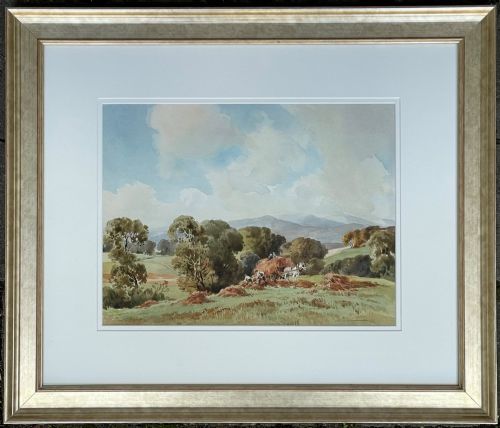
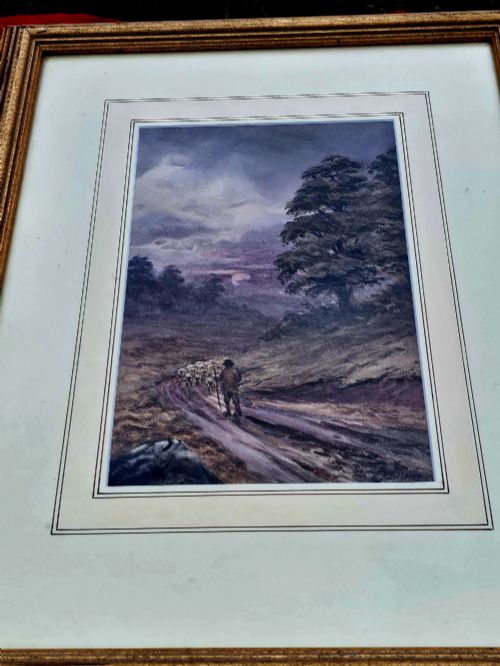
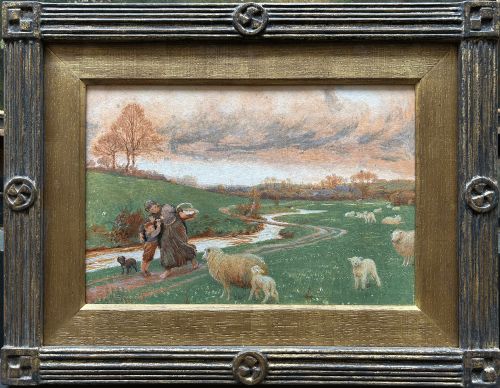
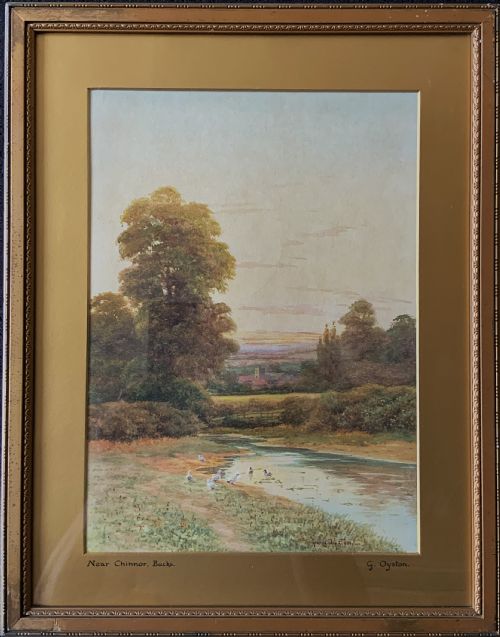
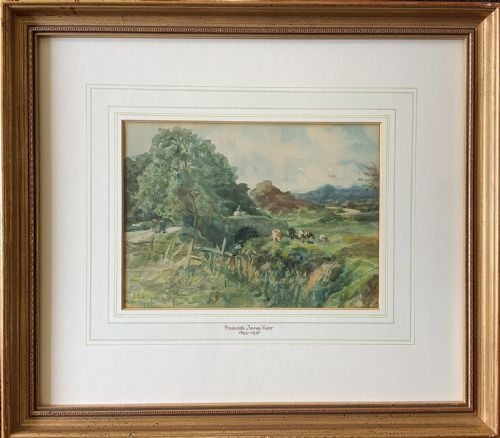
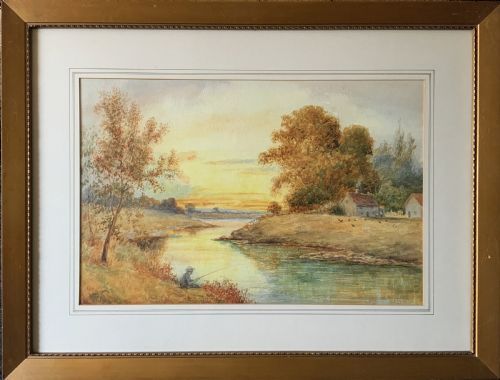
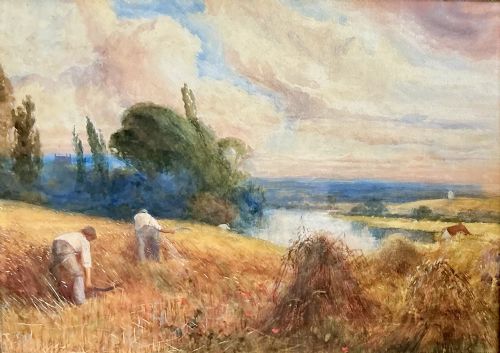
A pastoral watercolour scene depicts traditional British country life, agricultural labour, and rural landscapes. The pieces here span the Victorian, Edwardian, and early twentieth-century periods, capturing countryside vistas on paper.
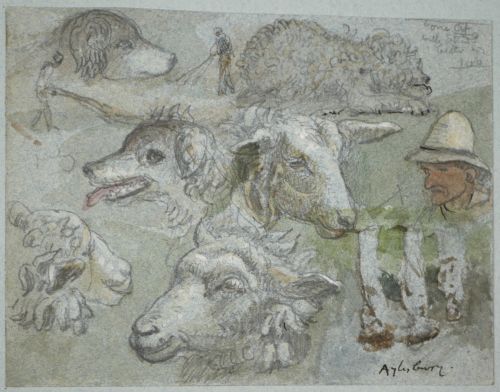
Most examples feature framed artwork showing cottages, riversides, and farming activities such as herding sheep, harvesting hay, and tending cattle. The compositions range from intimate vignettes of rural figures to expansive lowland and river landscapes.
Originating predominantly from British artists working through the nineteenth and early twentieth centuries, these watercolours document a vanished agrarian world. They appear today mounted behind glass within original gilt or burr wood frames.
How they were made
Artists applied watercolour pigment onto absorbent paper sheets, often building up translucent washes to achieve atmospheric effects of light and weather. Detail was then refined using finer brushes and occasionally gouache highlights.
Finished paintings were secured behind protective glass and housed in wooden frames, frequently enhanced with gold leaf or gilt mouldings. Many retain their original period frames, which contribute significantly to the historic integrity of the object.
Several watercolours preserve the exact moment a young foal attempted to steal fruit directly from a woven basket.
What varies in quality
Quality rests primarily on the artist's draughtsmanship and ability to handle the fluid medium of watercolour without muddying the pigments. Stronger works display confident brushwork, balanced composition, and a clear atmospheric sense of light.
The survival of the original paper condition and colour saturation marks the difference between average and exceptional pieces. Unfaded pigments and well-preserved gilt frames elevate the visual impact of a pastoral watercolour scene.
Percy Lancaster·James Smetham·George Oyston·Frederick James Kerr·Frederick Hines·Henry John Kinnaird·James William Booth·Ernest Pile Bucknall·Robert Thorne Waite·John Atkinson·Helena Maguire·Alfred Grey·George Soper·Edmund George Warren·William Stephen Coleman·Harry Sylvester Stannard·Henry Charles Fox·Will Anderson·Robert Hollands Walker·Basil Bradley·Augustus Jules Bouvier·Thomas James Lloyd·Joseph Kirkpatrick·Henry Sykes·John R K Duff
The Pastoral Watercolour Scene Glossary
- Watercolour pigment
- Finely ground colour particles mixed with a water-soluble binder for painting on paper.
- Gilt
- A thin layer of gold leaf applied to wooden frames to provide a decorative metallic finish.
- Burr wood
- Timber featuring distorted grain patterns often utilised for decorative nineteenth-century frames.
- Wash
- A thin, transparent layer of diluted watercolour pigment spread evenly across the paper surface.
Pastoral Watercolour Scene: Frequently Asked Questions
What is a pastoral watercolour scene?
A pastoral watercolour scene is a painting on paper depicting traditional rural life, farming, and countryside landscapes.
These artworks typically feature cottages, rivers, and agricultural workers created by British artists during the nineteenth and early twentieth centuries.
How should I display these watercolours?
These paintings require placement away from direct sunlight to prevent the watercolour pigments from fading over time.
Keeping them behind protective glass within their original wooden frames maintains both their historical context and physical preservation.
How do I identify the period?
Dating relies heavily on the style of the mounting, the characteristics of the framing materials, and artist signatures.
Victorian and Edwardian pieces often display distinct framing choices, such as gilt moulding or burr wood, alongside period costume details.
Were these paintings used outdoors?
Artists generally produced landscape and pastoral watercolours on location in the countryside before finishing them inside studios.
Working outdoors allowed painters to capture natural lighting and authentic rural activities directly from observation.