



Pastoral Silk Picture
A pastoral silk picture brings the idealised countryside into the parlour through fine needlework and silk threads.
Pastoral Silk Picture
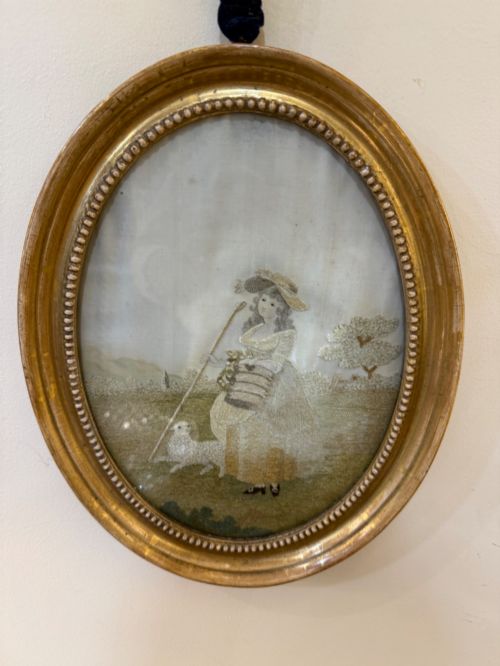
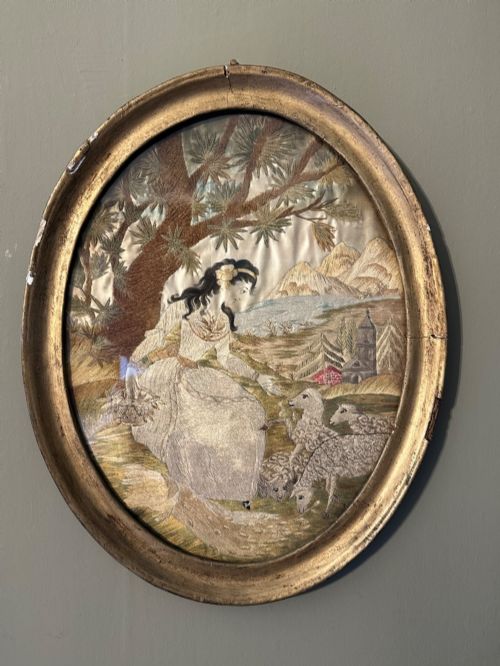
A pastoral silk picture depicts rustic farming scenes, gardens and country figures using silk and wool embroidery upon a linen or fabric ground. These textile works capture the Georgian and Regency fascination with idyllic rural life, rendered in stitched thread rather than paint.
The versions most commonly met on this page date from the Georgian and Regency periods, alongside pieces from the eighteenth and nineteenth centuries. They frequently take the form of wall art, needlework pictures and textile art housed within period frames.
Materials and construction
These works are constructed using silk and wool threads stitched onto linen or textile grounds to form detailed pastoral imagery. Artisans combined crewel work and fine silk embroidery techniques to build texture and depth within the rural scenes.
Framing is an integral element of the construction, featuring giltwood, wood, and specialised verre églomisé or mezzotint black glass. Original gilt frames enhance the presentation of these eighteenth and nineteenth-century textiles.
Pastoral Silk Picture Retail Price Guide 2026
Typical asking prices for pastoral silk picture among the pieces listed under this phrase on Sellingantiques today, from the lower quarter to the upper quarter. They describe what is for sale here now, not the wider market.
Listings feature periods spanning from seventeen-hundred through the Regency era, utilising silk, wool, and giltwood.
Distinctions in quality
Quality rests upon the fineness of the needlework and the fidelity of the pastoral scene rendered in silk and wool. Superior examples display subtle tonal gradation in the stitching and careful preservation of the textile ground.
The calibre of the surrounding frame alters the standing of the piece, with original giltwood and verre églomisé glass elevating the overall execution. Pairs demonstrate a higher level of matching craftsmanship compared to single works.
The Pastoral Silk Picture Glossary
- Verre églomisé
- A process of applying gold leaf or painting on glass to create a decorative border. This technique often frames Regency woolwork and silk pictures.
- Crewel work
- Embroidery executed using wool yarn on a fabric foundation. Early nineteenth-century examples utilise this method for robust pastoral textures.
- Mezzotint glass
- Darkened glass used in historic framing to provide depth and contrast. It frequently accompanies Regency silk embroideries.
- Giltwood
- Wood carved and covered with a thin layer of gold leaf. Period frames utilise this material to highlight needlework pictures.
- Needlework picture
- A decorative textile piece worked with a needle using silk, wool, or other threads. These objects function as framed wall art.
Pastoral Silk Picture: Frequently Asked Questions
What is a pastoral silk picture?
A pastoral silk picture is a framed textile artwork depicting rustic scenes using silk and wool threads. These pieces date primarily from the Georgian and Regency eras.
They combine needlework with specialised glass and giltwood frames to create decorative wall art that celebrates rural life.
How were these pictures displayed?
These works were designed to hang upon interior walls as refined decorative art within domestic parlours and drawing rooms. Their delicate threads required protection behind glass.
Original frames of giltwood or verre églomisé ensured the textile remained secure while complementing fashionable interior schemes.
How do I date a silk picture?
Dating relies upon stylistic markers in the costume of the figures, the framing technique, and the types of textile ground used. Regency examples often feature distinct oval formats and dark glass borders.
Georgian and eighteenth-century pieces display different stitching densities and framing profiles that separate them from later nineteenth-century work.
Are these works always made of silk?
While silk is predominant, many examples incorporate wool, linen, and metallic threads within the same composition. Crewel work variants rely heavily on wool yarn.
The materials vary according to the period and the specific textural effects the maker wished to achieve in the landscape.