


Pastoral River Scene Artwork
These pastoral river scene artwork pieces capture quiet rural waterways and figures by banks across the nineteenth and early twentieth centuries.
Pastoral River Scene Artwork
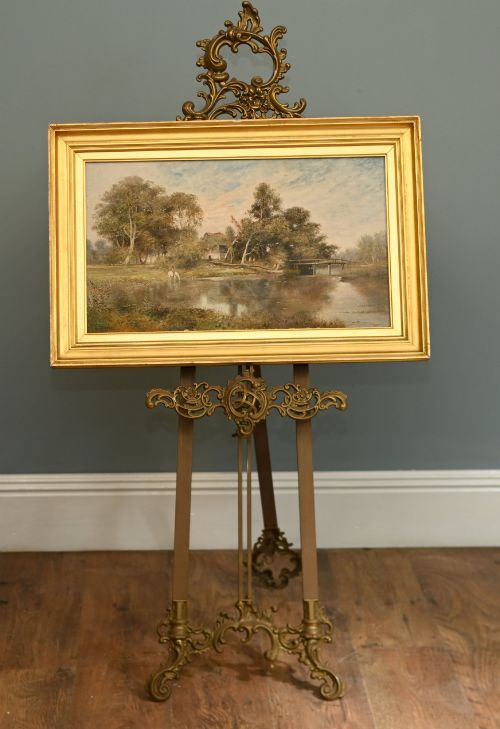
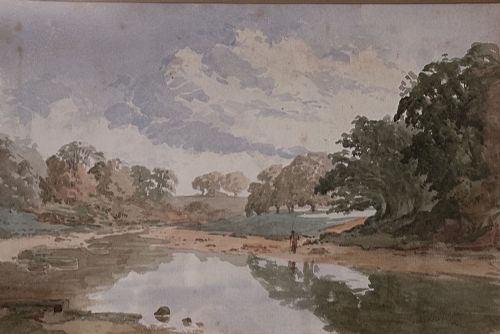
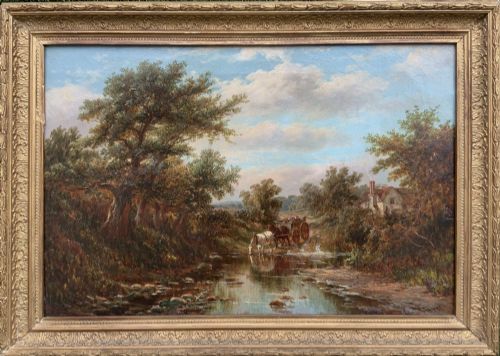
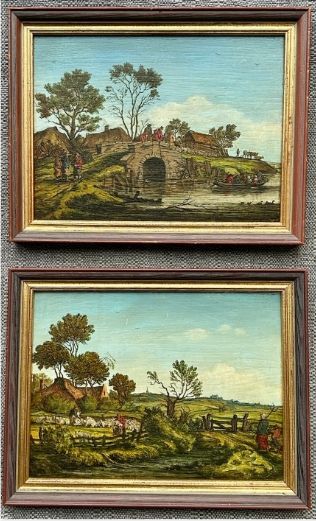
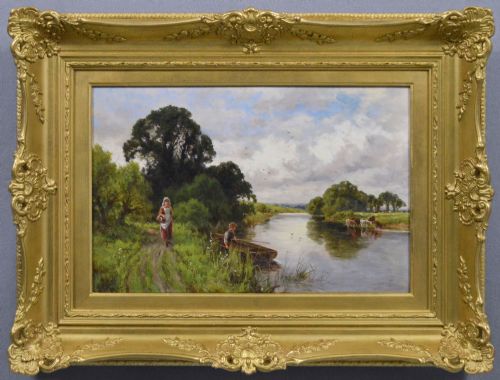
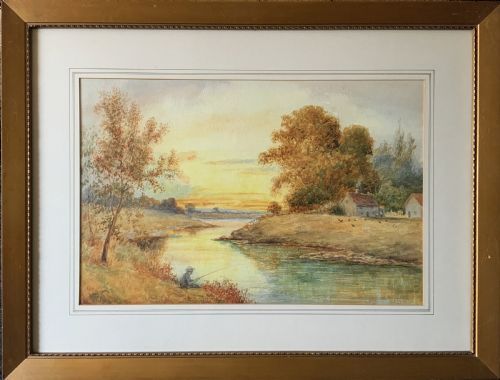
When you search for pastoral river scene artwork, you encounter painted and drawn depictions of rural waterways, featuring figures, cottages, livestock, and fishermen along riverbanks. The selections span the eighteenth, nineteenth, and early twentieth centuries, encompassing Victorian and Edwardian periods as well as British Impressionism.
The most common forms on this page are oil paintings on canvas or board and detailed watercolours on paper. These works frequently record specific British rivers and regions, including the Thames, the Severn, and Welsh valleys, alongside continental European scenes.
Materials and Technique
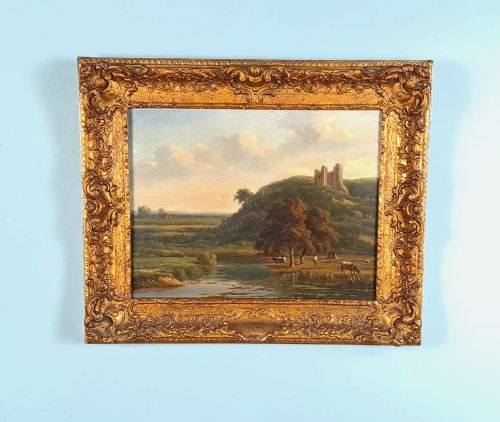
The physical works combine traditional painting and drawing supports with oil and watercolour media. Artists utilised oil paint on stretched canvas, wooden panels, and boards, often framing the results in moulded giltwood.
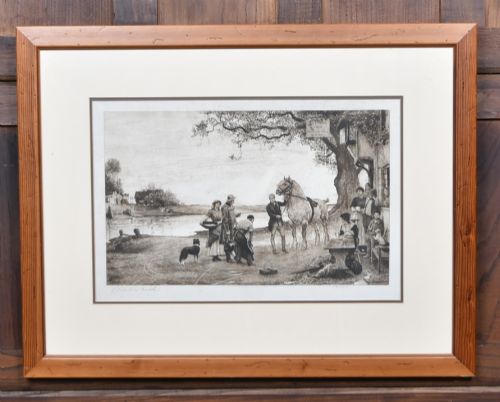
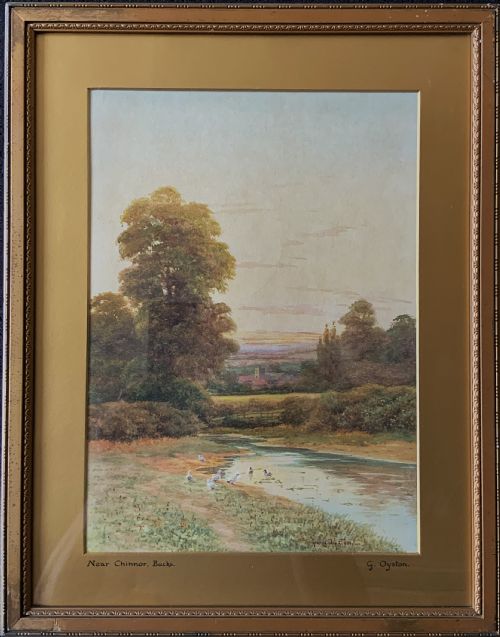
Watercolour works employ paper supports, sometimes finished with etching techniques to build texture and depth. Pigments were applied to capture natural light, dusk illumination, and atmospheric riverbanks.
Listings feature works spanning the 18th, 19th, and 20th centuries, executed in oil on canvas, board, wood, and watercolour on paper.
Execution and Handling
The standard of a pastoral river scene artwork rests upon the artist's handling of light, atmosphere, and natural proportions. Superior examples demonstrate confident brushwork or precise watercolour washes that define water reflections and vegetation clearly.
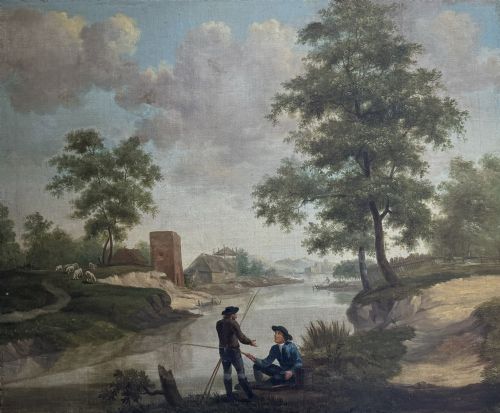
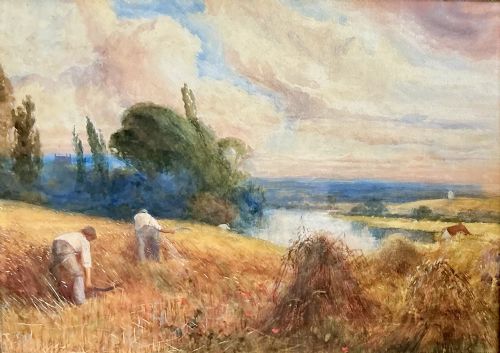
Compositions featuring detailed narrative elements, such as figures harvesting or fishing by the water, require skilled spatial arrangement. The depth of the landscape and the integration of livestock or human subjects distinguish finer academic pieces from simpler decorative works.
Robert W. Macbeth·George Oyston·Henry H Parker·Thomas Baker of Leamington·Benjamin Williams Leader·David Bates
The Pastoral River Scene Artwork Glossary
- Oil on Canvas
- A painting medium where pigments suspended in drying oils are applied to stretched woven fabric. This combination allows for rich colour blending and textured impasto surfaces.
- Watercolour
- A painting method where water-soluble pigments are applied to paper. It creates translucent washes of colour that rely on the white of the paper for luminosity.
- Giltwood
- Wood carved and coated with a thin layer of gold leaf or metallic powder. It provides a reflective decorative border common in period frames.
- Etching
- A printmaking process where lines are incised into a metal plate using acid. The resulting grooves hold ink to produce fine, detailed linear images on paper.
- Impressionism
- A style of painting emphasising light and its changing qualities rather than precise details. Artists apply visible brushstrokes to capture an immediate visual impression of a scene.
Pastoral River Scene Artwork: Frequently Asked Questions
What subjects appear in these scenes?
The artworks primarily show rivers, streams, and locks accompanied by rural life. Common elements include figures fishing, boating, or harvesting next to banks, alongside cattle and sheep.
Settings range from English and Welsh countryside locations to Italianate compositions. Artists focused on capturing natural light, seasonal changes, and traditional rural activities.
How do oil and watercolour differ?
Oil paintings utilise pigment bound in drying oil applied to canvas, board, or wood panels. This medium allows for thick textures, deep colours, and extensive layering.
Watercolours use water-soluble pigments on paper to achieve transparent, luminous effects. These works rely on protective framing behind glass to prevent moisture and light damage.
How are periods identified?
Periods are determined through artist signatures, biographical dates, framing styles, and material characteristics. Victorian and Edwardian works reflect specific aesthetic movements and academic painting traditions of their respective decades.
19th-century pieces often exhibit traditional British School handling, while early 20th-century items incorporate Impressionist techniques and brighter palettes.
Where were these works created?
The pieces originate primarily from British artists recording local landscapes across England, Wales, and Scotland. Specific river locations such as the Thames, Severn, and Duddon feature prominently in the titles.
Some works reflect continental European traditions, including Flemish styles and Italianate landscape compositions inspired by classical painting conventions.