







Pastoral Cottage Scenes
These pastoral cottage scenes bring the quiet English countryside of past centuries directly to your walls through oil and watercolour.
Pastoral Cottage Scenes
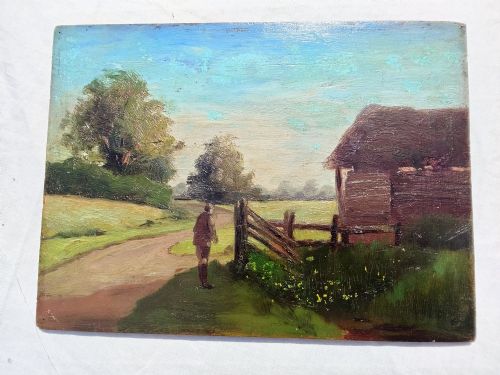
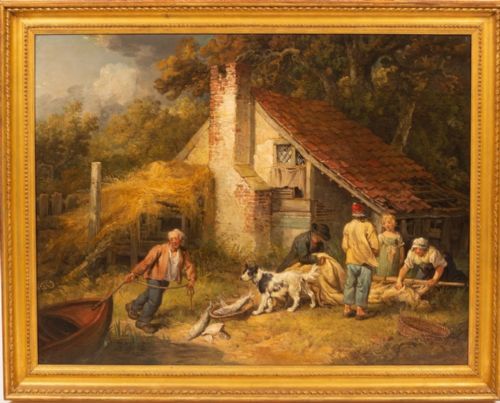
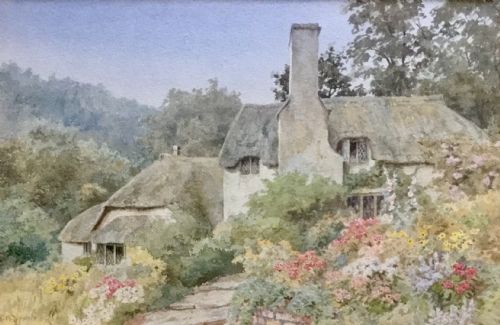
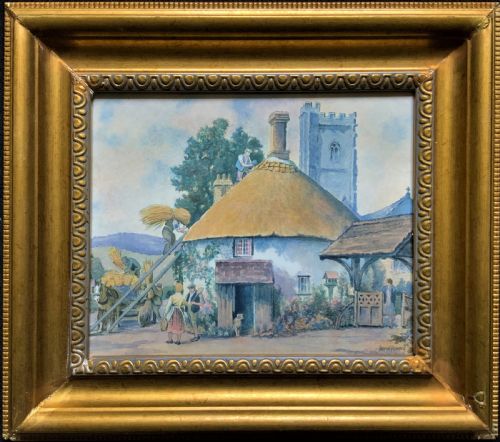
Pastoral cottage scenes depict rural life, agricultural work, and thatched dwellings across English counties, capturing rivers, farms, and villages. These artworks span several decades, reaching from the Georgian period through the Victorian and Edwardian eras into the mid-twentieth century.
The versions most commonly found here are framed watercolours on paper and oil paintings on canvas or wooden boards. Artists document specific locations in Devon, Somerset, Sussex, and Warwickshire alongside generalised countryside vistas filled with figures, livestock, and domestic animals.
Materials and Technique
Painters utilise oil paint on stretched canvas and wooden boards, applying rich pigments to build textured rural landscapes. Alternatively, watercolour pigment on paper yields lighter, translucent compositions that record atmospheric village scenes and fenland views.
Framing preserves these fragile paper and canvas works behind glass or within traditional timber surrounds. Signatures, inscriptions, and artist attributions frequently appear directly on the front or verso of the paintings.
Pastoral Cottage Scenes Retail Price Guide 2026
Typical asking prices for pastoral cottage scenes among the pieces listed under this phrase on Sellingantiques today, from the lower quarter to the upper quarter. They describe what is for sale here now, not the wider market.
Evaluating Quality
Quality rests upon the artist's ability to render light, atmosphere, and natural proportions within the landscape. Works by documented painters with established exhibition records demonstrate superior brushwork and compositional depth compared to anonymous student pieces.
Condition dictates the longevity of the artwork, separating well-preserved pieces with stable pigments and original paper integrity from items suffering from heavy fading, foxing, or canvas tears.
James Hardy Junior·Frederick James Knowles·Charles Vickers·Robert Finley McIntyre·Lorenzo Headley·Helmut Reuter·Harry Sylvester Stannard·Henry Charles Fox·Will Anderson·Robert Hollands Walker·Thomas James Lloyd·Joseph Kirkpatrick·J.V.R. Parsons·Walter Henry Sweet·Thomas Nicholson Tyndale·Benjamin D. Sigmund·James Ward·George Morland·Robert Gallon·David Heward·Harold Lawes·Stuart Lloyd·G R Vaughan·Sir Ernest Albert Waterlow·Arthur Claude Strachan
The Pastoral Cottage Scenes Glossary
- Watercolour
- A painting method where fine pigment is suspended in a water-based solution and applied to paper. This technique creates transparent washes of colour that highlight delicate architectural and natural details.
- Oil on Canvas
- Pigment mixed with drying oil applied to a woven fabric stretched across a wooden frame. This medium allows for thick impasto application and deep, lasting colour saturation.
- Victorian Pastoral
- A nineteenth-century artistic style focusing on idealised rural life and agricultural labour. These depictions reflect contemporary romanticised views of the English countryside.
- Framed Artwork
- A finished painting or drawing enclosed within a protective timber or moulded border. Many include glass to shield vulnerable paper surfaces from environmental dust and moisture.
Pastoral Cottage Scenes: Frequently Asked Questions
What periods do these paintings come from?
The selection spans from the Georgian era through Victorian and Edwardian times up to the mid-twentieth century. Artists recorded rural English life across these changing decades using traditional painting methods.
Most pieces date from the nineteenth and early twentieth centuries, reflecting a sustained artistic interest in farming communities, rivers, and thatched cottages.
How should I care for a watercolour?
Watercolour paintings require protection from direct sunlight to prevent the pigments and paper from fading over time. Keeping them away from excessive moisture preserves the delicate paper support.
Displaying them behind glass within a stable indoor environment shields the surface from dust and atmospheric pollutants.
Are these paintings signed by the artists?
Many examples feature visible signatures, monograms, or period inscriptions left by the original painter. Some works also record specific geographical locations, such as villages in Devon or Sussex.
Unsigned pieces occasionally appear, often attributed to the broader English School or specific nineteenth-century artistic traditions based on their style and materials.
What subjects feature in these scenes?
Common subjects include thatched cottages by streams, farmworkers tending livestock, horses and carts on country lanes, and river landscapes. These compositions capture daily rural routines and agricultural harvests.
Artists frequently portrayed specific regions across the English countryside, documenting local architecture, folk, and working landscapes before industrial expansion altered them.